Pear Psylla Pheromone Lures for Monitoring and Mating Disruption
Author: Christopher Adams
Published: 2023
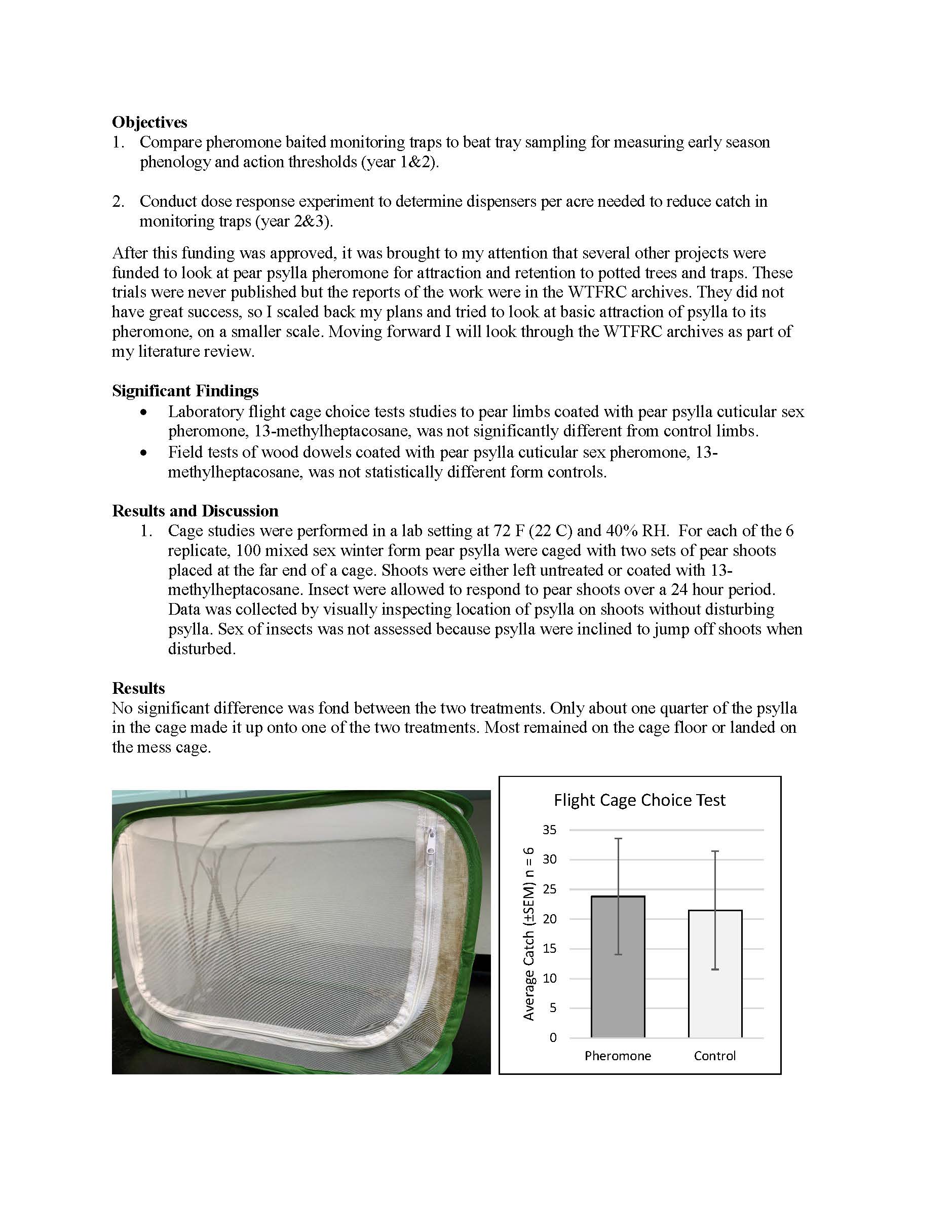
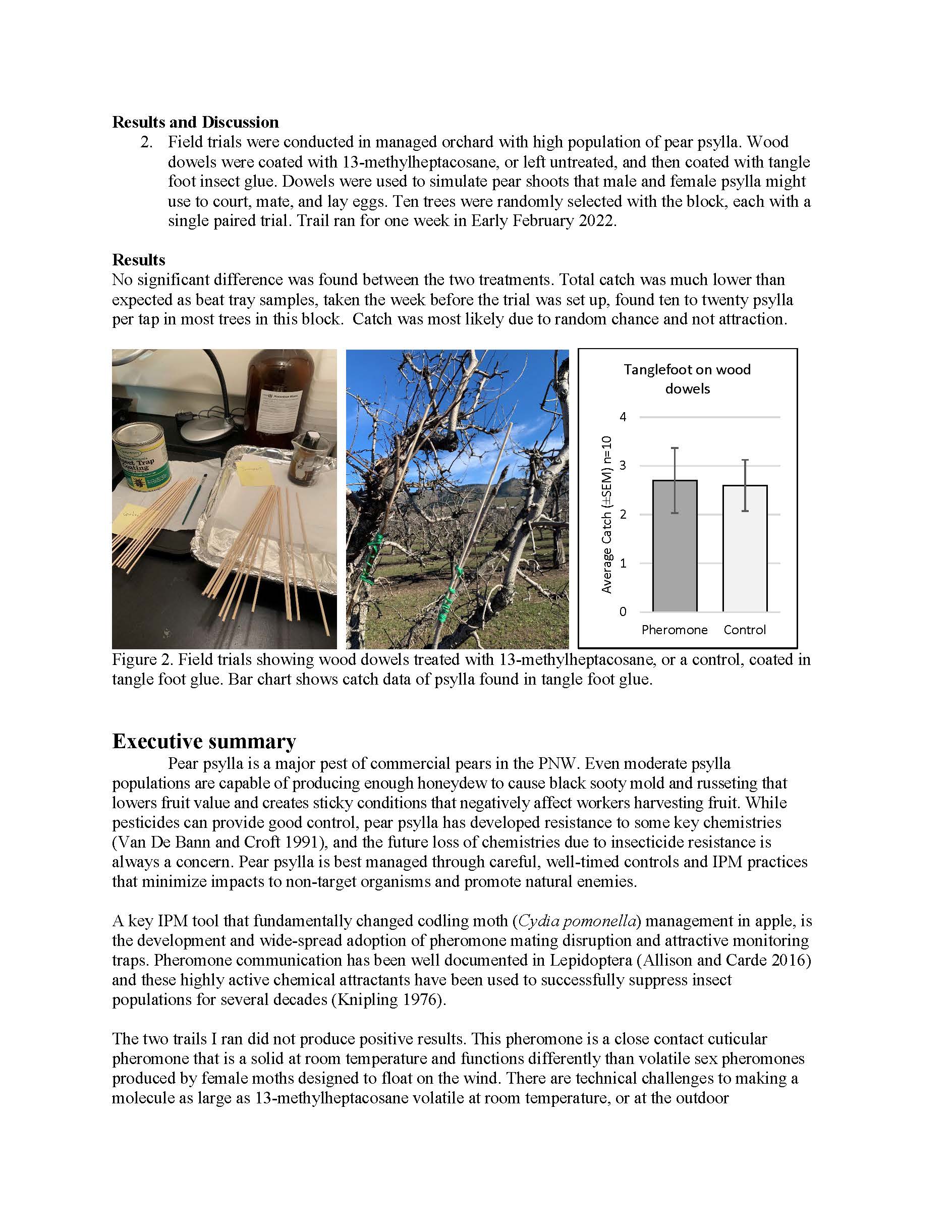
Summary: Pear psylla is a major pest of commercial pears in the PNW. Even moderate psylla populations are capable of producing enough honeydew to cause black sooty mold and russeting that lowers fruit value and creates sticky conditions that negatively affect workers harvesting fruit. While pesticides can provide good control, pear psylla has developed resistance to some key chemistries (Van De Bann and Croft 1991), and the future loss of chemistries due to insecticide resistance is always a concern. Pear psylla is best managed through careful, well-timed controls and IPM practices that minimize impacts to non-target organisms and promote natural enemies. A key IPM tool that fundamentally changed codling moth (Cydia pomonella) management in apple, is the development and wide-spread adoption of pheromone mating disruption and attractive monitoring traps. Pheromone communication has been well documented in Lepidoptera (Allison and Carde 2016) and these highly active chemical attractants have been used to successfully suppress insect populations for several decades (Knipling 1976). The two trails I ran did not produce positive results. This pheromone is a close contact cuticular pheromone that is a solid at room temperature and functions differently than volatile sex pheromones produced by female moths designed to float on the wind. There are technical challenges to making a molecule as large as 13-methylheptacosane volatile at room temperature, or at the outdoor temperatures of early February. However, the potential for developing a new tool for monitoring or disruption of early season psylla makes this pheromone worth investigating further.