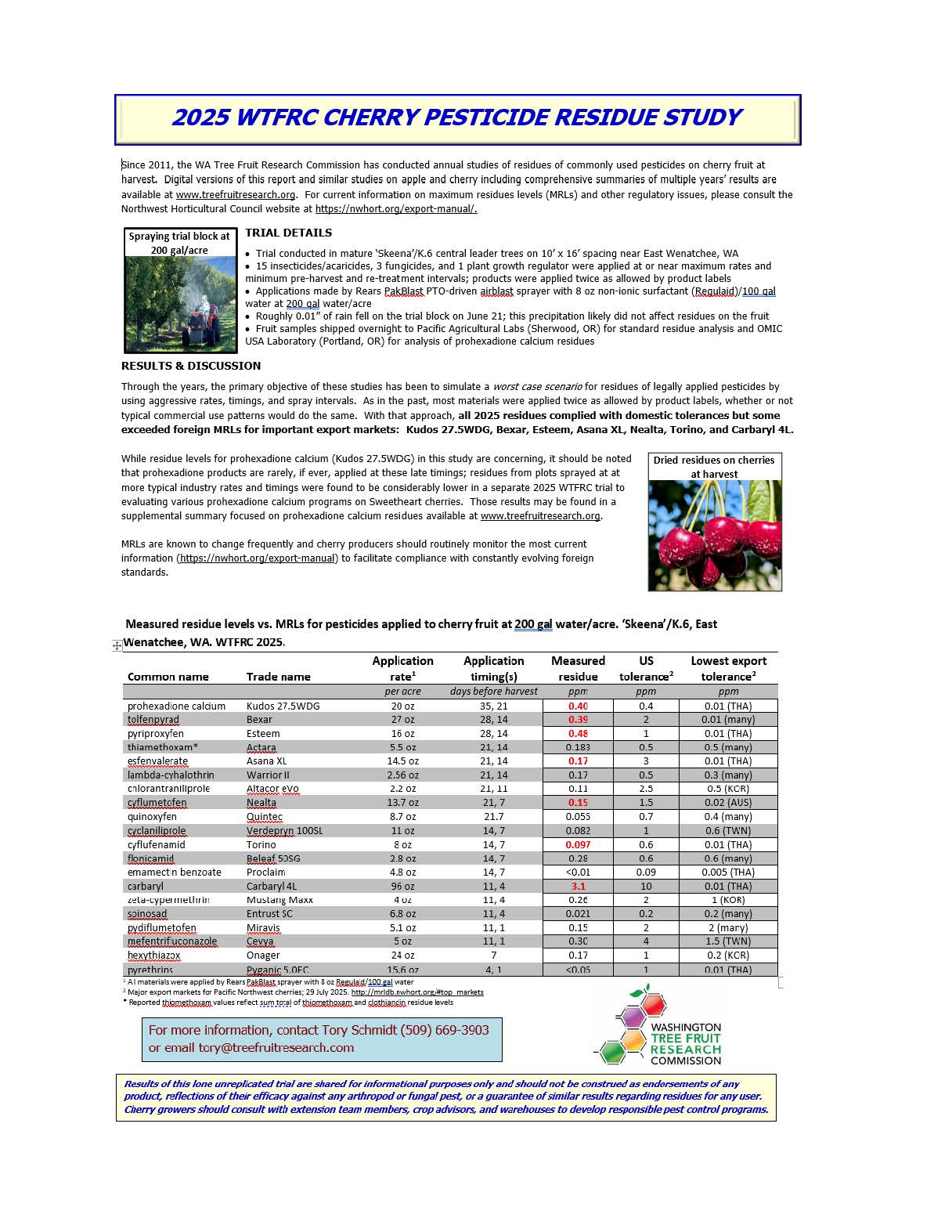
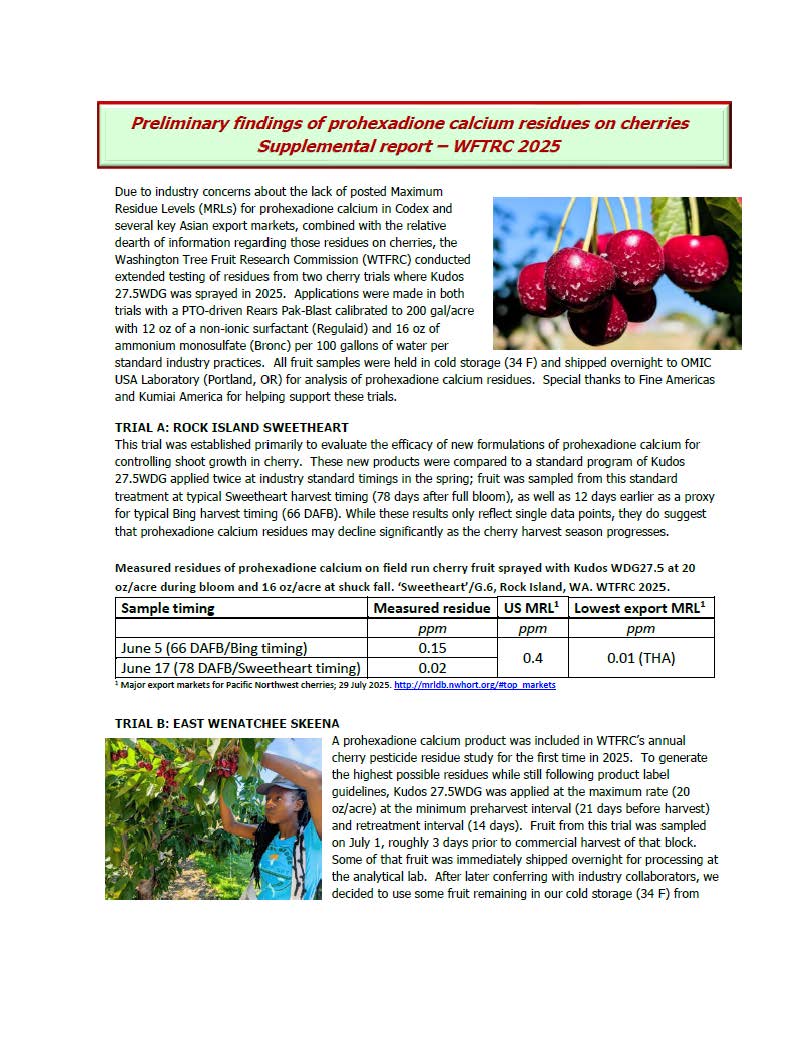
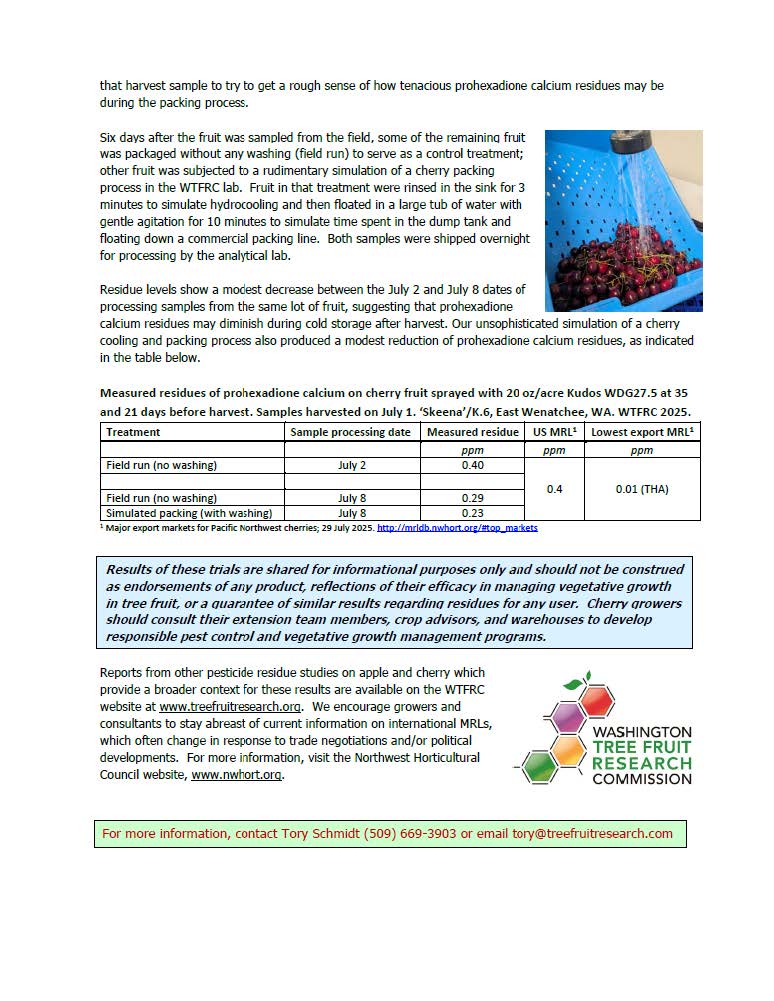
Summary: The Washington Tree Fruit Research Commission (WTFRC) has conducted annual pesticide residue studies in apple and cherry since 2011 to provide basic data to the tree fruit industry regarding residue levels of commonly used pesticides. This information is used by growers, consultants, and fruit sales desks to help guide management decisions regarding spray programs for fruit being exported to foreign markets which may have more stringent Maximum Residue Level (MRL) tolerances than those allowed for fruit sold domestically. For these studies, various fungicides, insecticides, acaricides, and plant growth regulators were sprayed at typical rates and timings used by the PNW cherry industry. Applications were made to a commercial ‘Skeena’ orchard with an airblast sprayer calibrated to 200 gallons water/acre. Fruit were then sampled at standard harvest timing and submitted to commercial labs for residue analysis. Results have consistently found that residue levels of all pesticides applied were safely below tolerances set for the United States market by the Environmental Protection Agency (EPA), but many residues have exceeded MRLs for some important cherry export markets. Most of these potentially problematic cases have been for countries that have either set their MRLs at the minimum limit of detection for those particular products, or have not posted MRLs for those pesticides; in those cases, imported fruit in those markets cannot have residues which exceed that nation’s default level for MRLs, which is frequently a very stringent value such as 0.1 or 0.01 ppm. Due to keen interest from industry, we did additional testing in 2025 of cherries sprayed with prohexadione calcium at various rates and timings, including some ‘Sweetheart’ cherries from another WTFRC trial site. All samples tested detected some residues of prohexadione, which would potentially be problematic for fruit destined for export markets with minimal MRLs of 0.01 ppm such as Thailand. Field run fruit sprayed at the maximum rate and minimum pre-harvest interval (PHI) had residue levels close to the US EPA tolerance but was still in compliance. Crude simulations of hydrocooling and packing line processes slightly reduced prohexadione residues on the fruit