Ganaspis brasiliensis for Biological Control of SWD
Author: Christopher Adams
Published: 2026
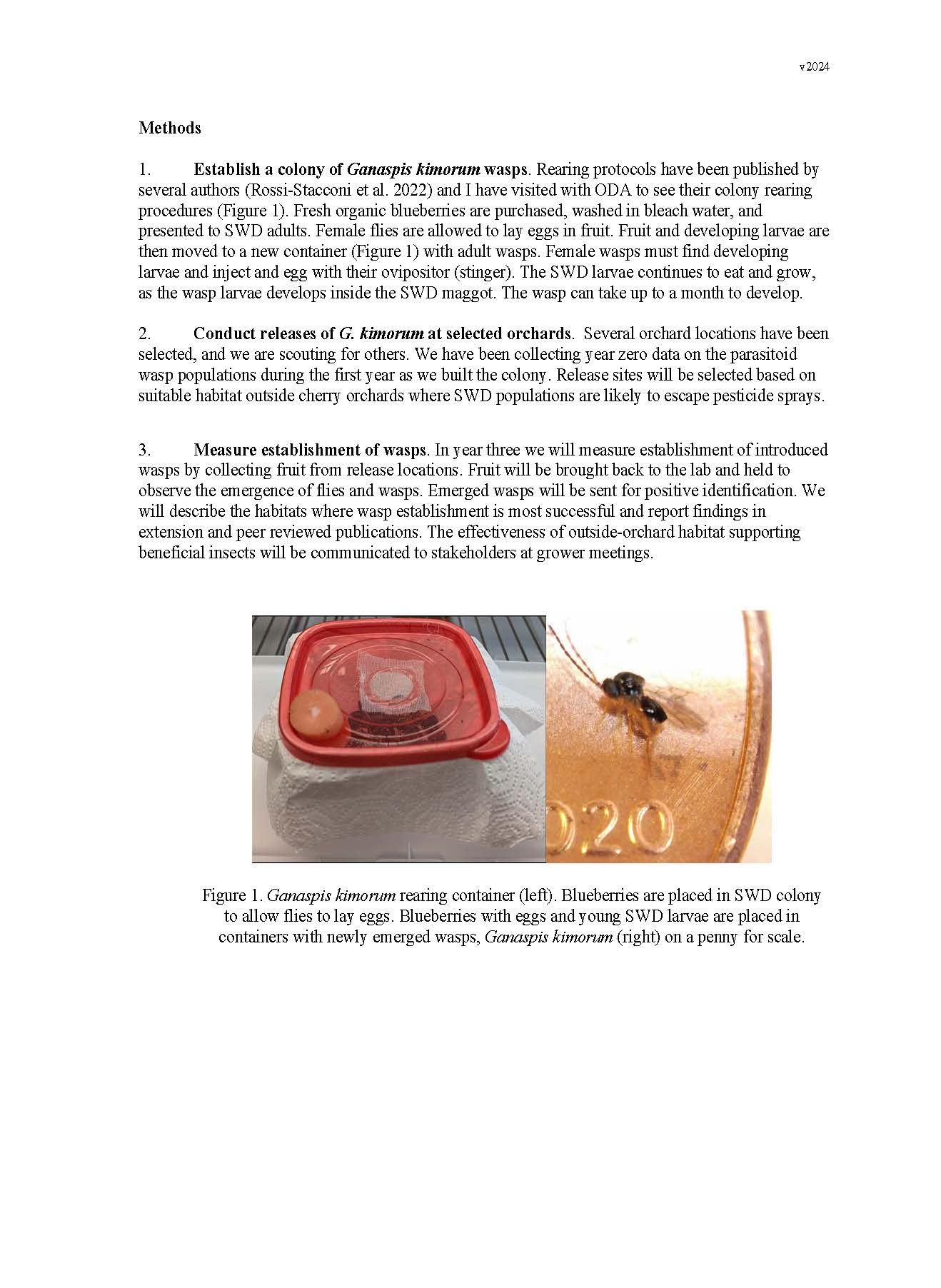
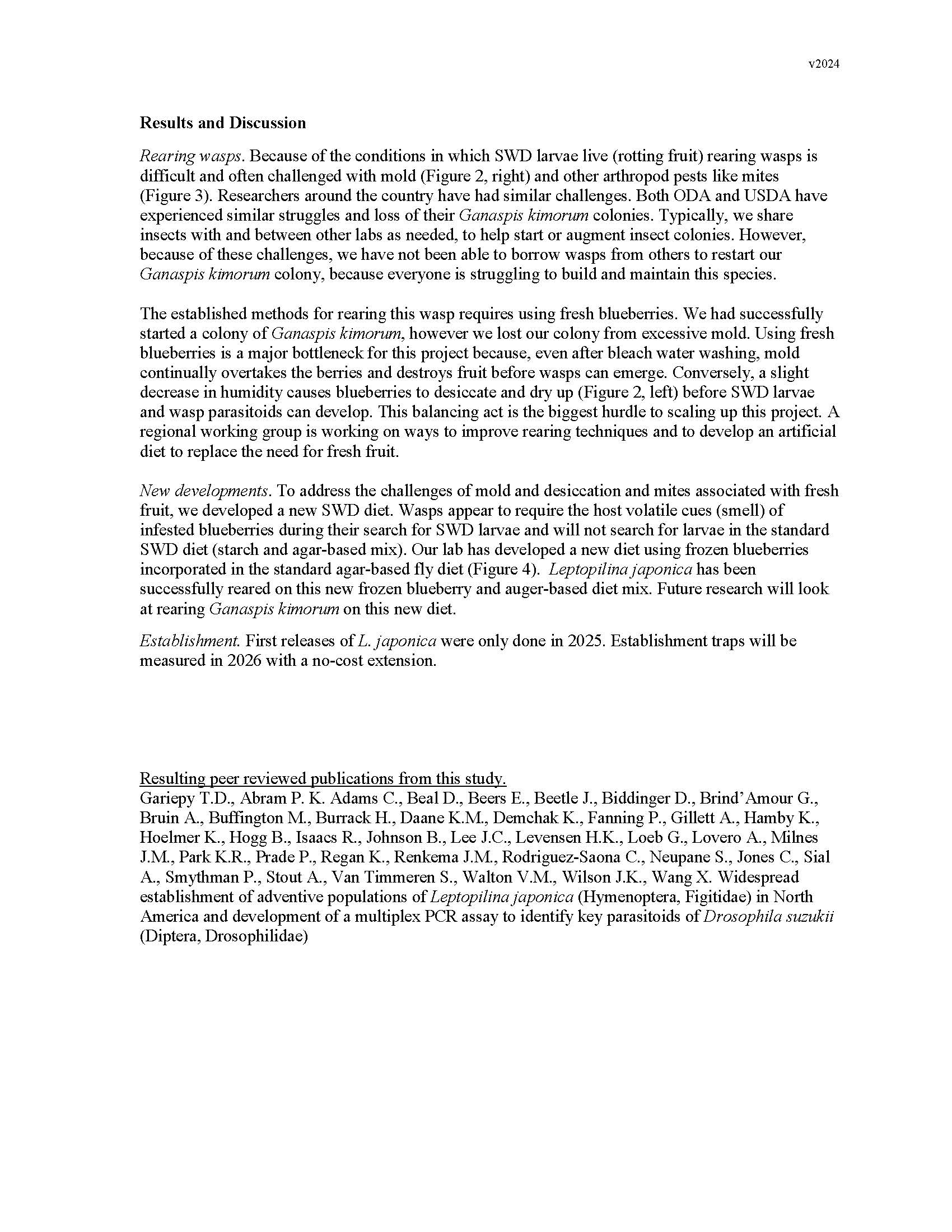
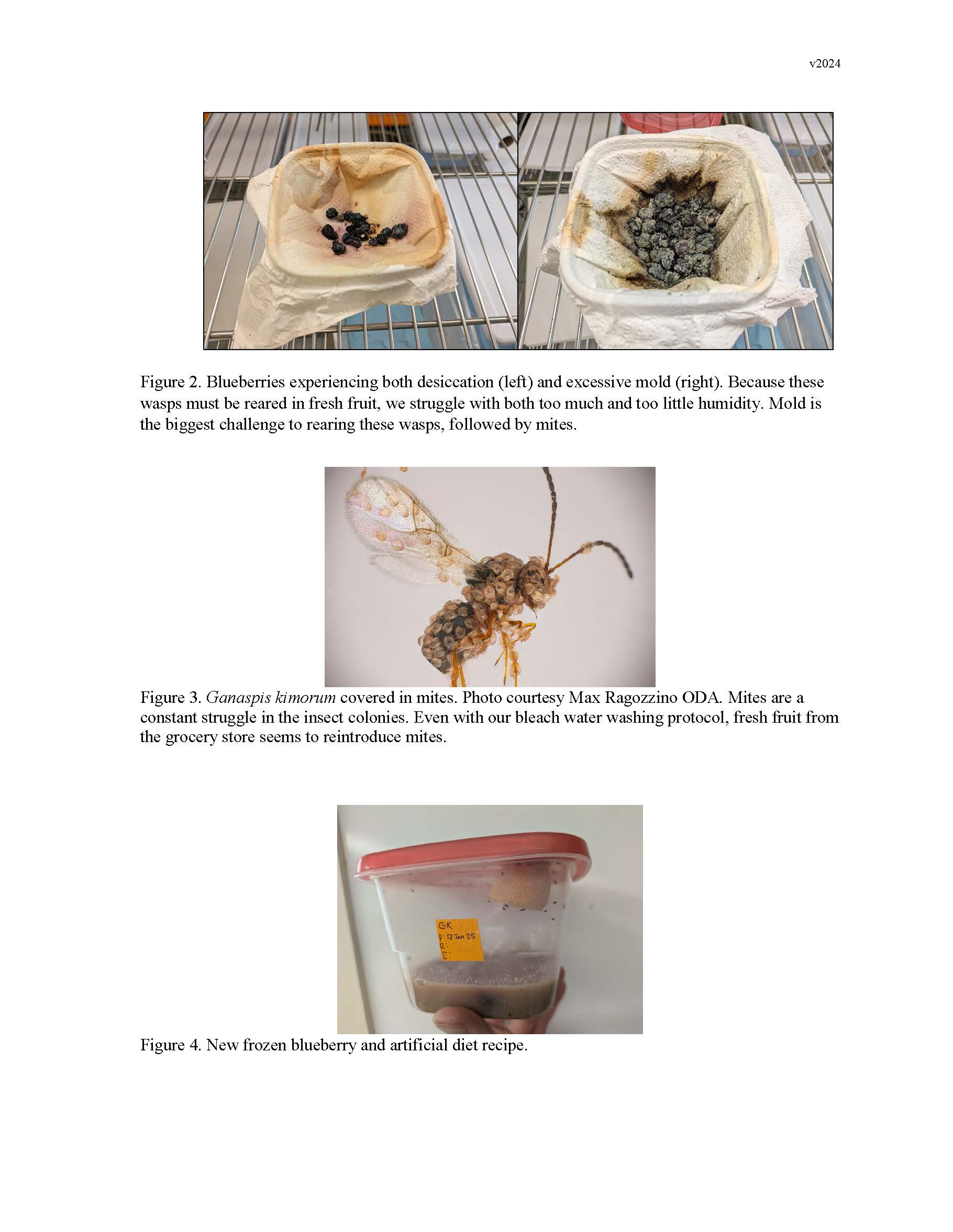
Summary: Rearing wasps. Because of the conditions in which SWD larvae live (rotting fruit) rearing wasps is difficult and often challenged with mold (Figure 2, right) and other arthropod pests like mites (Figure 3). Researchers around the country have had similar challenges. Both ODA and USDA have experienced similar struggles and loss of their Ganaspis kimorum colonies. Typically, we share insects with and between other labs as needed, to help start or augment insect colonies. However, because of these challenges, we have not been able to borrow wasps from others to restart our Ganaspis kimorum colony, because everyone is struggling to build and maintain this species. The established methods for rearing this wasp requires using fresh blueberries. We had successfully started a colony of Ganaspis kimorum, however we lost our colony from excessive mold. Using fresh blueberries is a major bottleneck for this project because, even after bleach water washing, mold continually overtakes the berries and destroys fruit before wasps can emerge. Conversely, a slight decrease in humidity causes blueberries to desiccate and dry up (Figure 2, left) before SWD larvae and wasp parasitoids can develop. This balancing act is the biggest hurdle to scaling up this project. A regional working group is working on ways to improve rearing techniques and to develop an artificial diet to replace the need for fresh fruit. New developments. To address the challenges of mold and desiccation and mites associated with fresh fruit, we developed a new SWD diet. Wasps appear to require the host volatile cues (smell) of infested blueberries during their search for SWD larvae and will not search for larvae in the standard SWD diet (starch and agar-based mix). Our lab has developed a new diet using frozen blueberries incorporated in the standard agar-based fly diet (Figure 4). Leptopilina japonica has been successfully reared on this new frozen blueberry and auger-based diet mix. Future research will look at rearing Ganaspis kimorum on this new diet.