Assessing Barriers to and Benefits of AMF Colonization in Apple
Author: Tracey Somera
Published: 2026
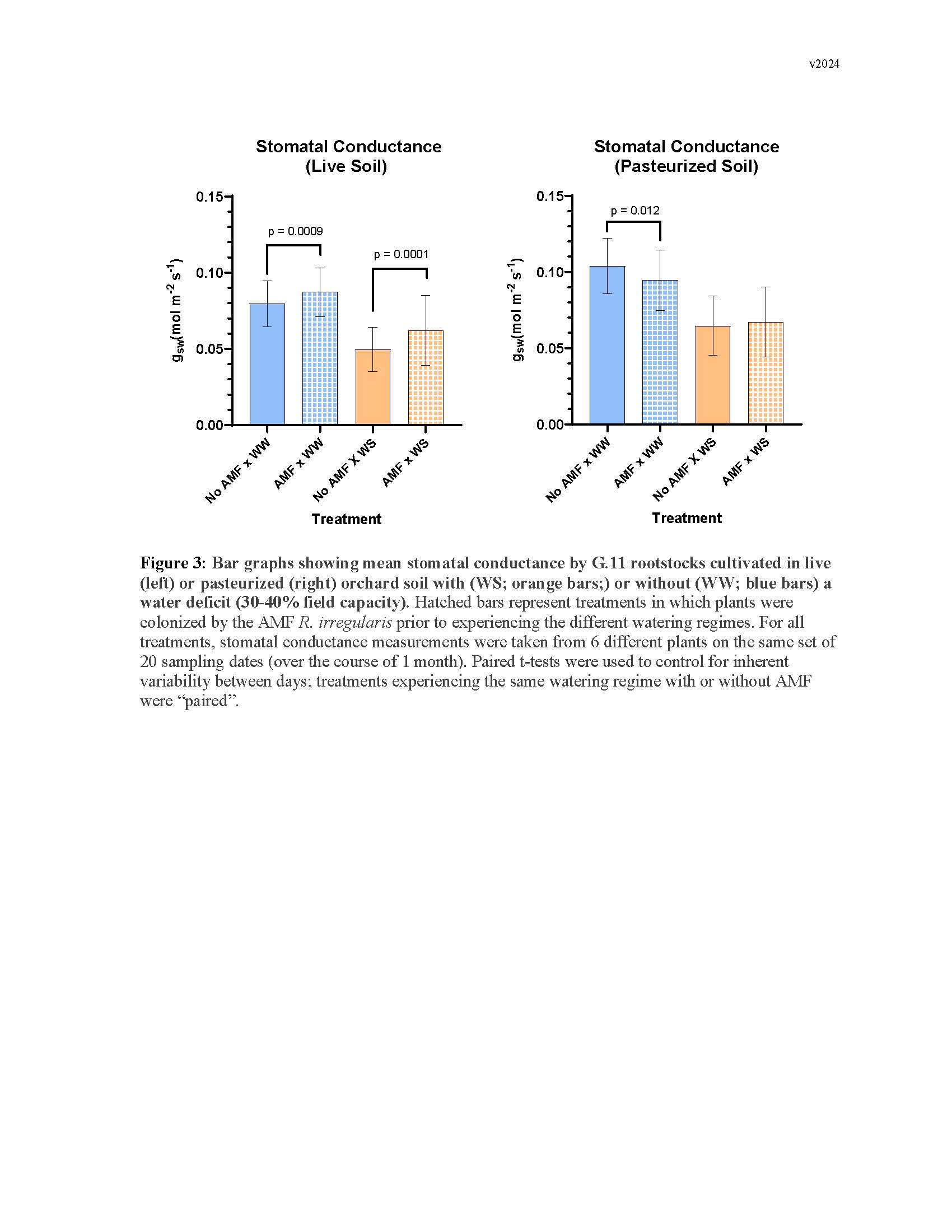
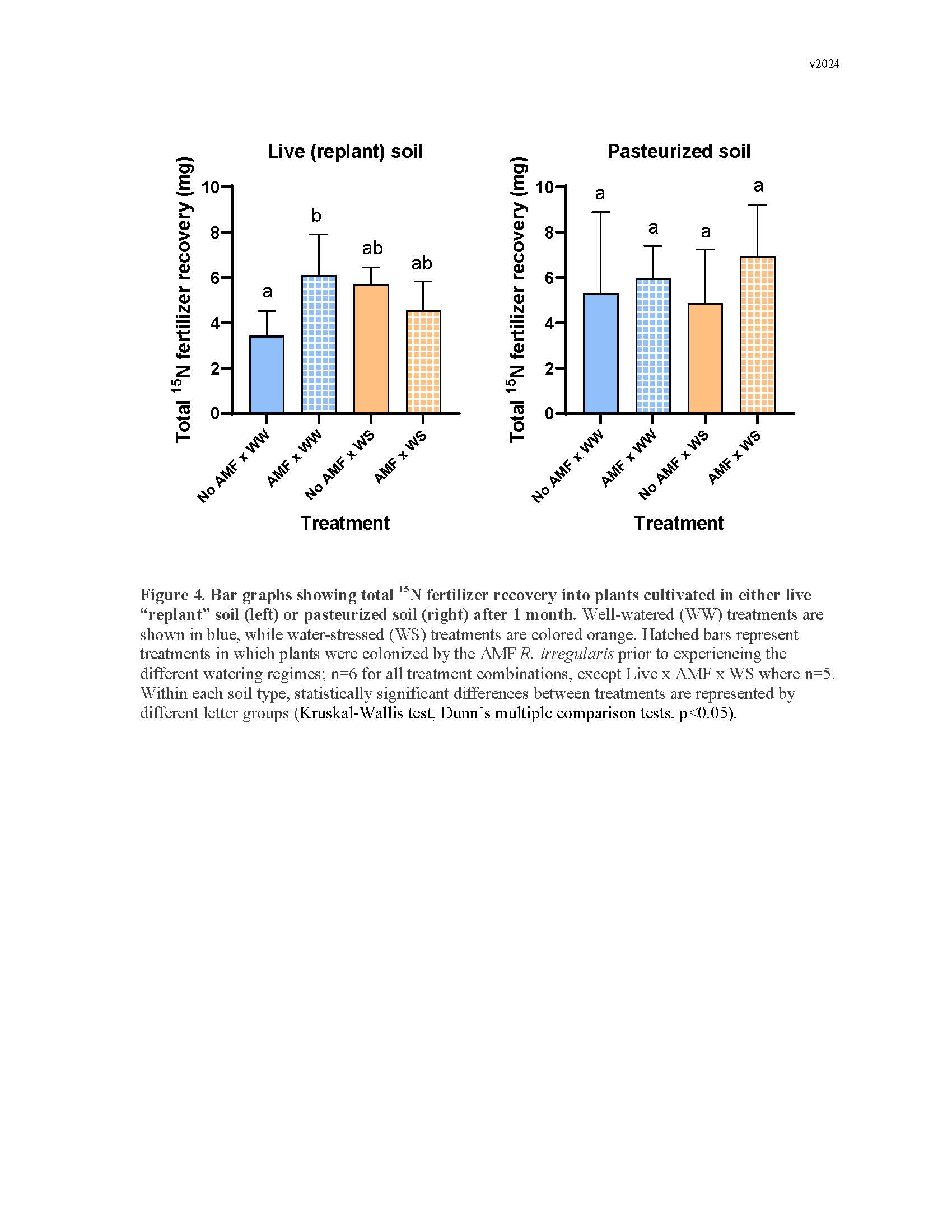
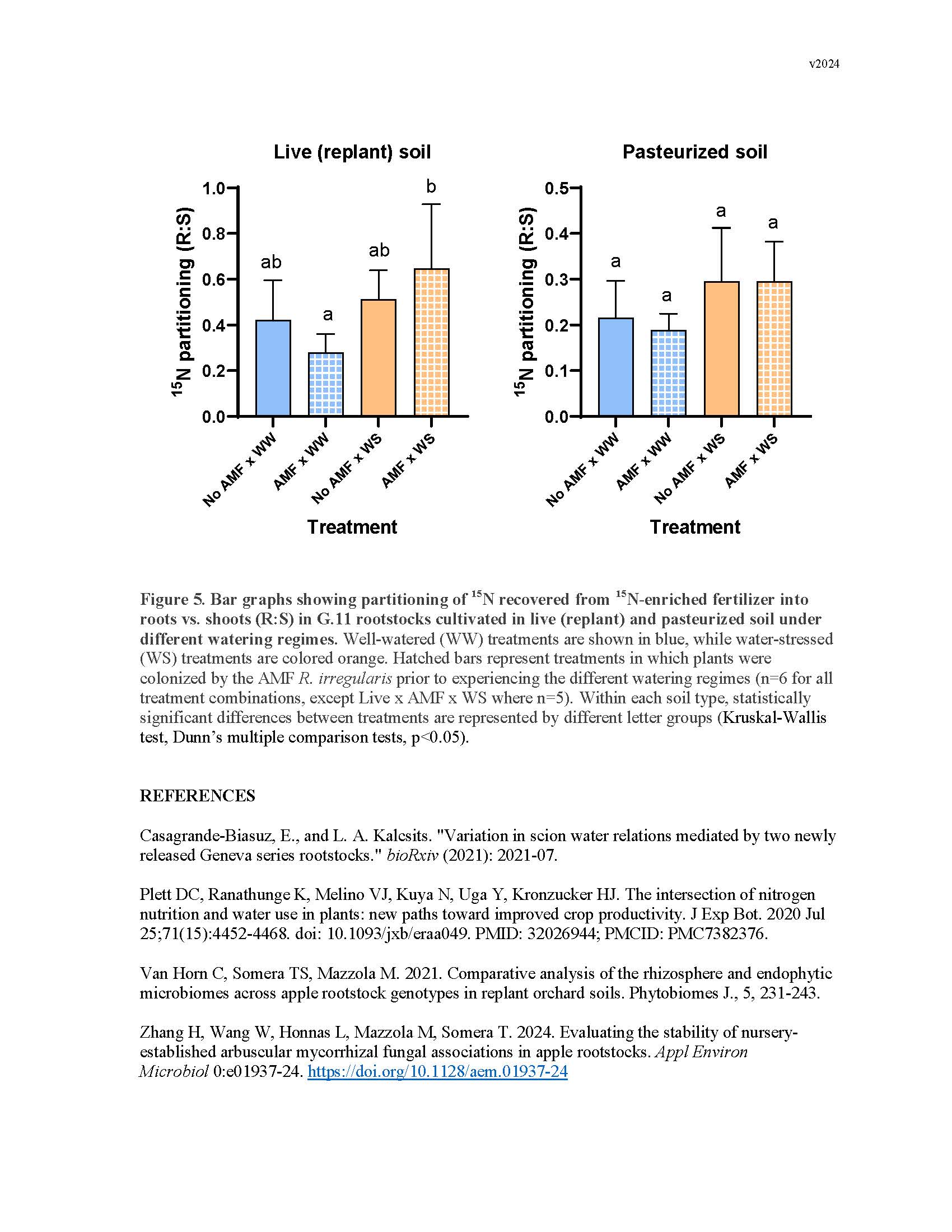
Summary: Microorganisms living inside plant tissues (endophytes) often play very specific and crucial roles in promoting the health and growth of their host plant. Arbuscular mycorrhizal fungi (AMF) are root-colonizing endophytes present in most terrestrial ecosystems, including agricultural soils. AMF have been shown to provide a spectrum of benefits to their plant hosts including improved tolerance to water stress, access to nutrients, and disease resistance. Although many AMF species are generalists, functional benefits may be fungus- and plant-species dependent. A primary aim of this research was to assess a range of benefits of specific apple rootstock/AMF associations. Previously identified “compatible” rootstock/AMF combinations leading to rapid establishment of a relationship were selected for testing. Specifically, we tested the ability of two different AMF species (Claroideoglomus etunicatum and Claroideoglomus claroideum) to enhance plant defense against infection by the fungal replant pathogen Rhizoctonia solani in G.41 and G.890 tissue-cultured plantlets. A separate experiment was conducted to test for R. irregularis-mediated tolerance to water stress and nitrogen uptake (15NH4NO3) in G.11 rootstock. Experiments provided clear evidence of AMF species directly functioning in beneficial roles with commercially available apple rootstock genotypes. Colonization of G.11 rootstocks by R. irregularis led to significant increases in stomatal conductance in live orchard soil in both water-stressed (30-40% water deficit) and well-watered (~80% field capacity) treatments. This result highlights the role of a specific apple rootstock-AMF associations in maintaining water supply to plants experiencing a combination of water-stress and replant pressure, especially in less vigorous apple rootstocks with relatively small root systems. When grown in live orchard soil and well-watered, G.11 rootstocks pre-colonized by R. irregularis recovered significantly more nitrogen (from 15N-enriched fertilizer) than non-inoculated plants growing under the same conditions. In addition, under combined water-stress and replant pressure (conditions in which a plant’s need to prioritize root growth over shoot growth would be expected to be relatively high), inoculation with R. irregularis benefited the ability of G.11 rootstocks to retain/accumulate nitrogen in root tissue. Finally, the AMF C. etunicatum (but not C. claroideum) significantly enhanced plant defense against subsequent infection by R. solani in G.41 (but not G.890), relative to uninoculated controls. Results of this study provide insight into specific AMF-rootstock relationships which could be harnessed to improve disease control, drought tolerance and/or sustainability, and represent a first step towards assessing the utility of and improving upon current practices to promote the establishment of mycorrhizal associations in orchard systems.