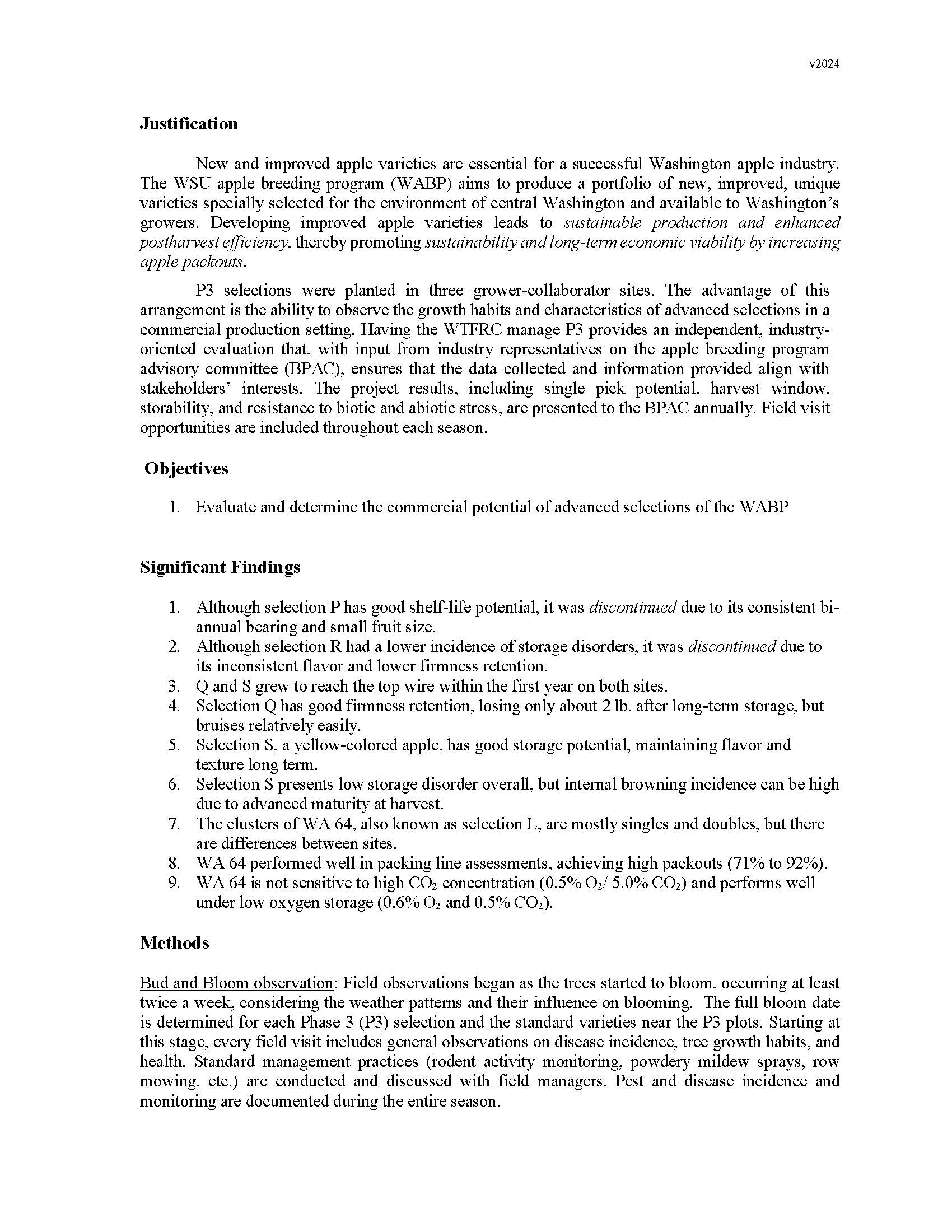
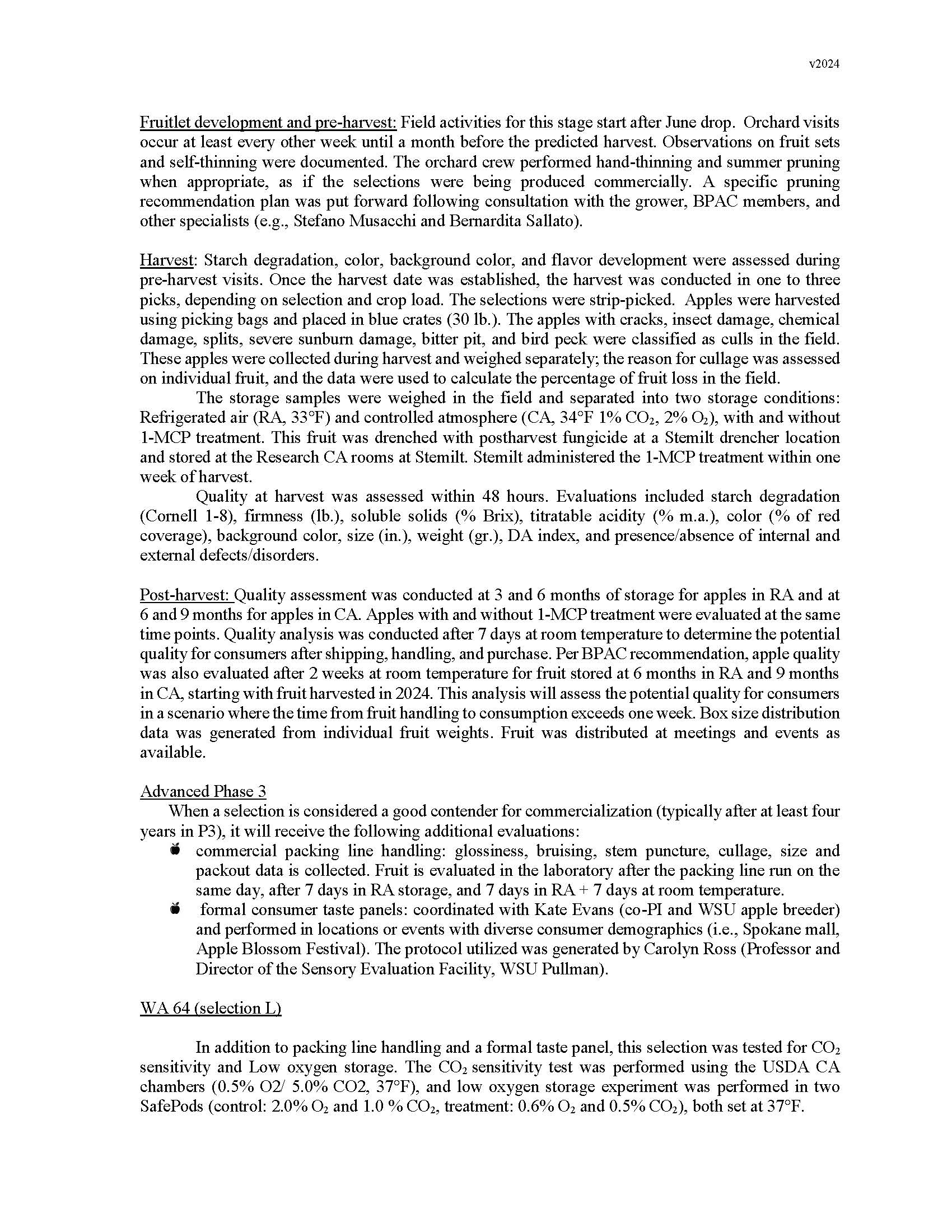
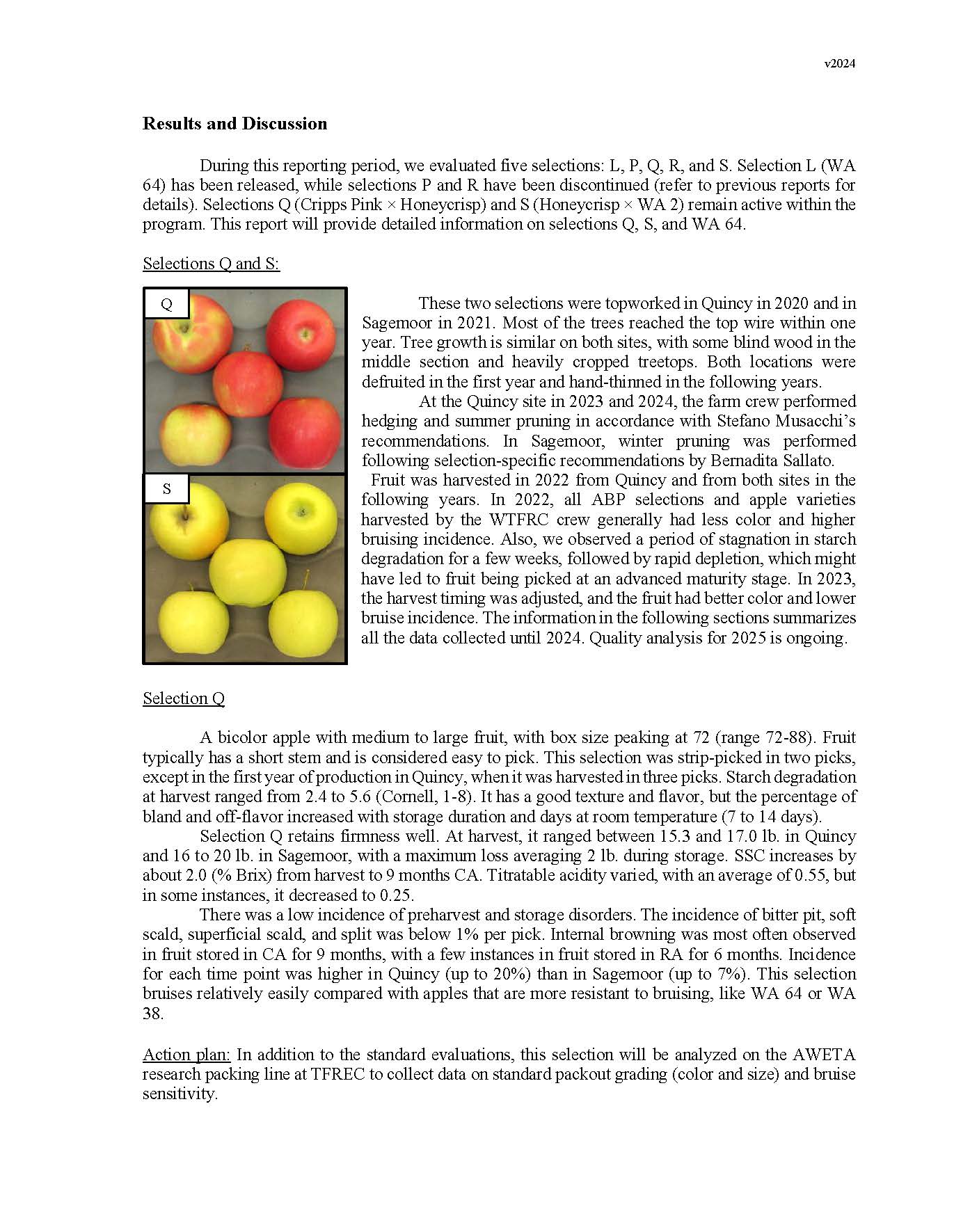
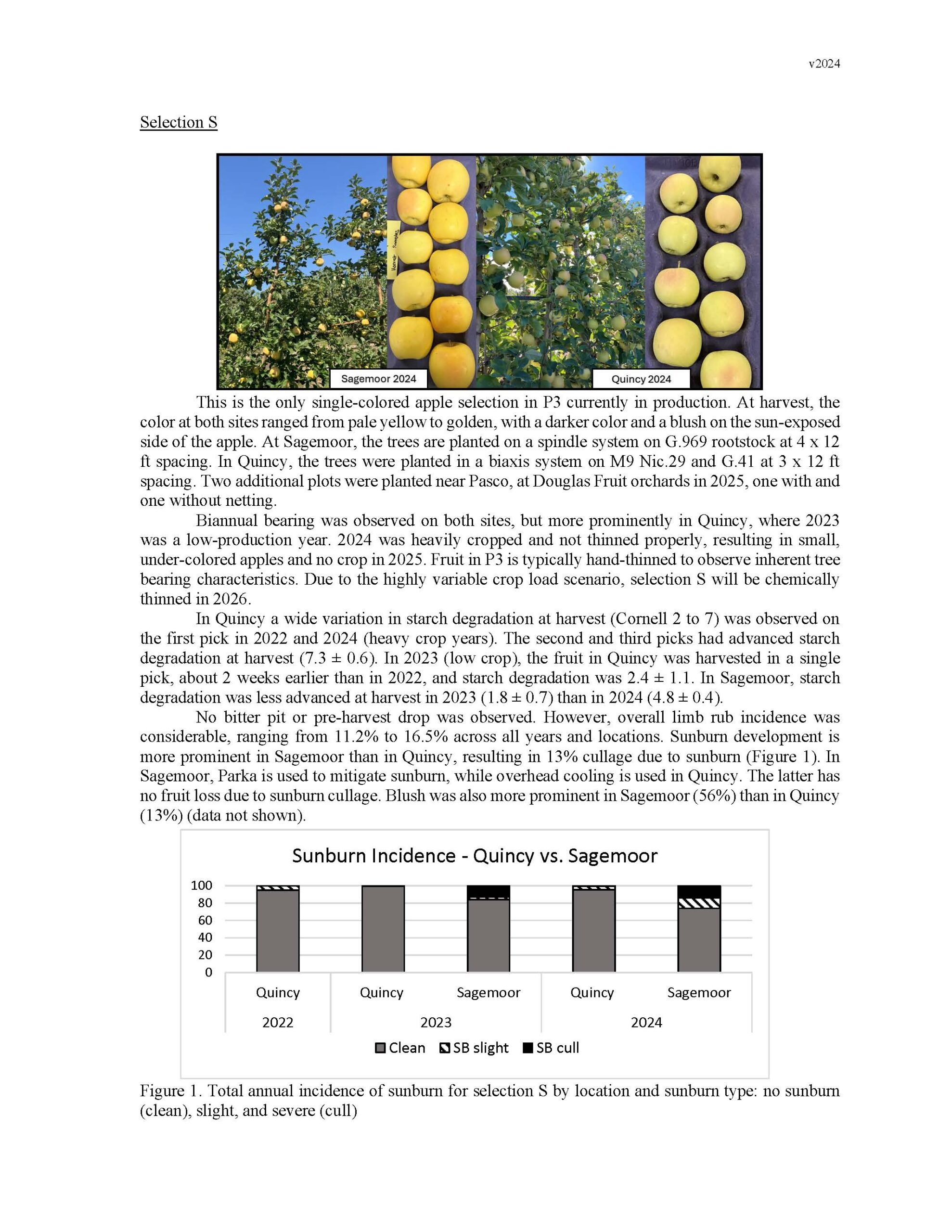
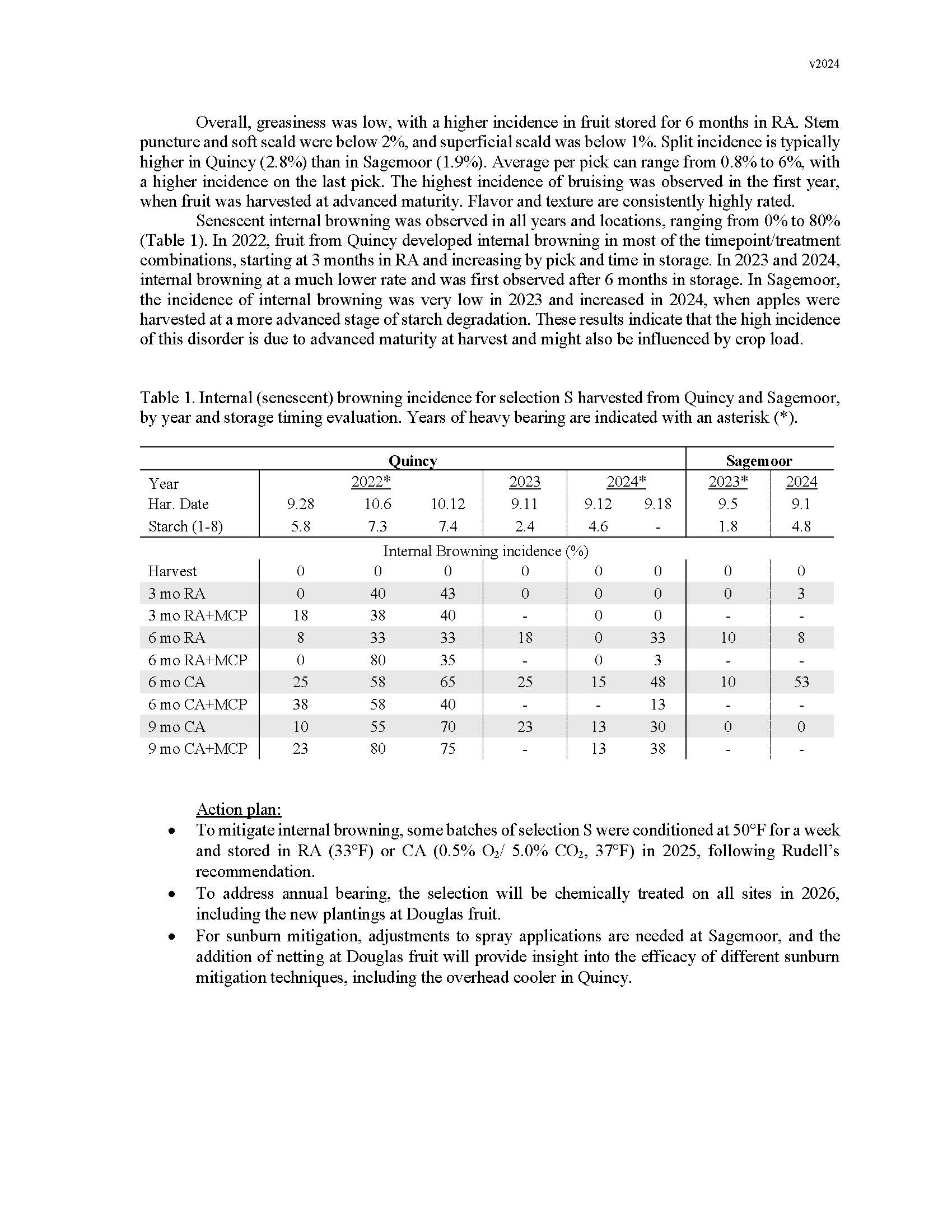
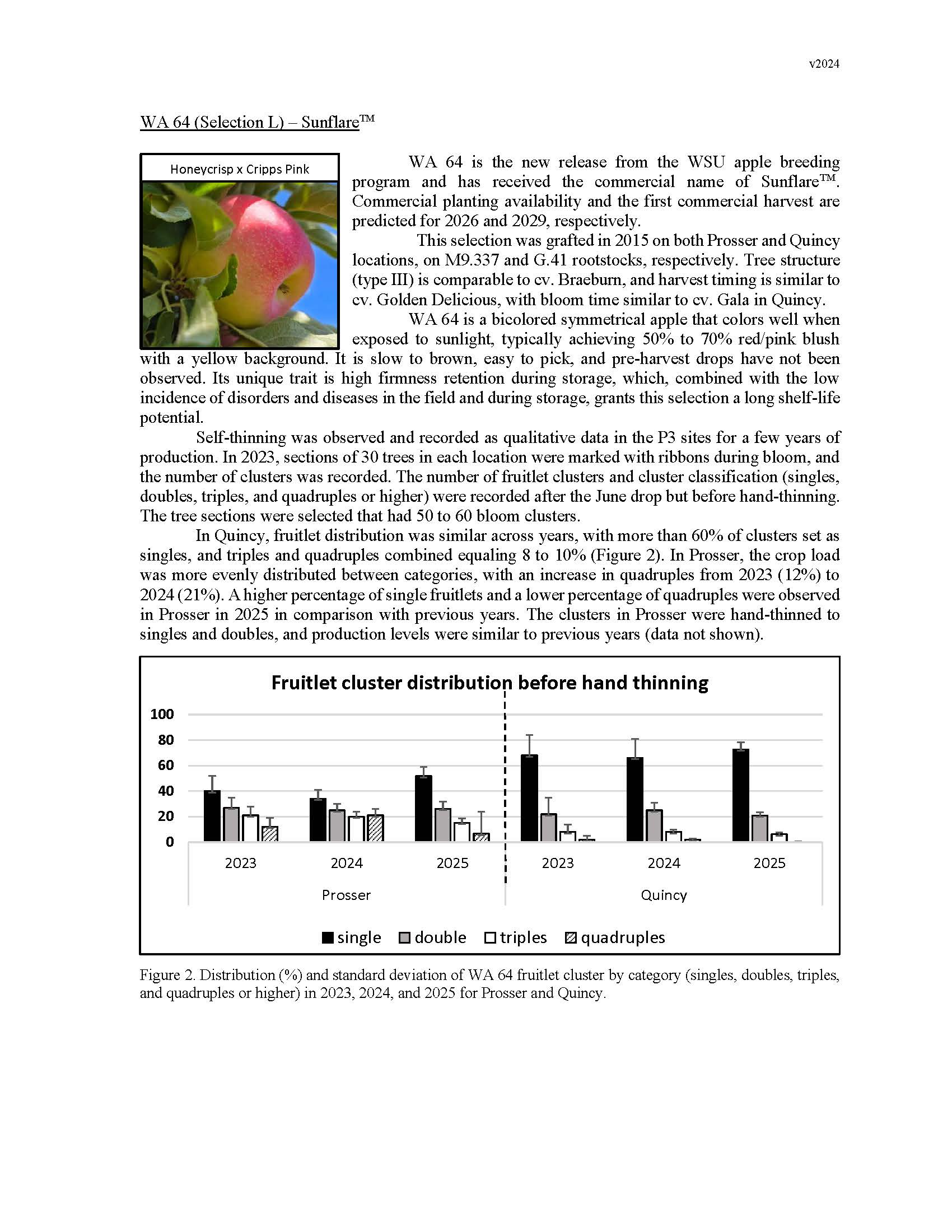
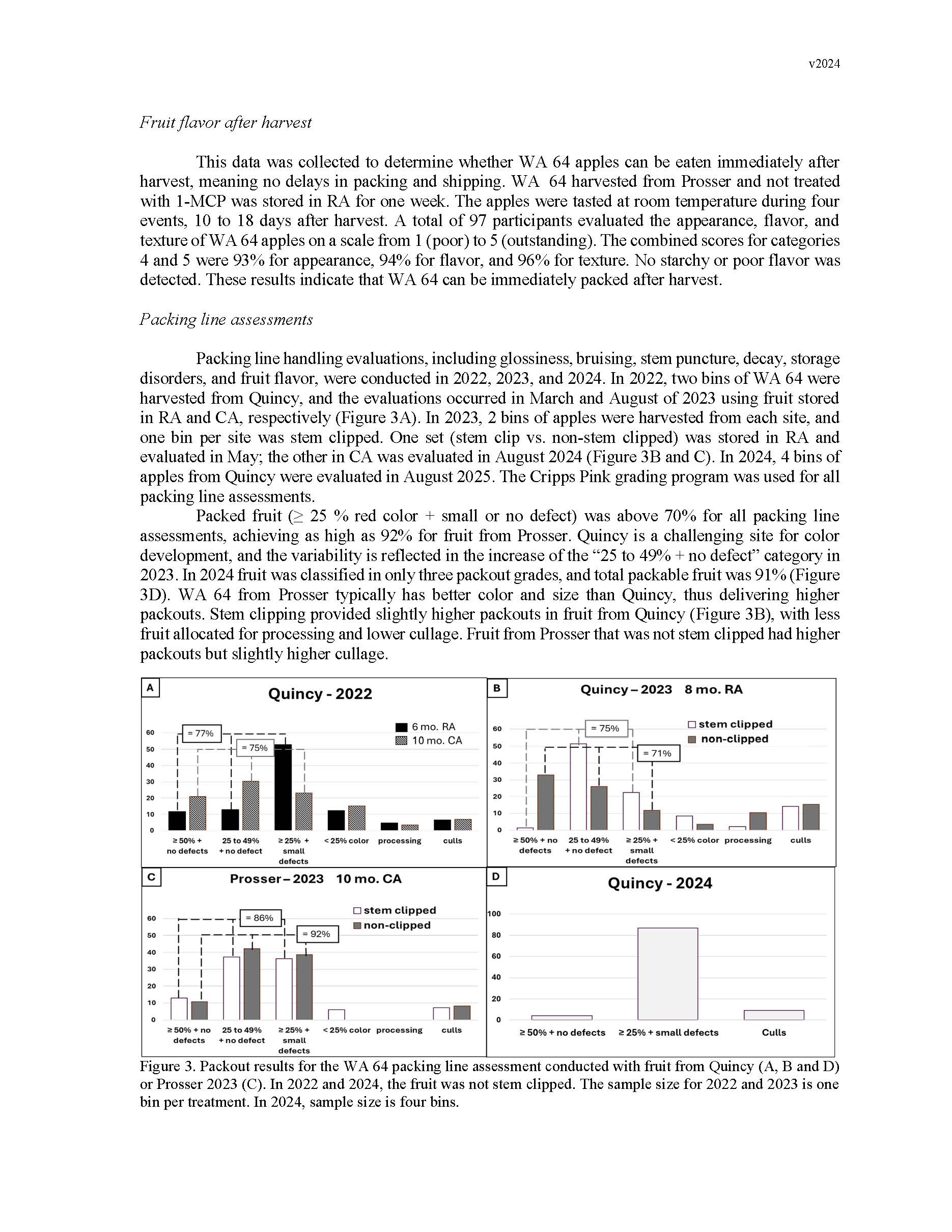
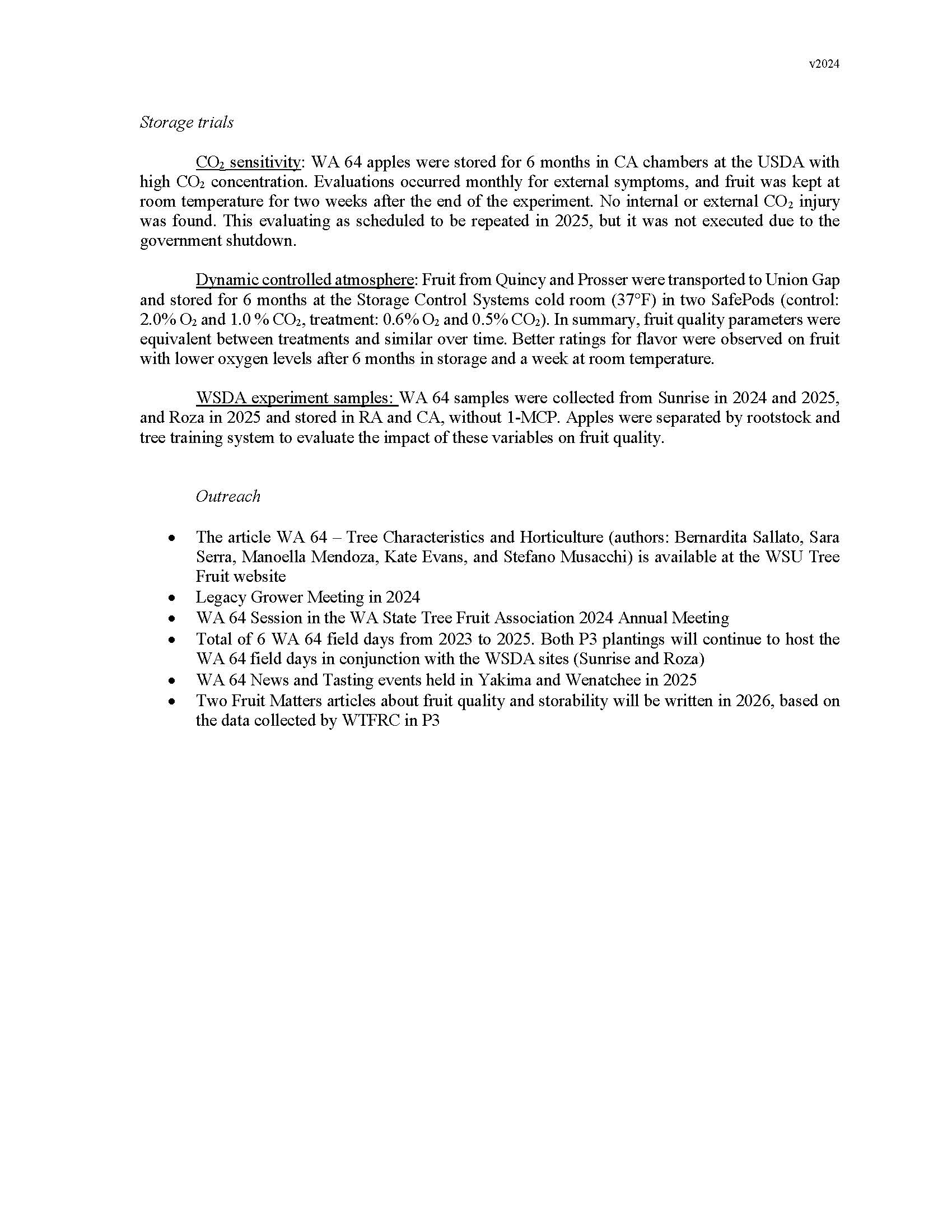
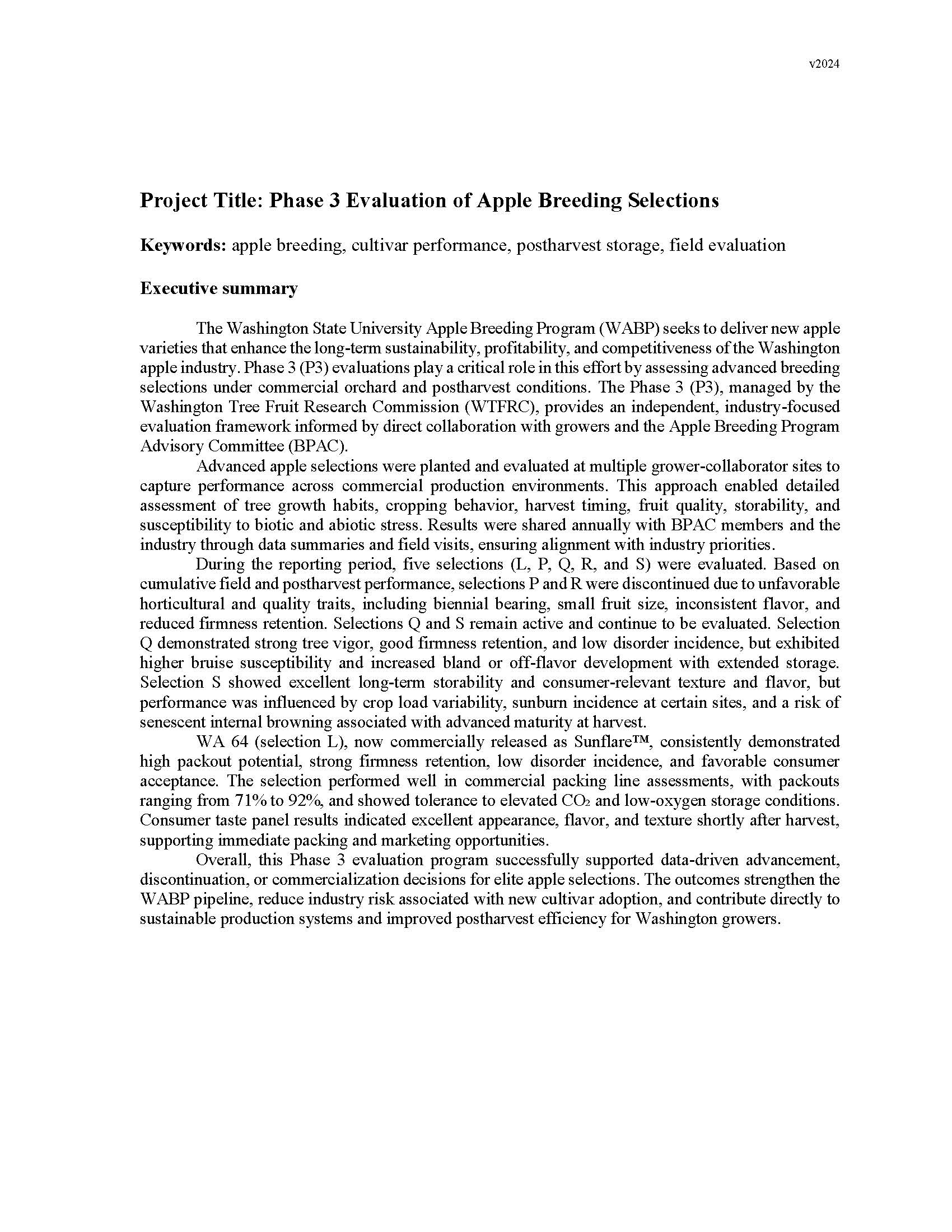
Summary: The Washington State University Apple Breeding Program (WABP) seeks to deliver new apple varieties that enhance the long-term sustainability, profitability, and competitiveness of the Washington apple industry. Phase 3 (P3) evaluations play a critical role in this effort by assessing advanced breeding selections under commercial orchard and postharvest conditions. The Phase 3 (P3), managed by the Washington Tree Fruit Research Commission (WTFRC), provides an independent, industry-focused evaluation framework informed by direct collaboration with growers and the Apple Breeding Program Advisory Committee (BPAC). Advanced apple selections were planted and evaluated at multiple grower-collaborator sites to capture performance across commercial production environments. This approach enabled detailed assessment of tree growth habits, cropping behavior, harvest timing, fruit quality, storability, and susceptibility to biotic and abiotic stress. Results were shared annually with BPAC members and the industry through data summaries and field visits, ensuring alignment with industry priorities. During the reporting period, five selections (L, P, Q, R, and S) were evaluated. Based on cumulative field and postharvest performance, selections P and R were discontinued due to unfavorable horticultural and quality traits, including biennial bearing, small fruit size, inconsistent flavor, and reduced firmness retention. Selections Q and S remain active and continue to be evaluated. Selection Q demonstrated strong tree vigor, good firmness retention, and low disorder incidence, but exhibited higher bruise susceptibility and increased bland or off-flavor development with extended storage. Selection S showed excellent long-term storability and consumer-relevant texture and flavor, but performance was influenced by crop load variability, sunburn incidence at certain sites, and a risk of senescent internal browning associated with advanced maturity at harvest. WA 64 (selection L), now commercially released as Sunflare™, consistently demonstrated high packout potential, strong firmness retention, low disorder incidence, and favorable consumer acceptance. The selection performed well in commercial packing line assessments, with packouts ranging from 71% to 92%, and showed tolerance to elevated CO₂ and low-oxygen storage conditions. Consumer taste panel results indicated excellent appearance, flavor, and texture shortly after harvest, supporting immediate packing and marketing opportunities. Overall, this Phase 3 evaluation program successfully supported data-driven advancement, discontinuation, or commercialization decisions for elite apple selections. The outcomes strengthen the WABP pipeline, reduce industry risk associated with new cultivar adoption, and contribute directly to sustainable production systems and improved postharvest efficiency for Washington growers.