Life Cycle Assessment for Apple Production in the Pacific
Author: Greg Thoma
Published: 2026
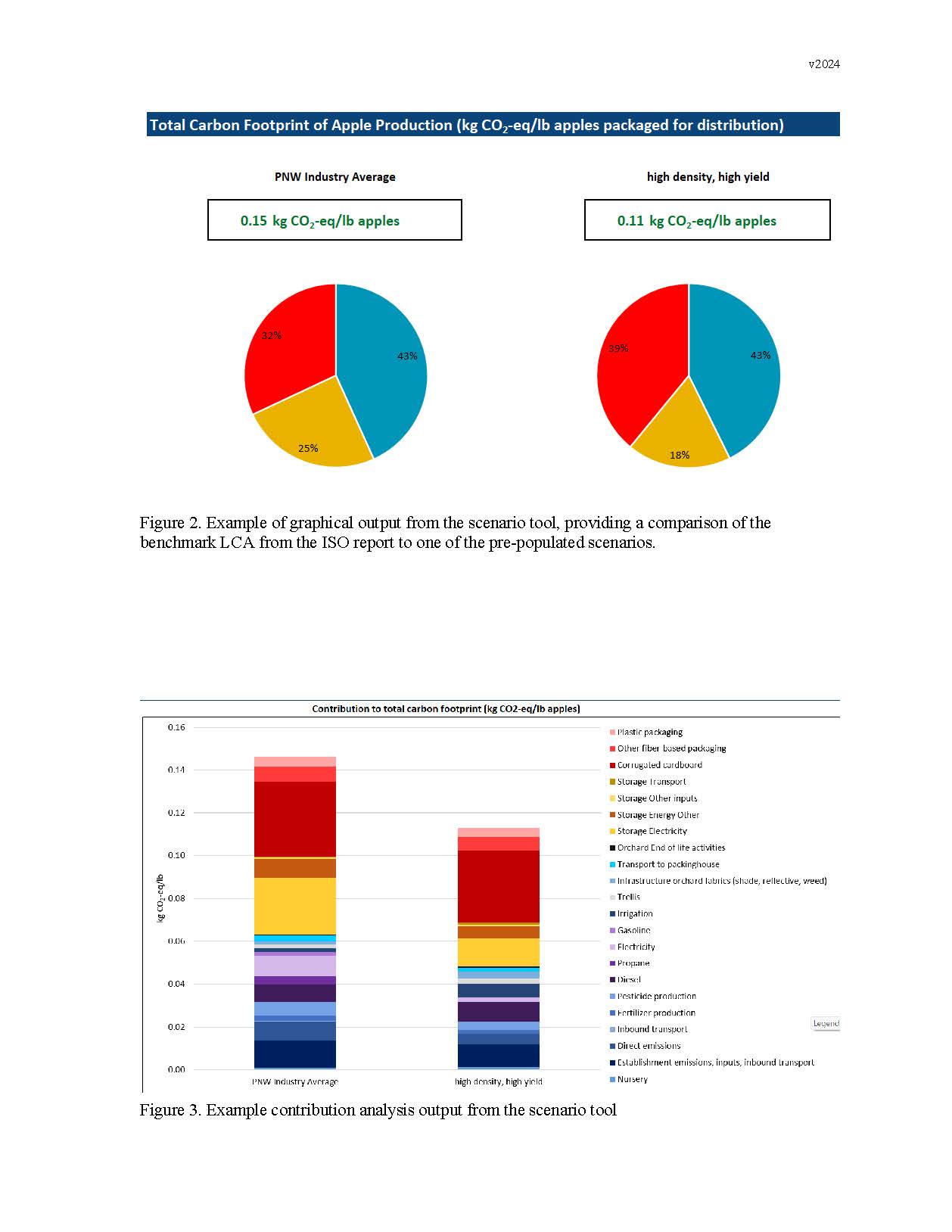
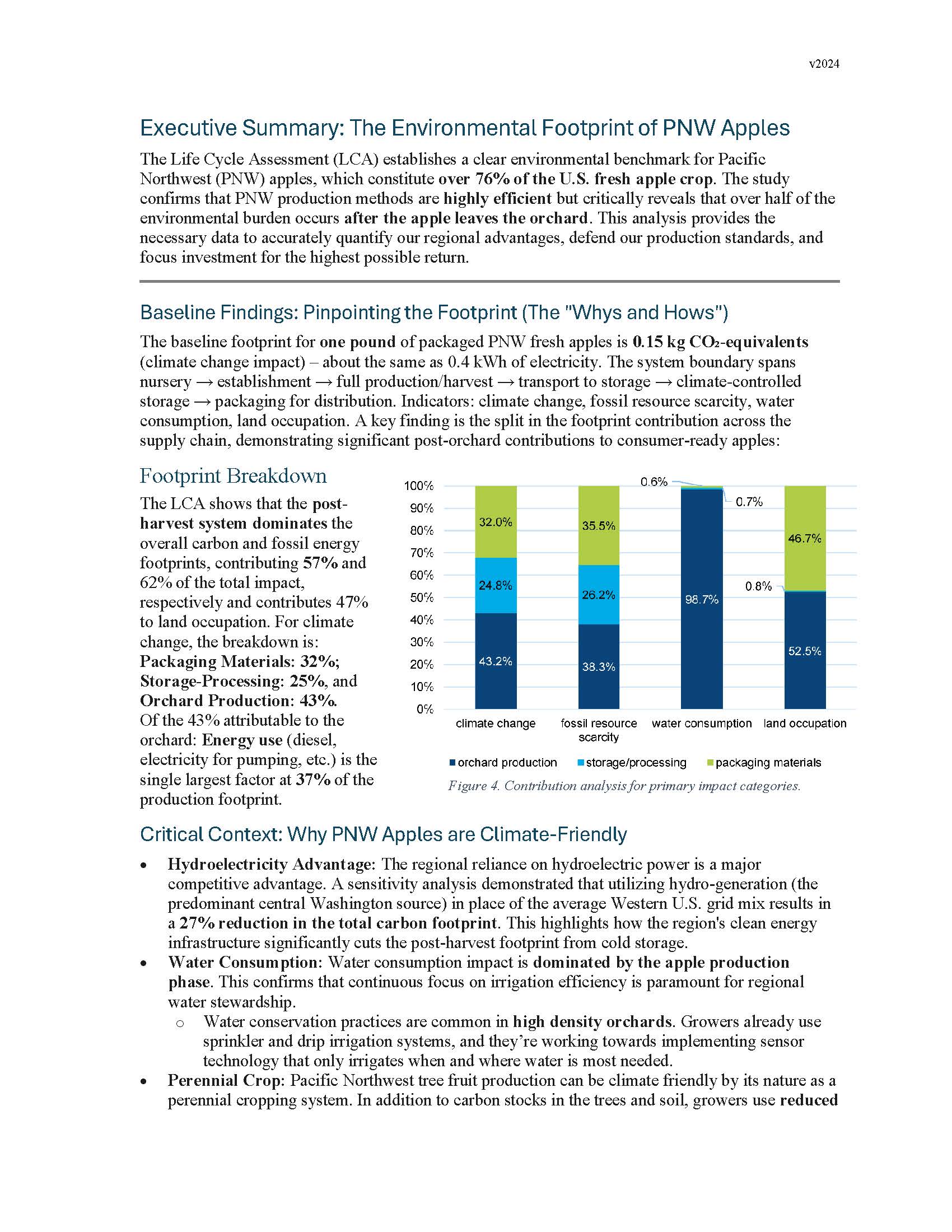
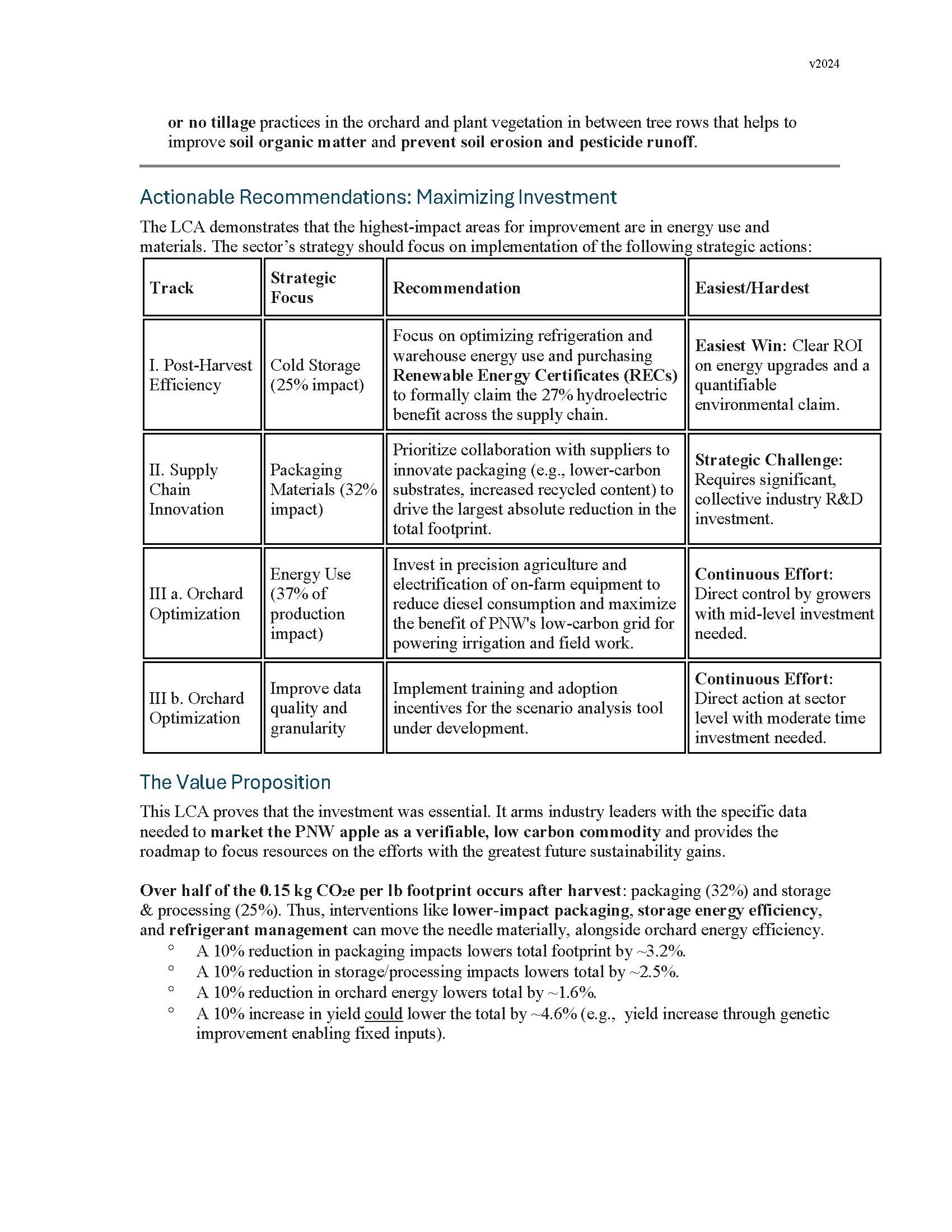
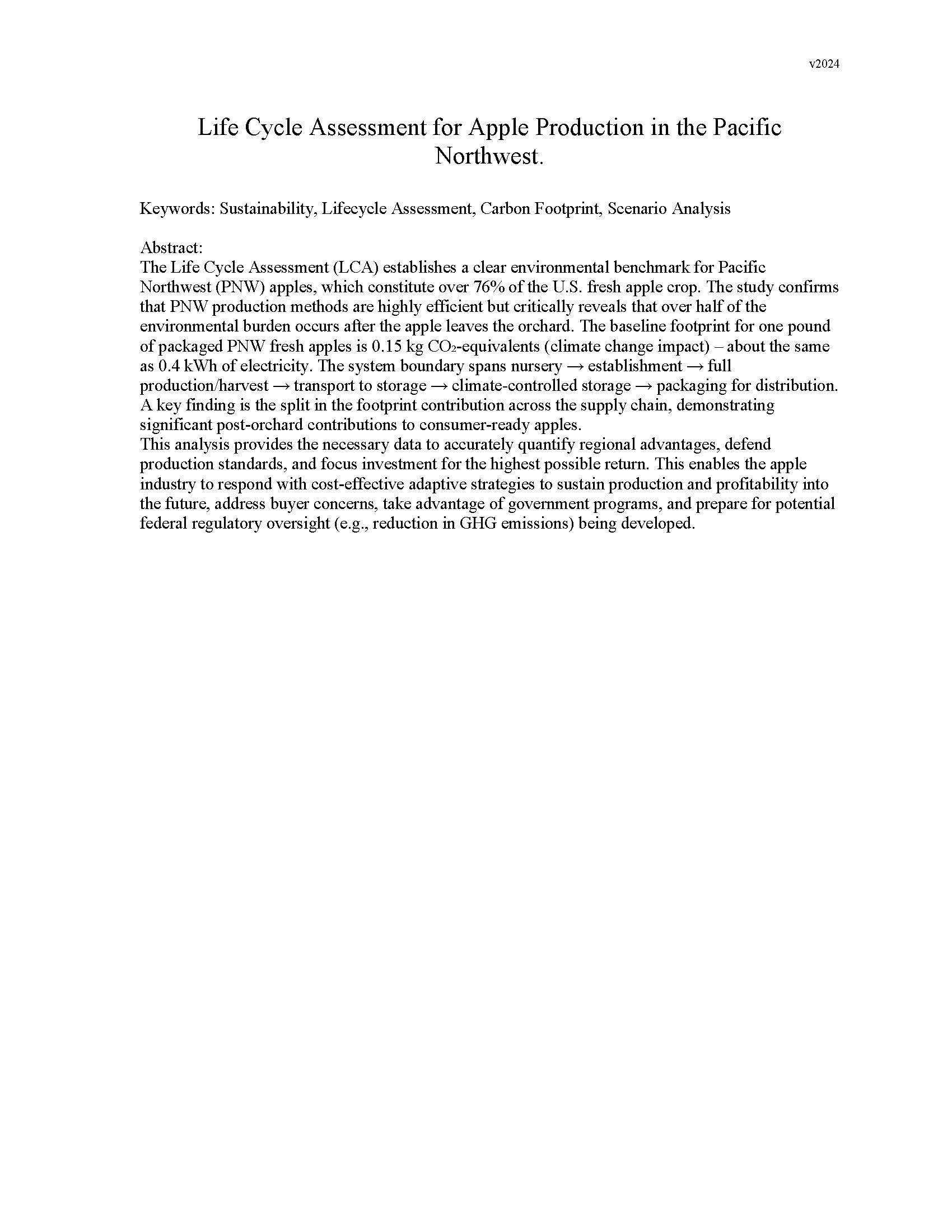
Summary: The Life Cycle Assessment (LCA) establishes a clear environmental benchmark for Pacific Northwest (PNW) apples, which constitute over 76% of the U.S. fresh apple crop. The study confirms that PNW production methods are highly efficient but critically reveals that over half of the environmental burden occurs after the apple leaves the orchard. The baseline footprint for one pound of packaged PNW fresh apples is 0.15 kg CO₂-equivalents (climate change impact) – about the same as 0.4 kWh of electricity. The system boundary spans nursery → establishment → full production/harvest → transport to storage → climate‑controlled storage → packaging for distribution. A key finding is the split in the footprint contribution across the supply chain, demonstrating significant post-orchard contributions to consumer-ready apples. This analysis provides the necessary data to accurately quantify regional advantages, defend production standards, and focus investment for the highest possible return. This enables the apple industry to respond with cost-effective adaptive strategies to sustain production and profitability into the future, address buyer concerns, take advantage of government programs, and prepare for potential federal regulatory oversight (e.g., reduction in GHG emissions) being developed.