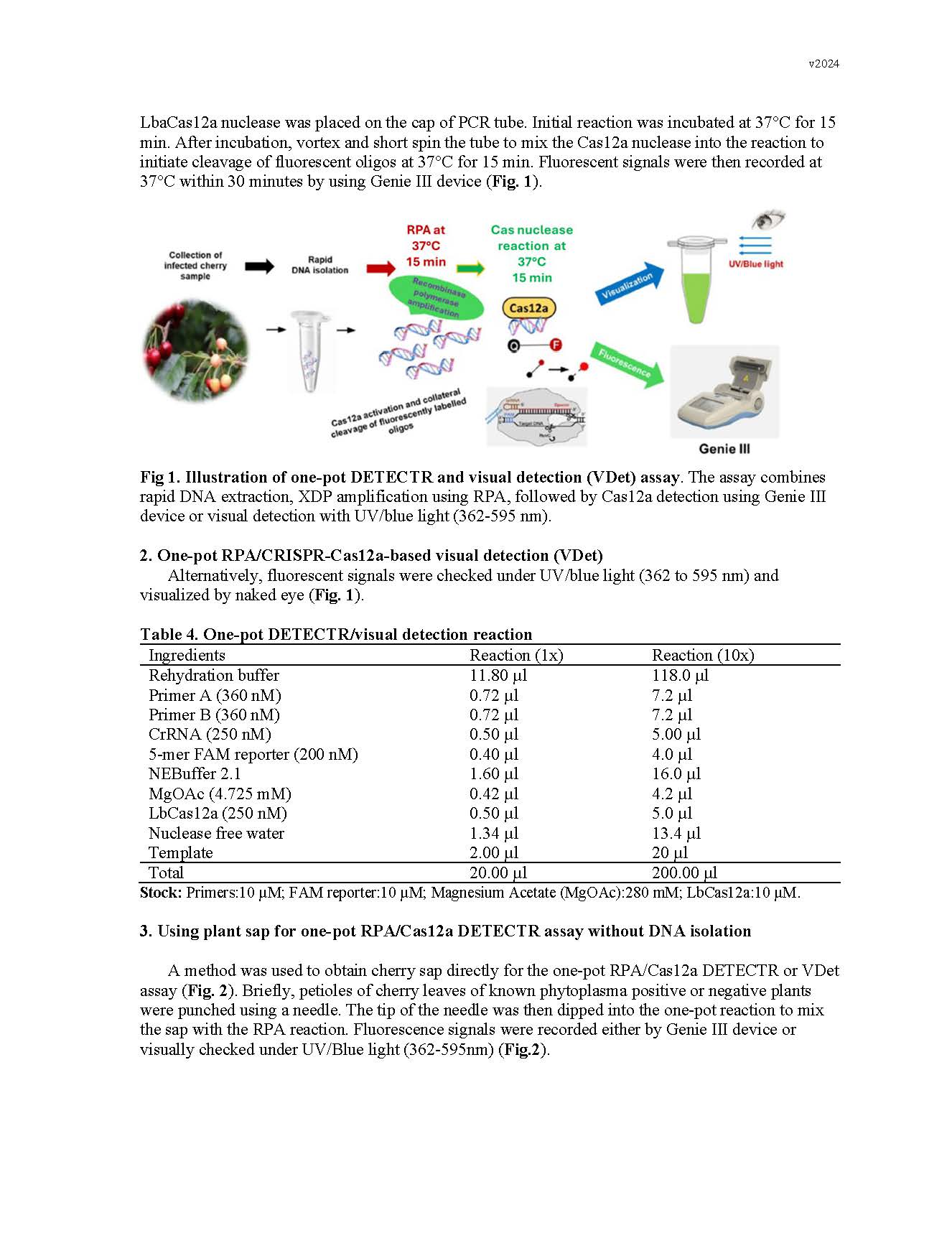
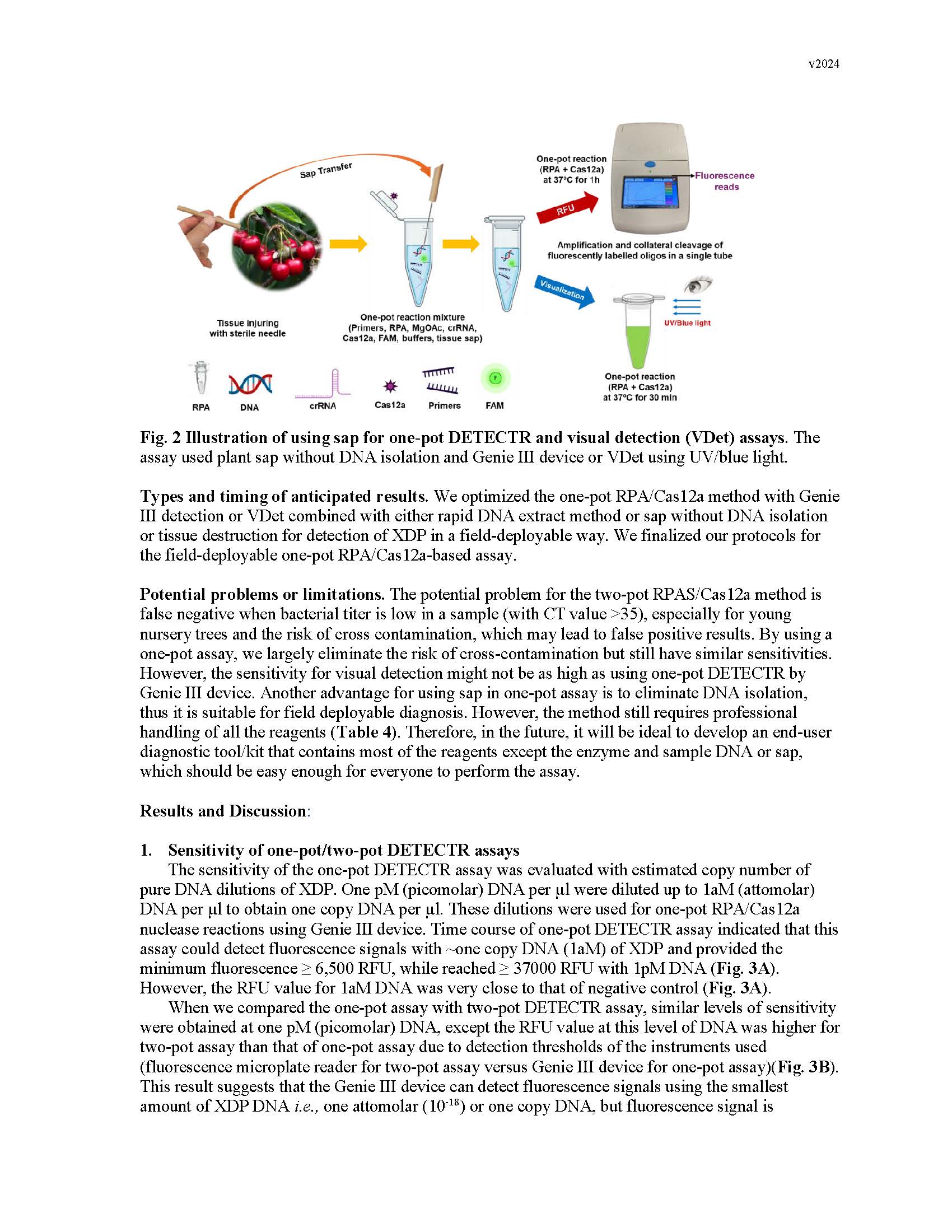
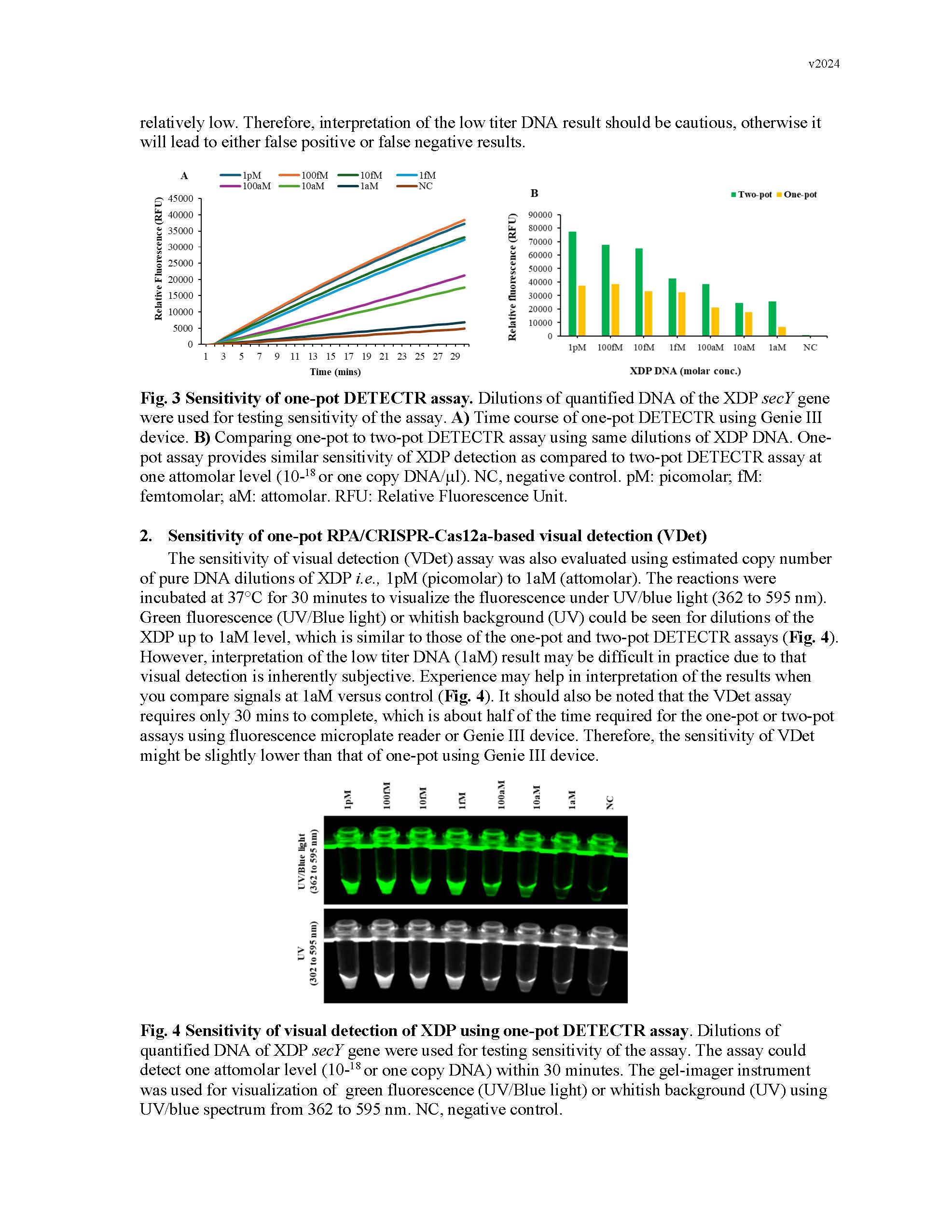
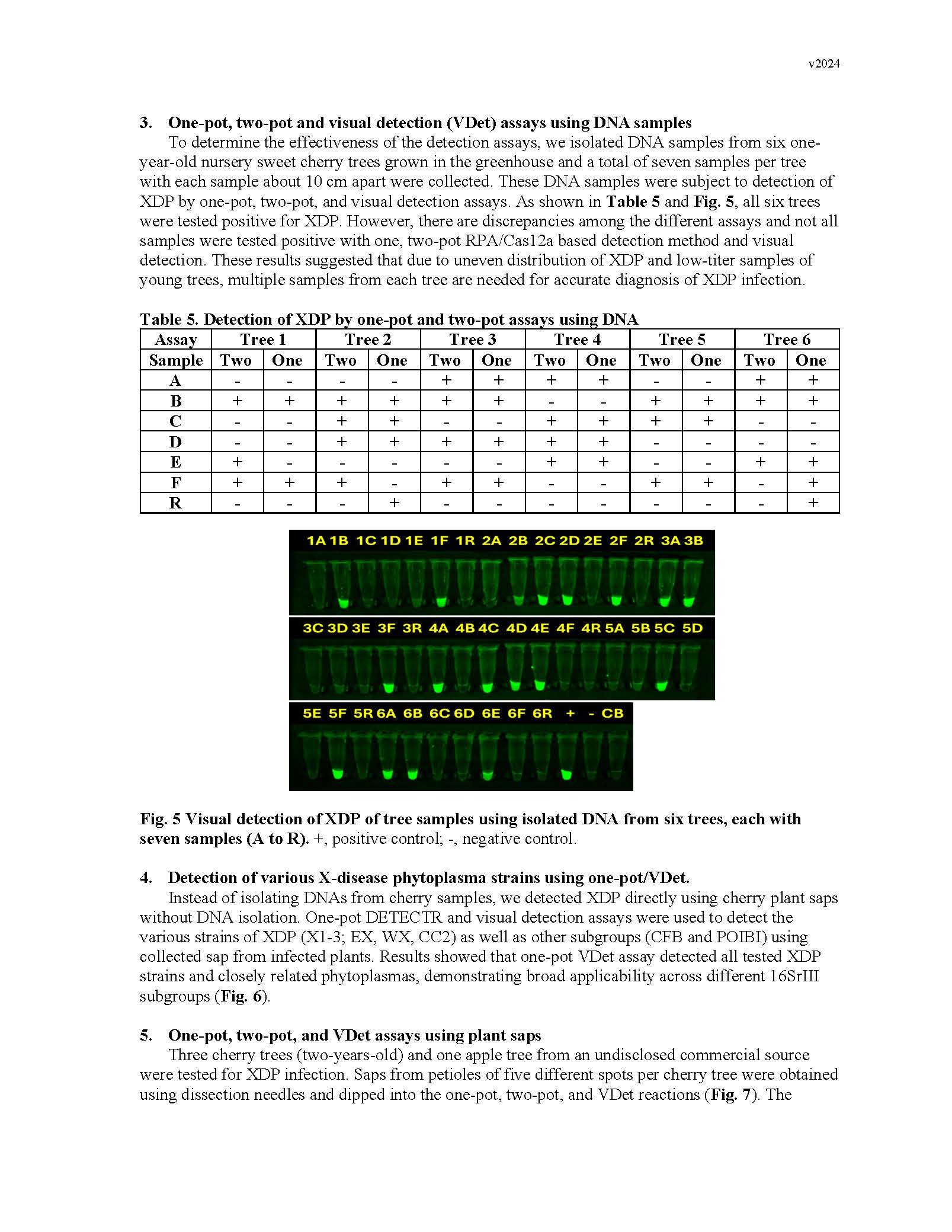
A field-deployable diagnosis of XDP based on optimized Cas12a method
Author: Dr. Youfu “Frank” Zhao
Published: 2027
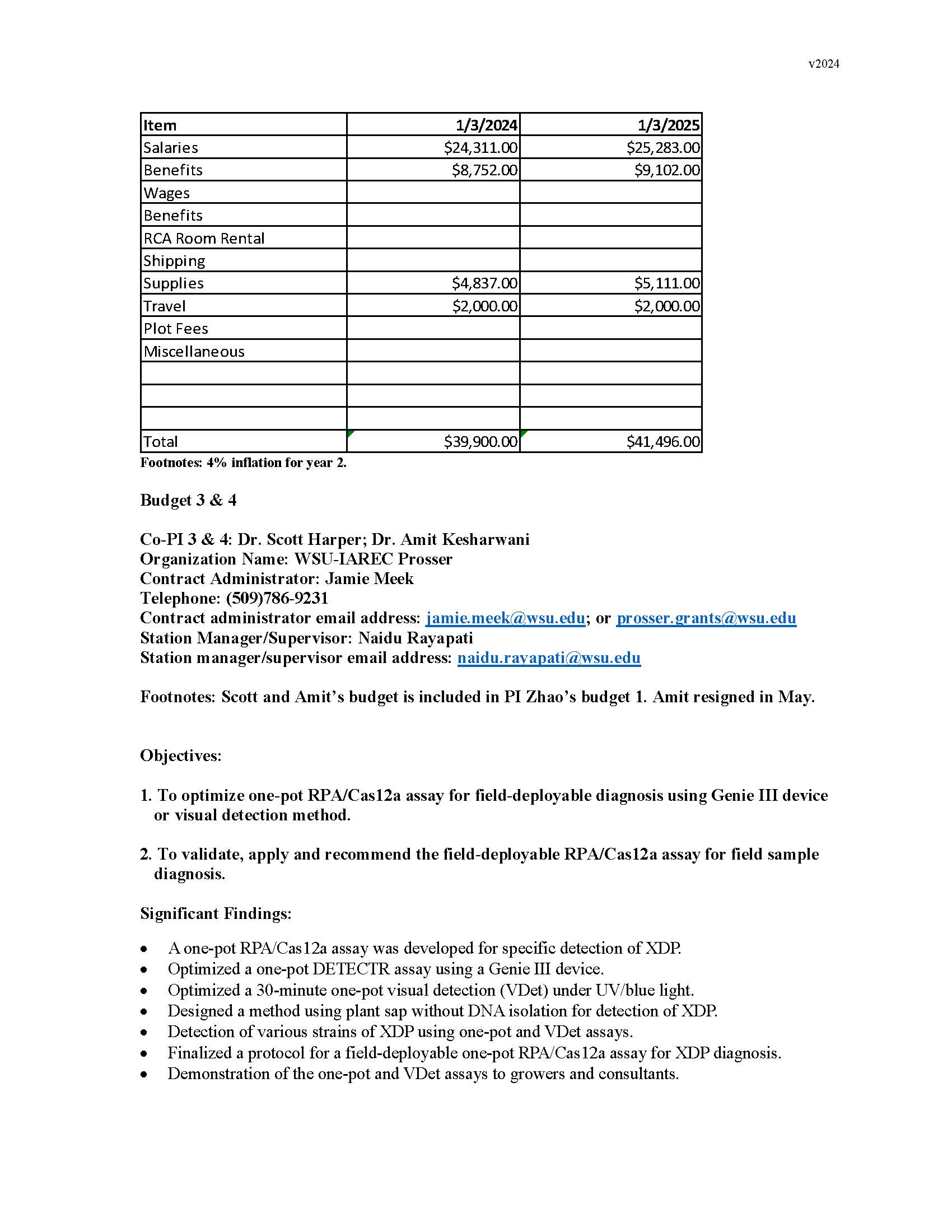
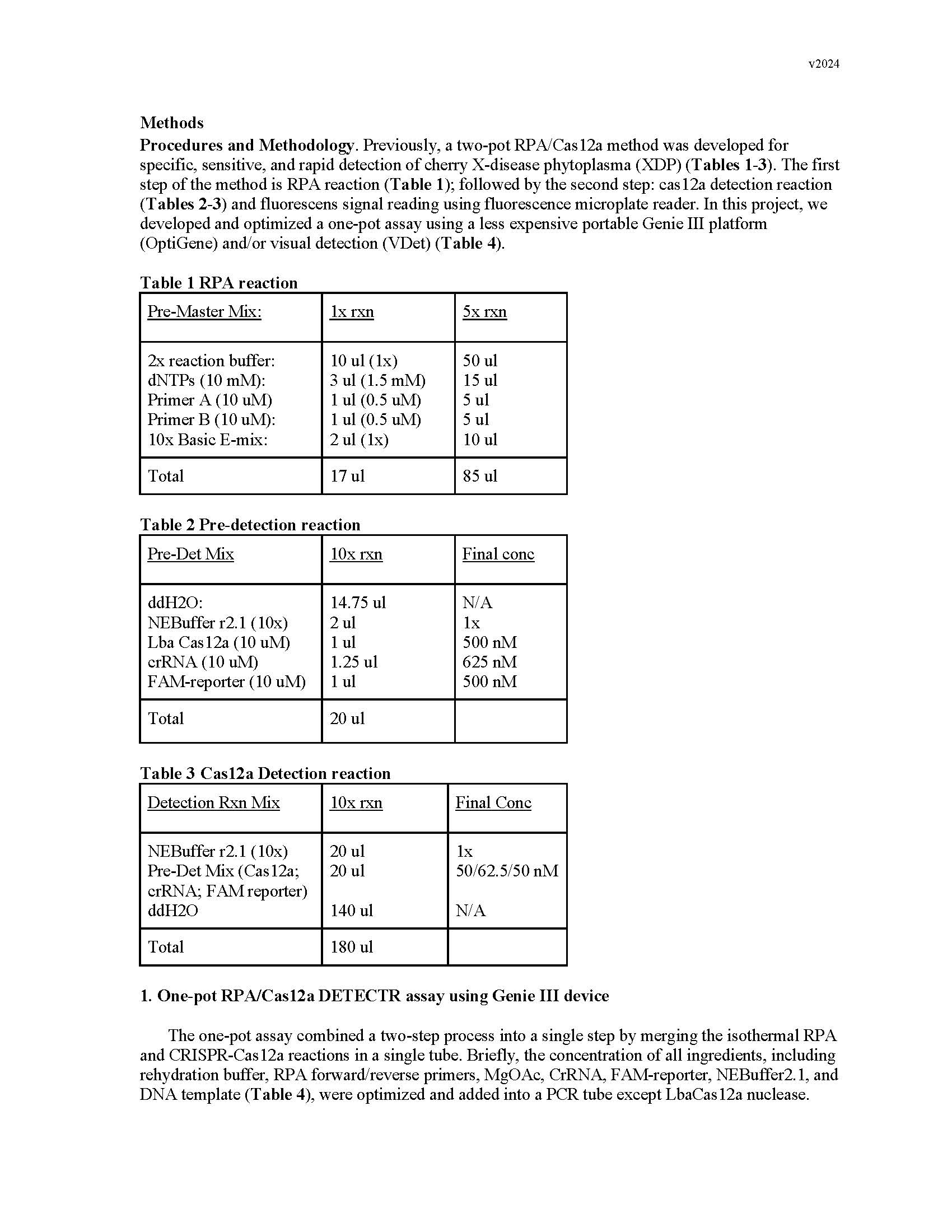
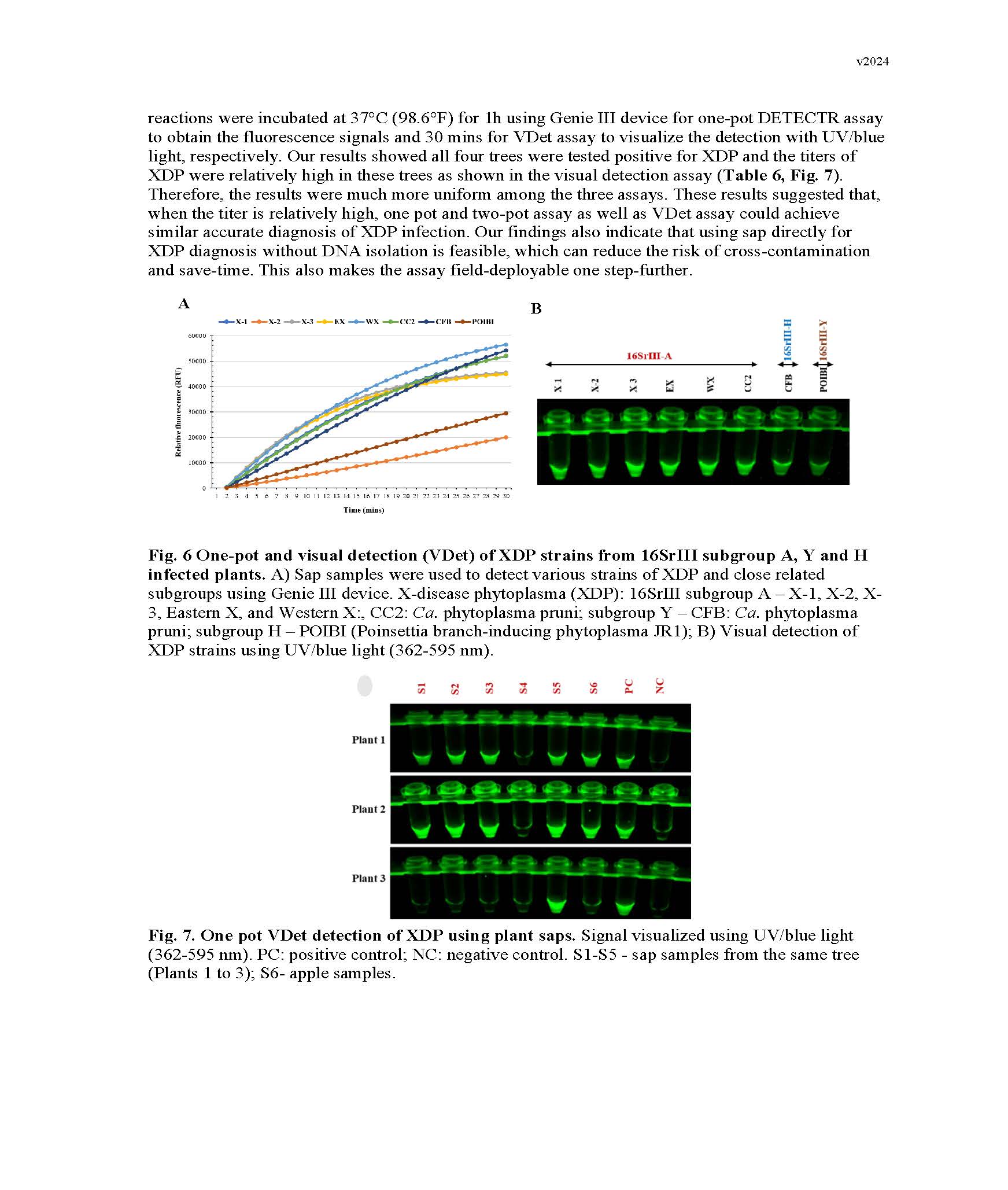
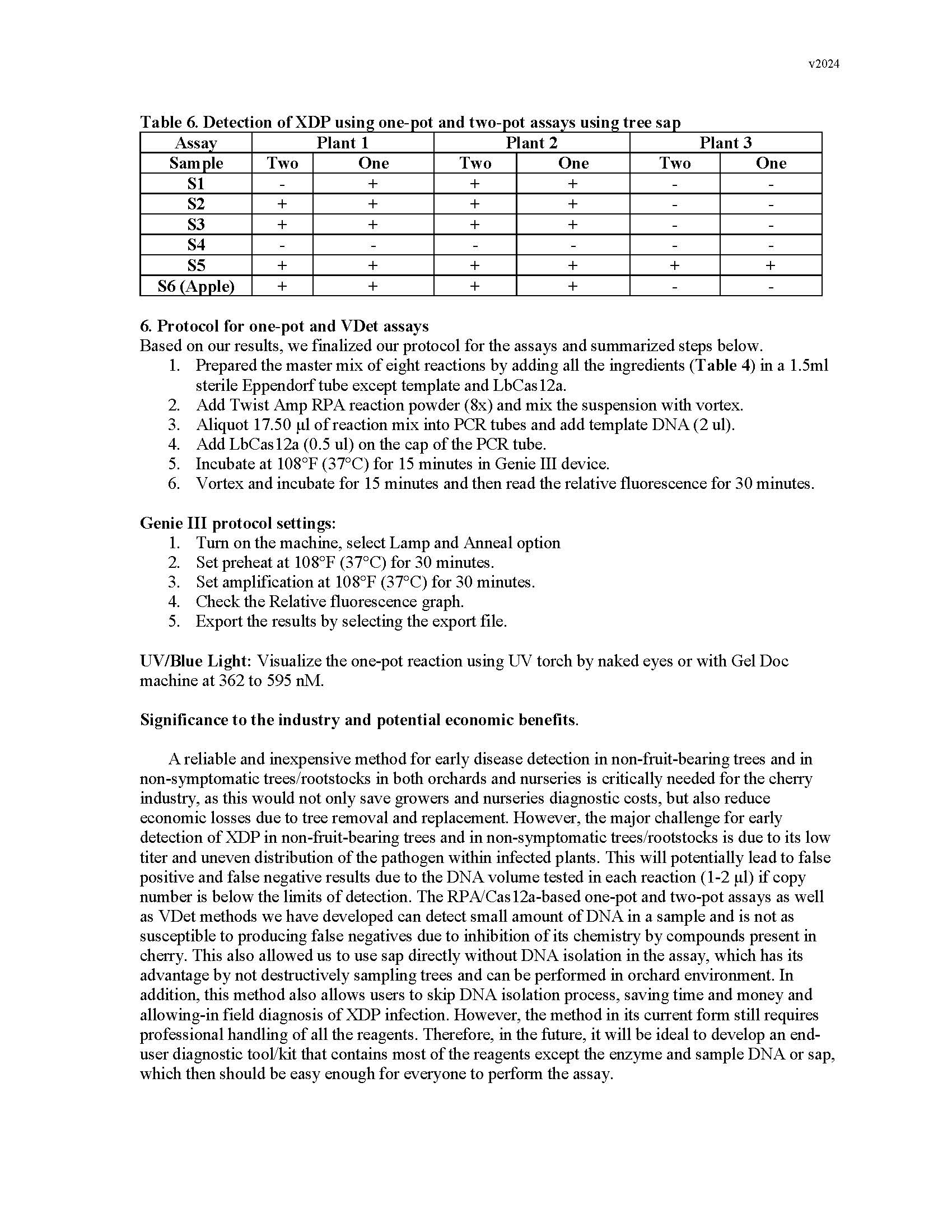
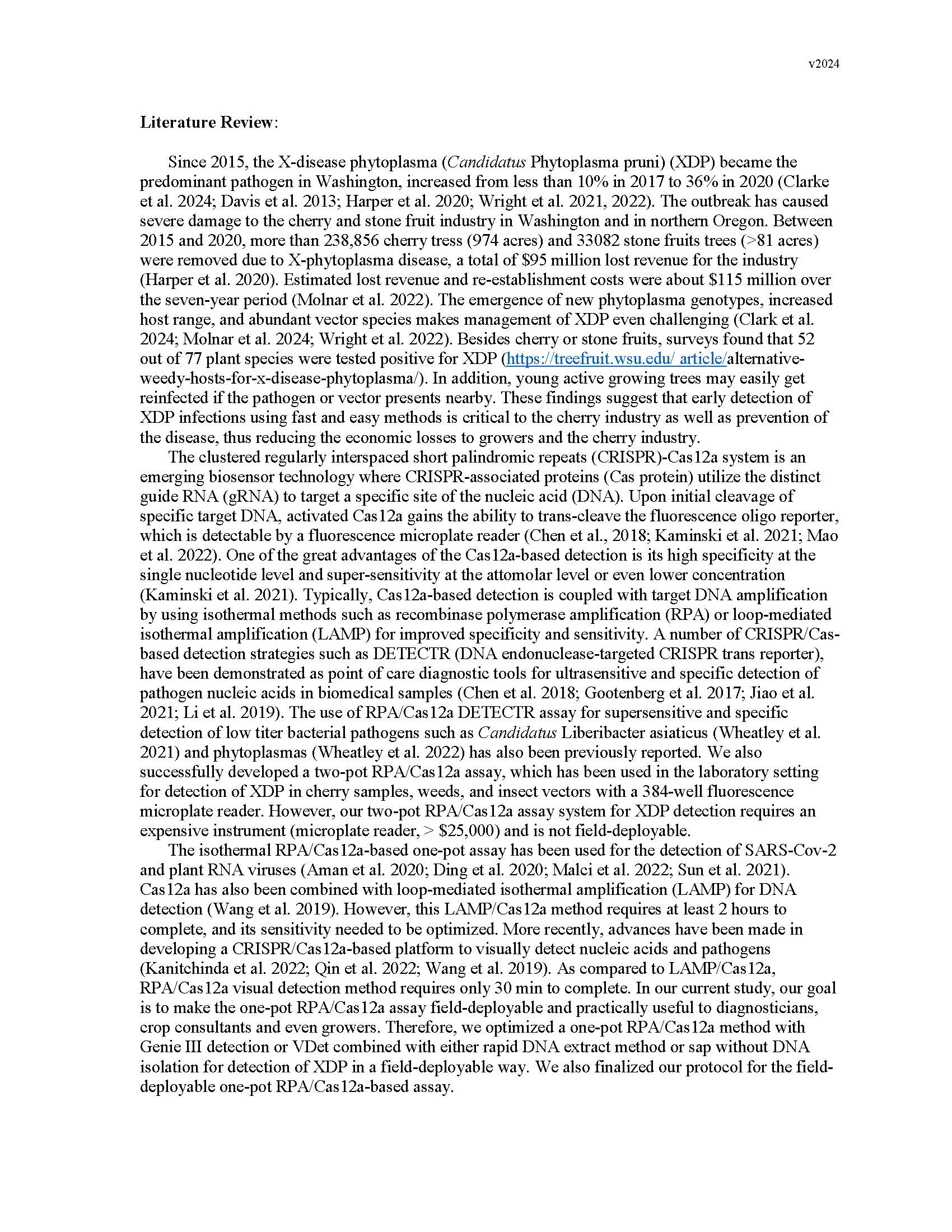
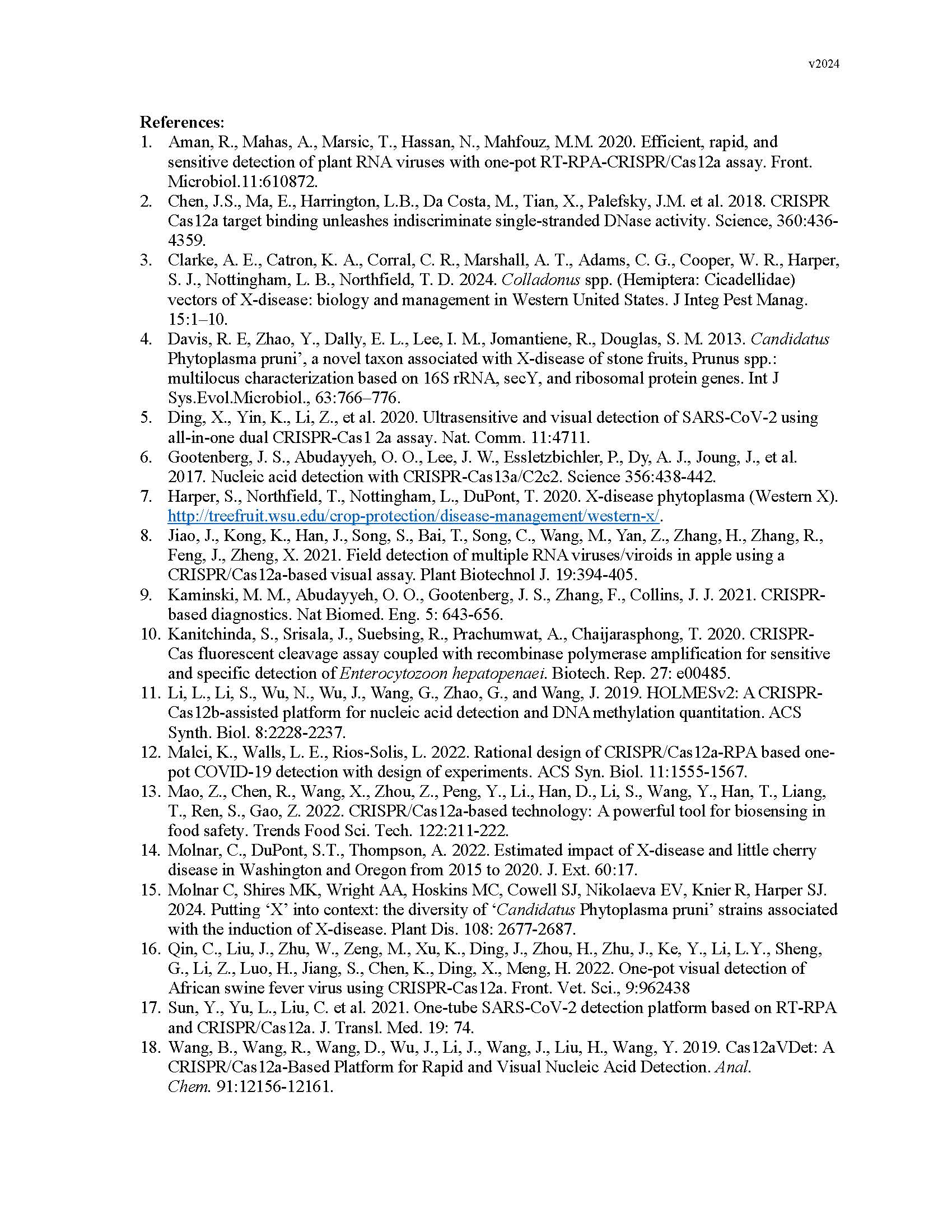
Summary: The cherry X-disease is at epidemic levels in the Pacific Northwest and has caused significant economic losses. A reliable and inexpensive method for early disease detection in non-fruit-bearing trees and in non-symptomatic trees/rootstocks in both orchards and nurseries is critically needed for the cherry industry, as this would not only save growers and nurseries diagnostic costs, but also reduce economic losses due to tree removal and replacement. However, the major challenge for early detection of XDP in non-fruit-bearing trees and in non-symptomatic trees/rootstocks is due to its low titer and uneven distribution of the pathogen within infected plants. A two-pot recombinase polymerase amplification (RPA)/Cas12a diagnostic assay for detection of XDP has been previously established, which is capable of specific, sensitive and rapid detection of XDP-infected samples from the field. However, the assay requires an expensive fluorescence microplate reader and has a high risk of cross-contamination. In this study, we developed and optimized a one-pot RPA/Cas12a assay using a less-expensive portable Genie III platform and a 30-minute one-pot visual detection (VDet) assay under UV/blue light. This method also allows us to apply plant sap directly without DNA isolation for detection of XDP, thus permitting in field diagnosis of XDP infection. Finally, we finalized a protocol for a field-deployable one-pot RPA/Cas12a assay for XDP diagnosis. In summary, the RPA/Cas12a assays for XDP detection not only provide the industry with a much-needed platform for fast, supersensitive, and accurate diagnosis, but also save time and money for both growers and nurseries. However, the method in its current form still requires professional handling of all the reagents. Future studies should focus on developing an end-user diagnostic tool/kit that contains most of the reagents except the enzyme and sample DNA or sap, which should be easy for everyone to perform.