Assessing and supporting effective areawide pear pest management
Author: Dr. Robert Orpet
Published: 2026
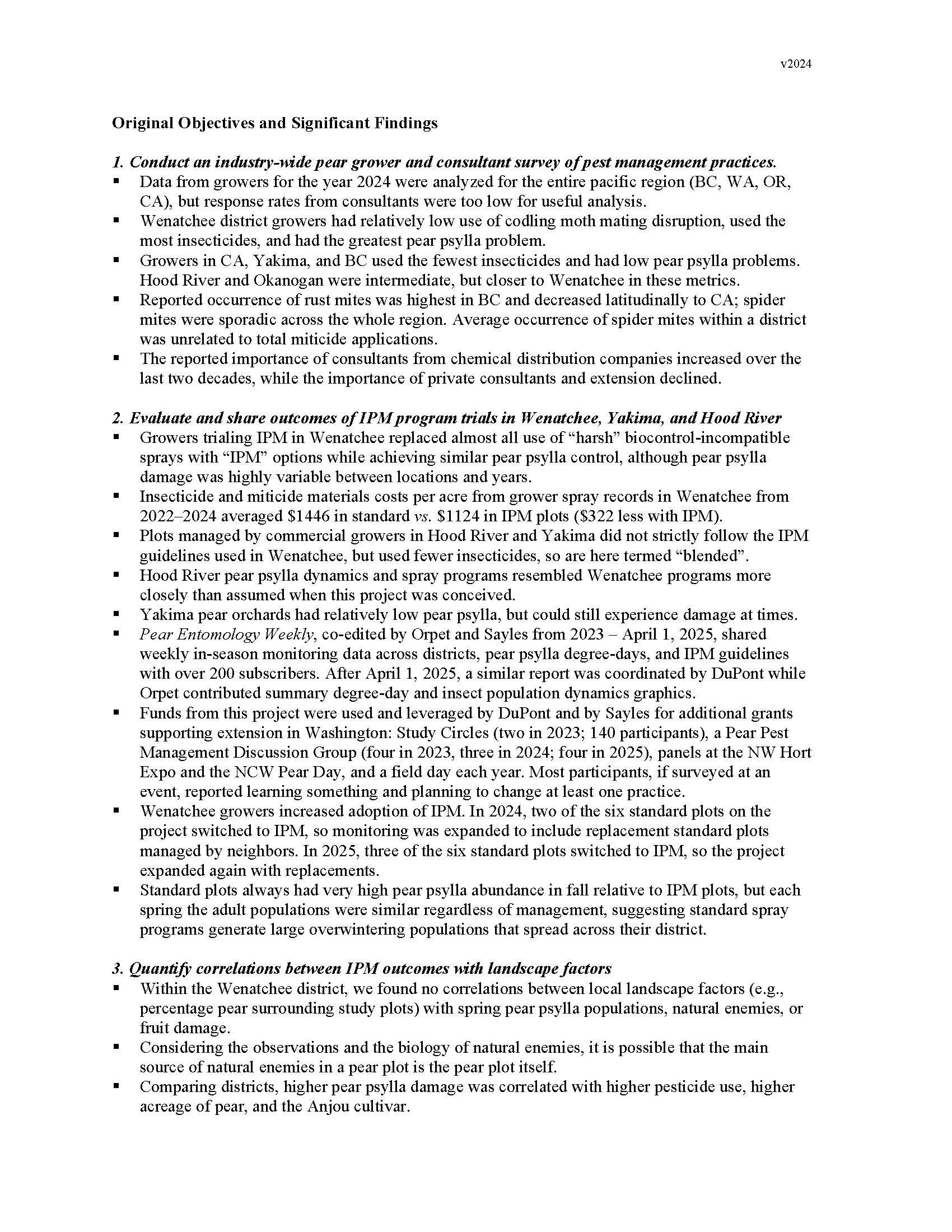
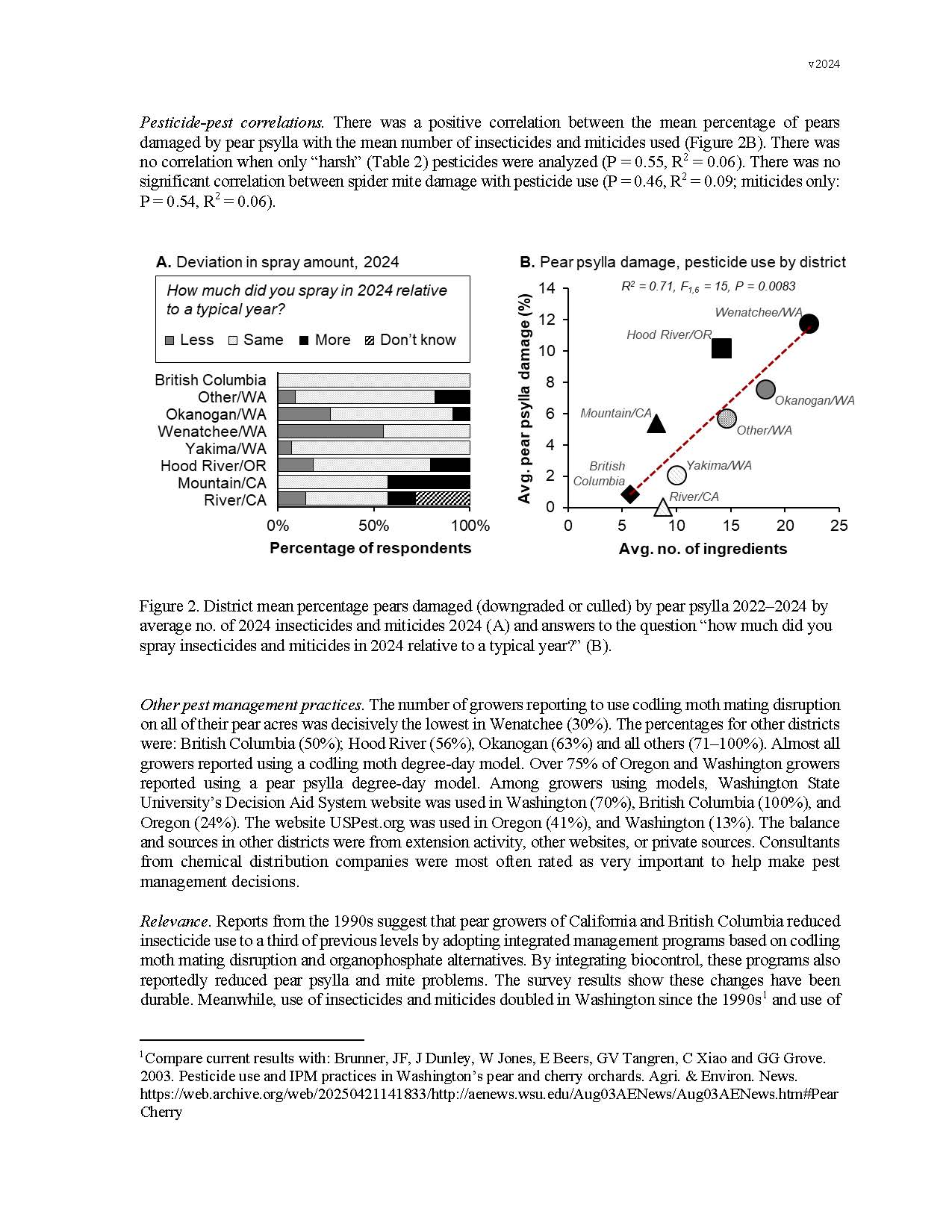
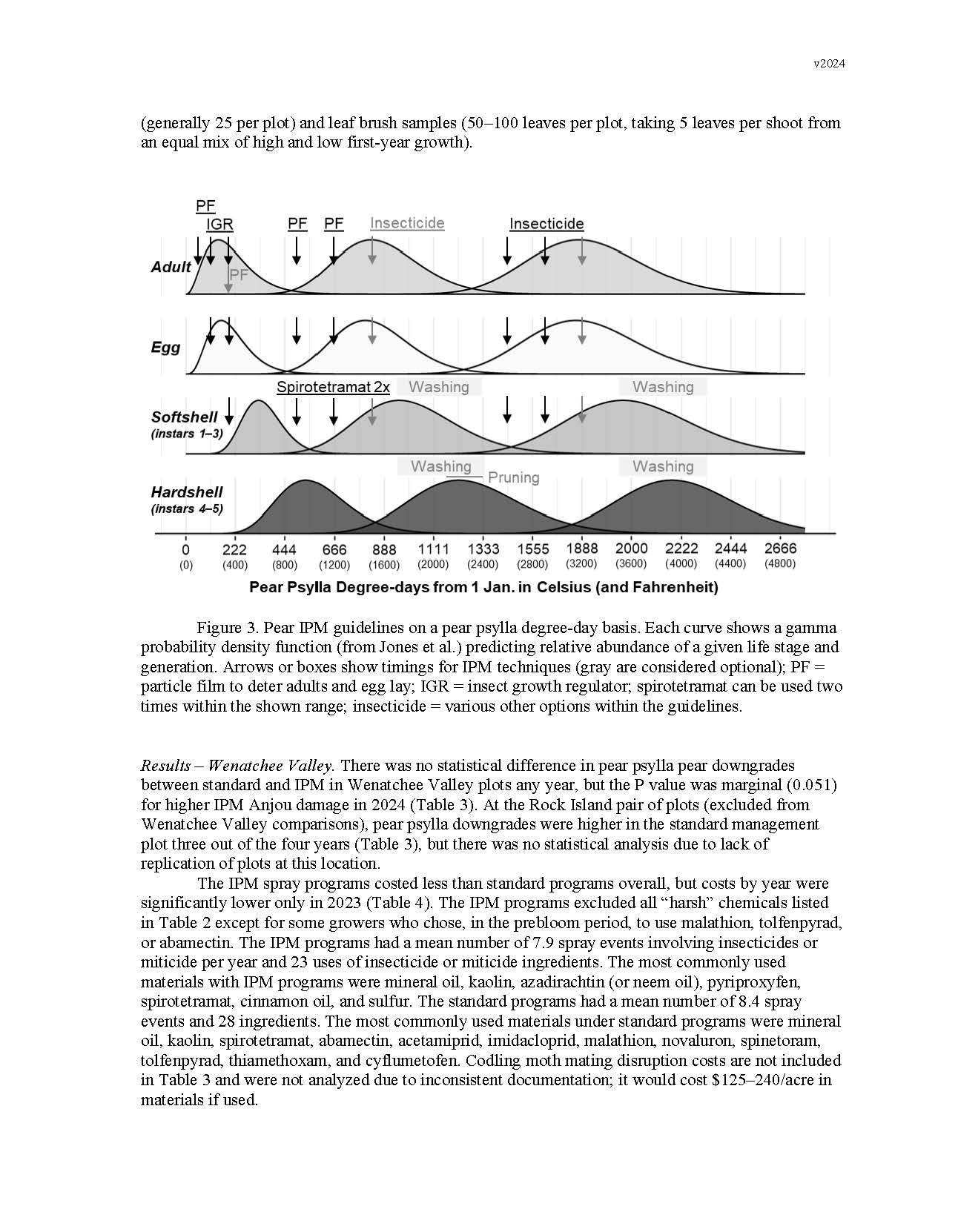
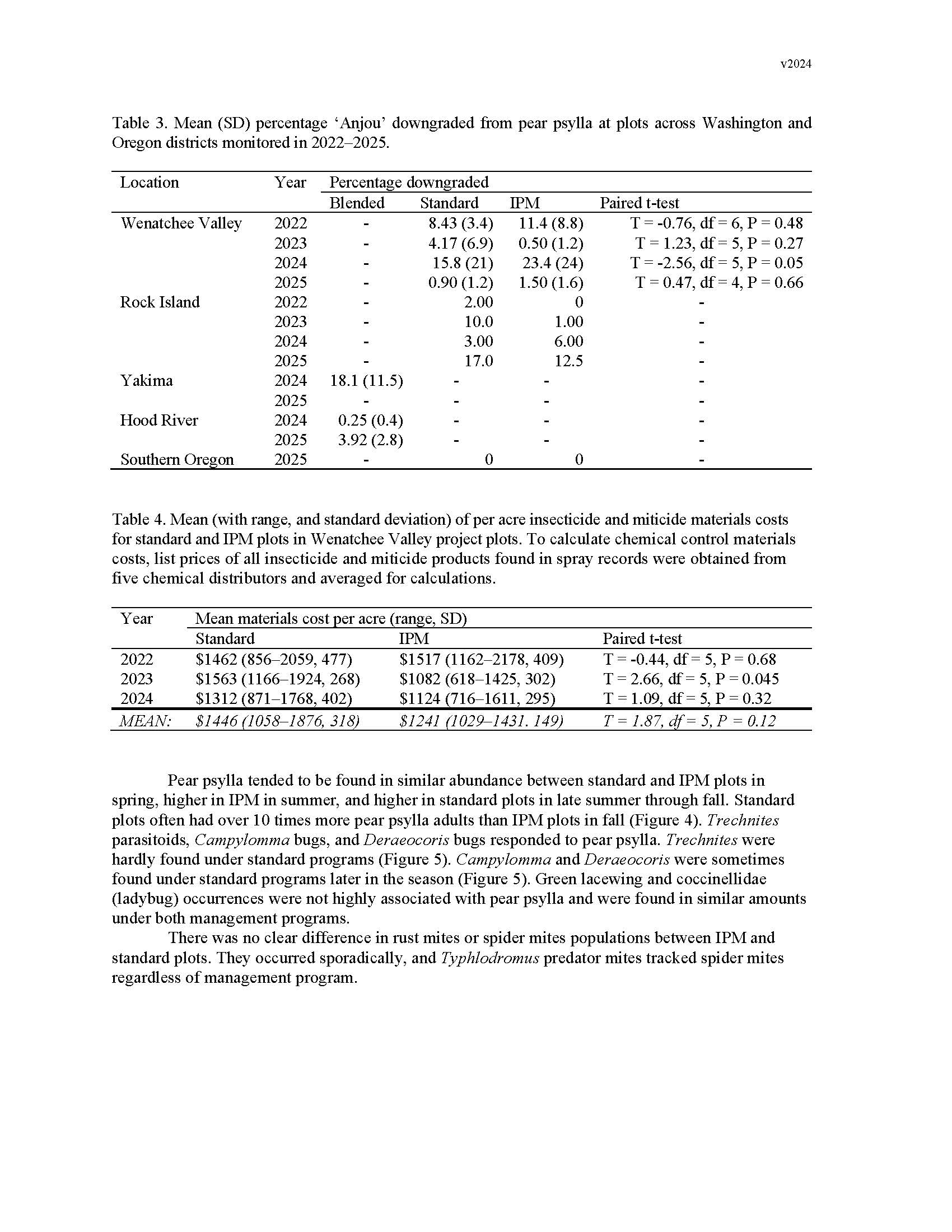
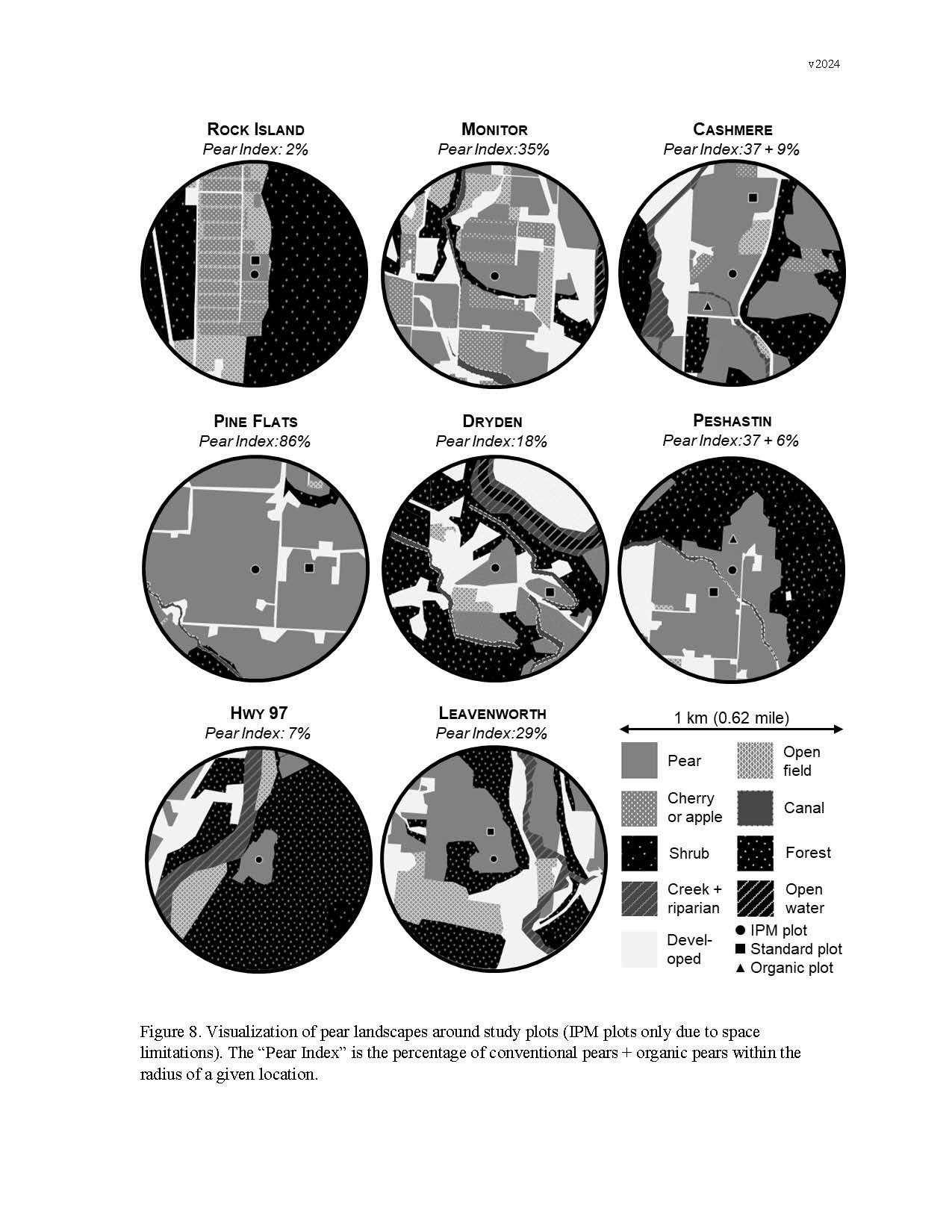
Summary: This project was designed to produce and share information that would help pear growers reduce chemical control costs while reducing damage of the key pest pear psylla by using an integrated pest management program (IPM) that conserves biocontrol. A survey was conducted and found that growers in Wenatchee used the most pesticides yet had the greatest pear psylla problem. An IPM program was designed for use in Wenatchee. It was built around a pear psylla phenology model for spray timings and a list of biocontrol-compatible spray options. The program was evaluated in commercial orchards from 2022–2025. The growers reduced spray costs in IPM plots in most years, but retained higher pesticide use than other districts through extensive applications of kaolin, azadirachtin, cinnamon oil, and other chemicals. The program resulted in similar pear psylla as standard programs. In Hood River and Yakima, growers meant to be trialing IPM programs ended up using blended programs that reduced but did not eliminate sprays excluded in the IPM guidelines, and outcomes were variable. Local and large-scale landscape factors were considered. Hood River pesticide use and pear psylla abundance was more similar to Wenatchee than we had assumed when the project was designed. Characteristics of Wenatchee and Hood River that may be associated with high pear psylla pressure relative to other districts includes high pesticide use (potential impairing biocontrol and causing pest resurgence), high pear acreage, and the Anjou cultivar. Notably, standard plots in Wenatchee generated very high overwintering pear psylla population in fall relative to IPM plots, but adult counts became similar between plots in spring. Overwintering pear psylla adults are known to be highly dispersive. It stands to reason that areawide adoption of IPM decreases pear psylla pressure across a district. An extensive program of field days, discussion groups, and newsletters shared data from the project, and adoption of IPM increased during the project. The survey and insect monitoring results here provide a conceptual basis for pear IPM and baseline data to compare with in the future.