Assessing effects of orchard management on codling moth ecology
Author: David Crowder
Published: 2026
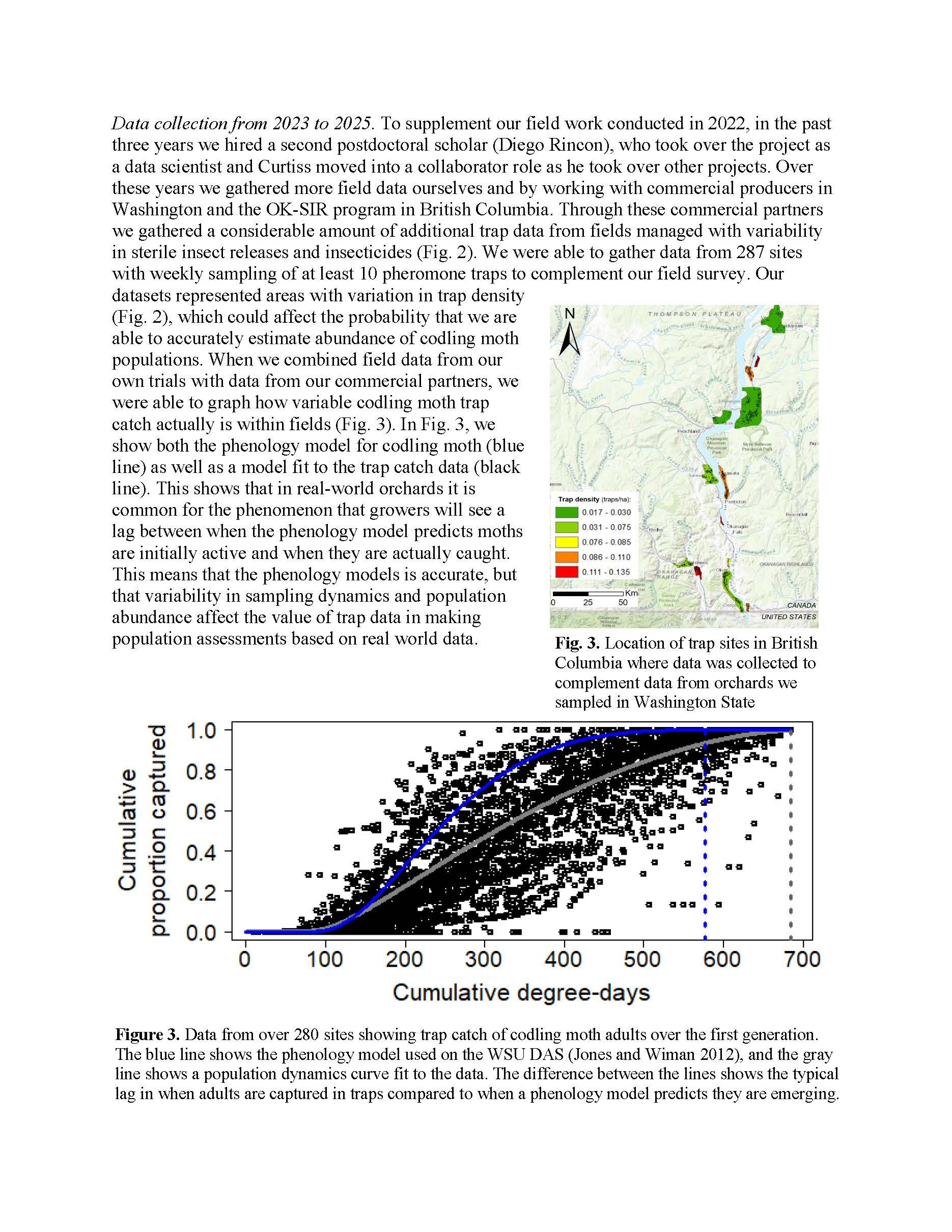
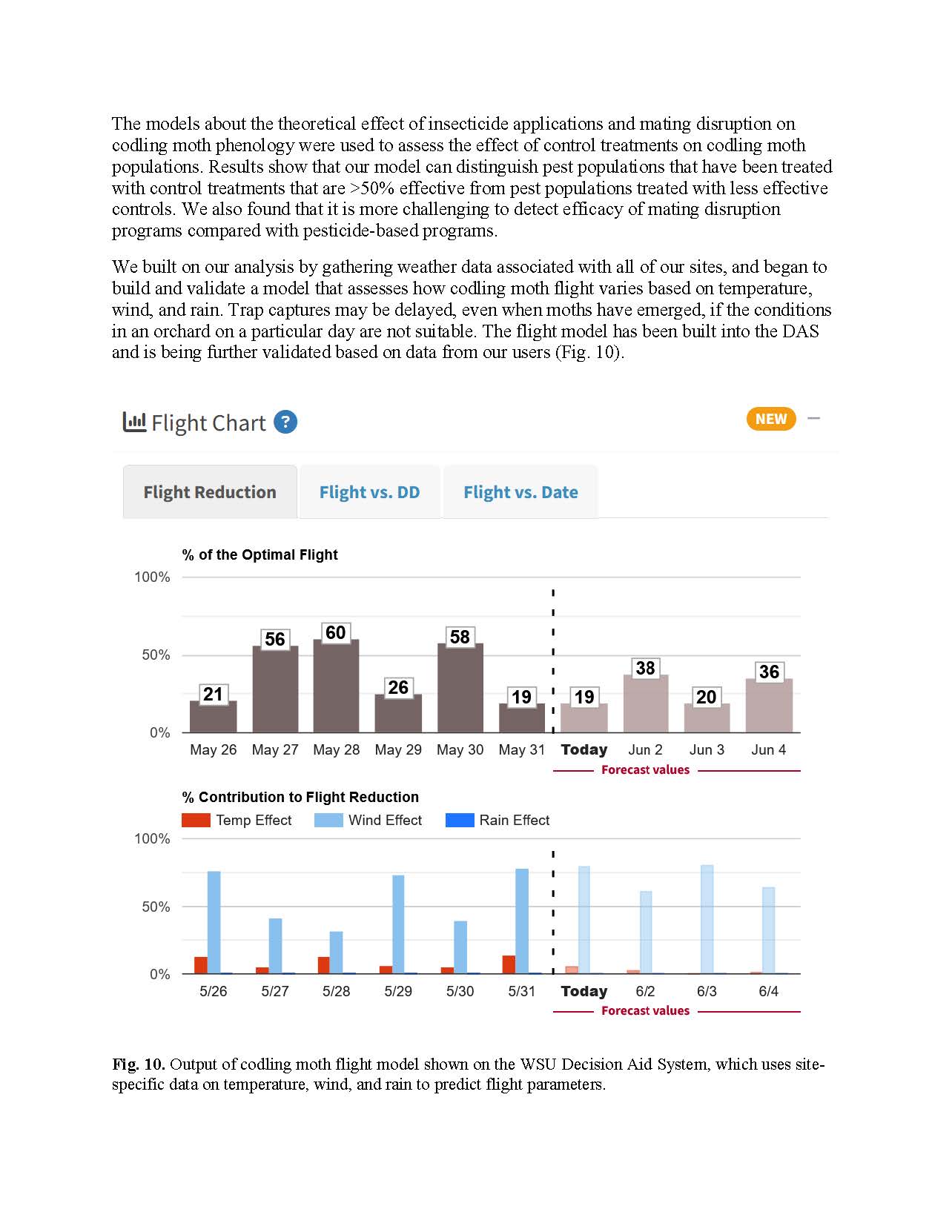
Summary: This project was designed to provide information about how producers and pest control advisors can better manage codling moth by linking predictions of phenology models with trap catch data. While much of the Washington tree fruit industry uses phenology models in their codling moth management, it is often unclear how growers should integrate trap catch data with models to make spray decisions. Our project provided data on the variability observed in codling moth populations across realistic Washington growing conditions, and showed how trap catch data may not always mirror predictions of phenology models. We showed that effective early season management using mating disruption, insecticides, or sterile insect releases may actually cause observed trap catch to lag considerably from what is predicted from models. We also found that weather variables like temperature, wind, and rainfall affect the flight conditions of codling moth, and we used these data to build better codling moth models. We integrated this information into the WSU Decision Aid System to provide better models that allow growers to conduct more responsive management that links real-time trap data with models. Our work from 2022 to 2025 used data from field sampling in Washington orchards along with data from commercial orchards in Washington and British Columbia. From these data we made considerable progress on showing how phenology models can be used to accurately predict codling moth population dynamics (i.e., abundance) based on variable management scenarios. Our project supported two postdoctoral scholars, undergraduates, and permanent staff who conducted the field work, modeling, and outreach. Our team also continued to build a more informed user base for the digital tools built into the WSU Decision Aid System.