Real-time Detection of Little Cherry Disease using Detector Canines
Author: Jessica Kohntopp
Published: 2027
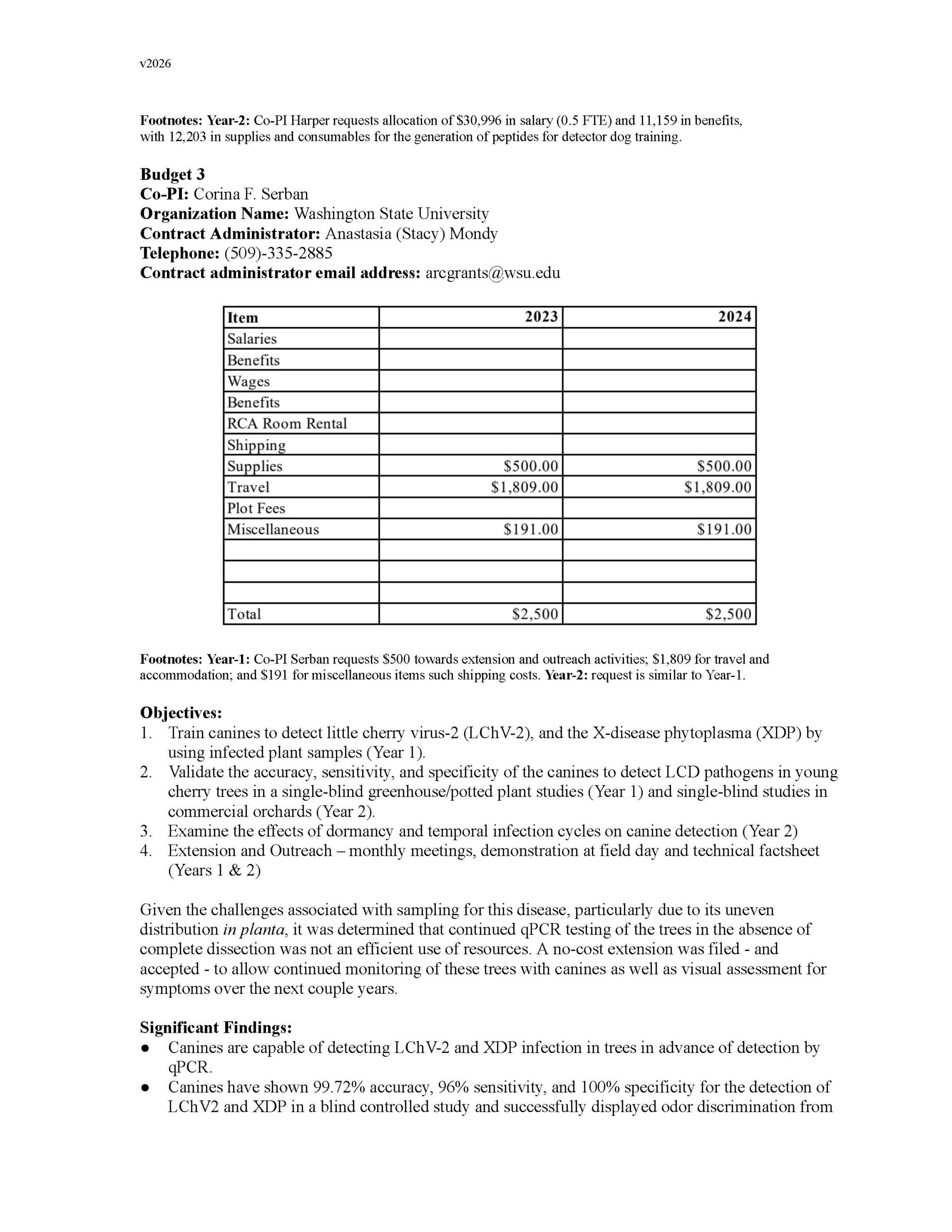
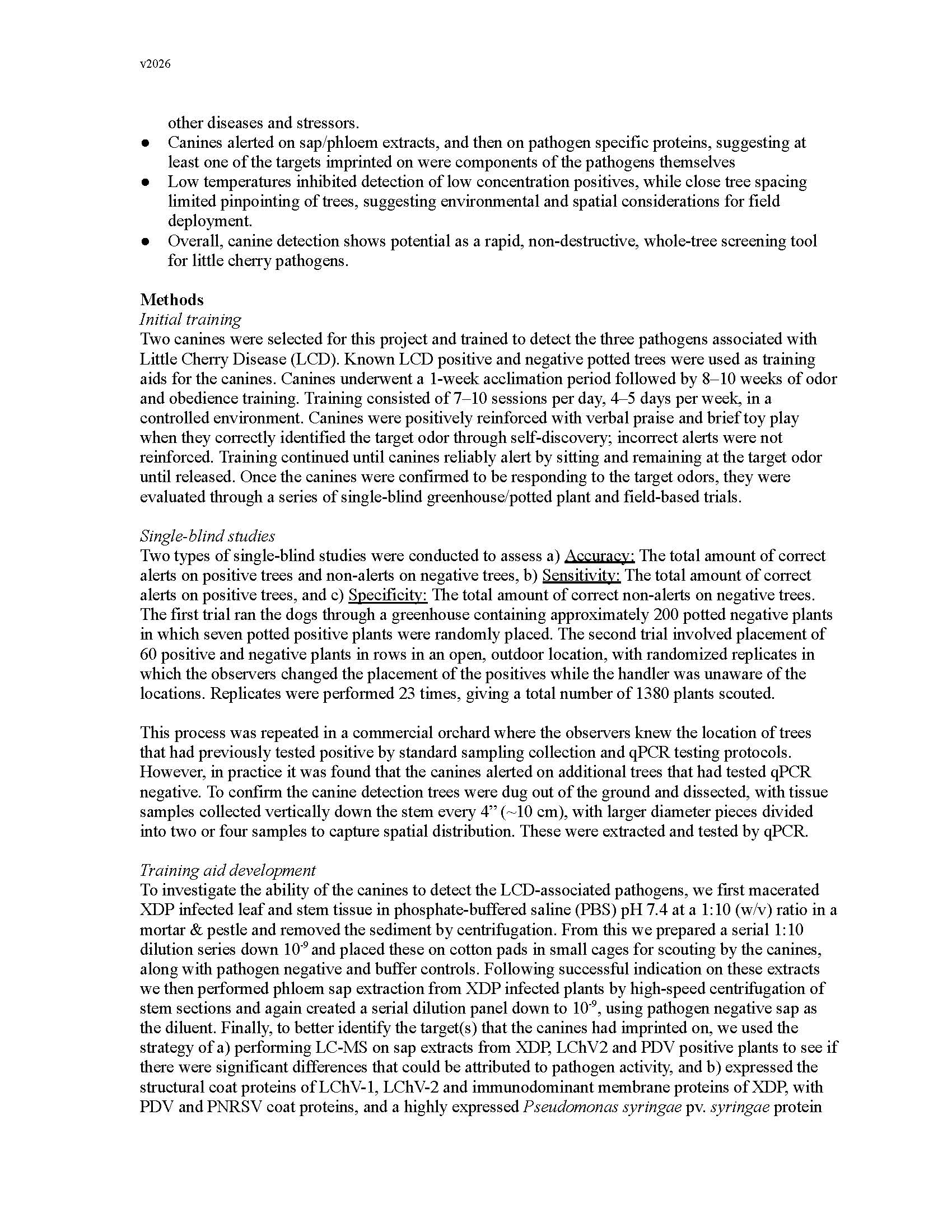
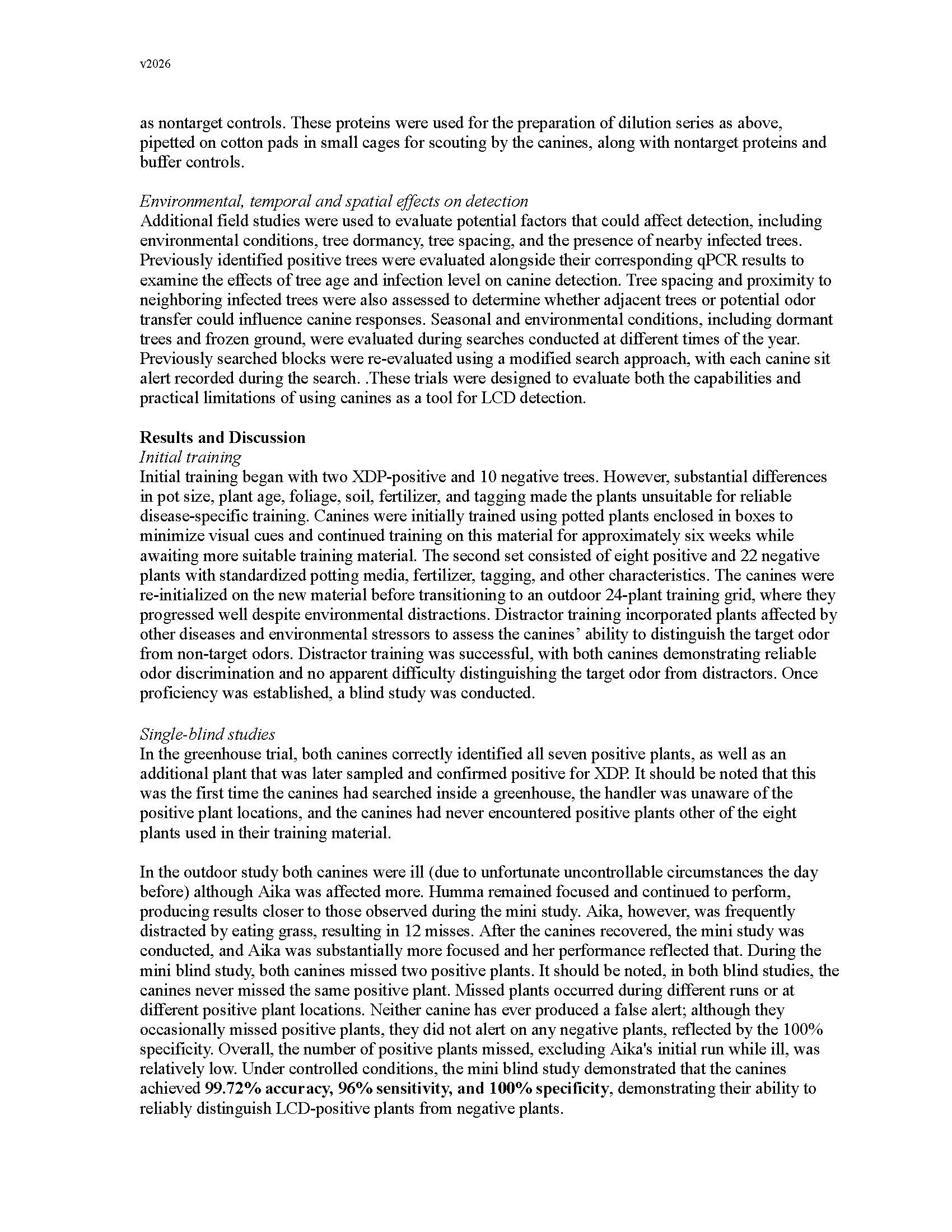
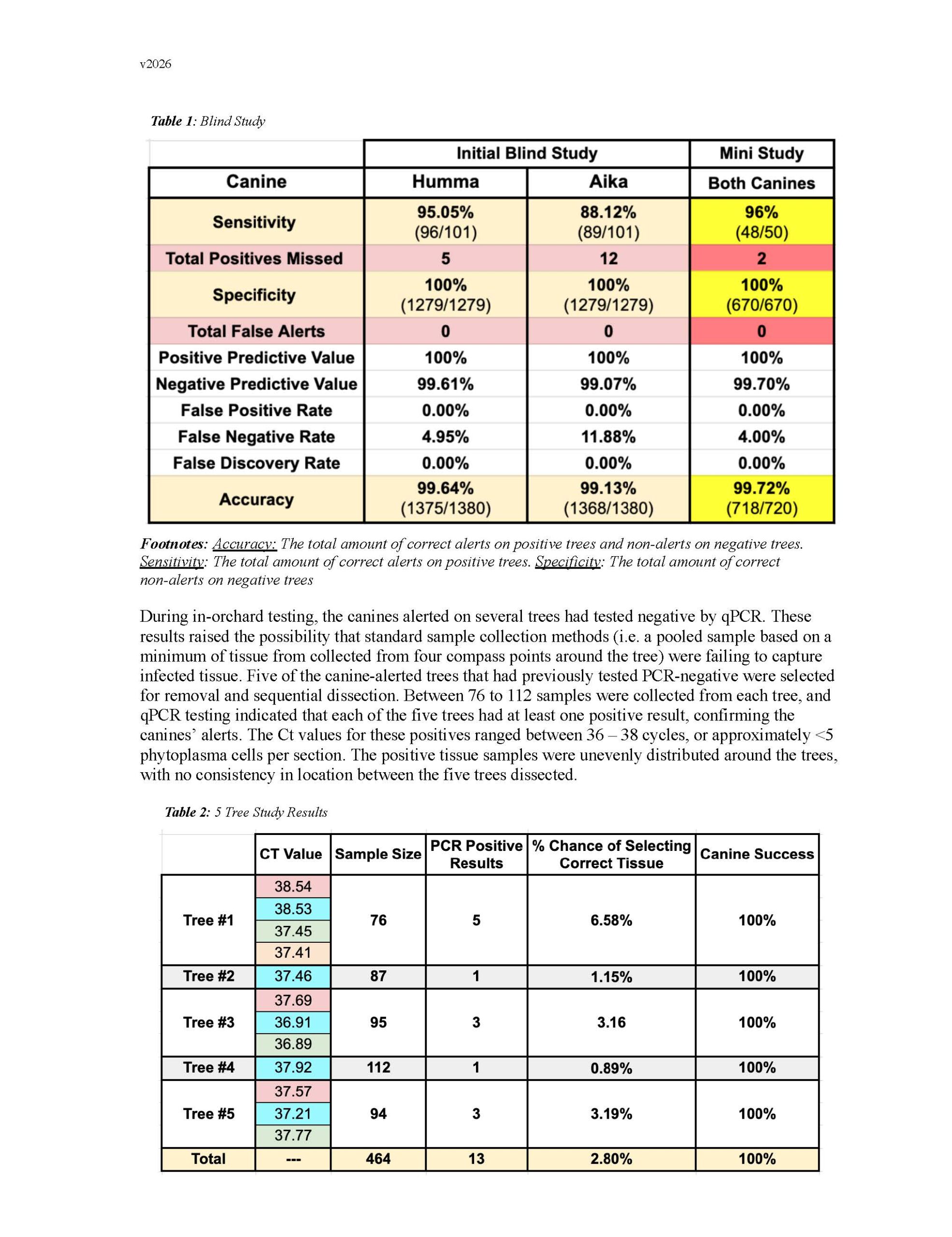
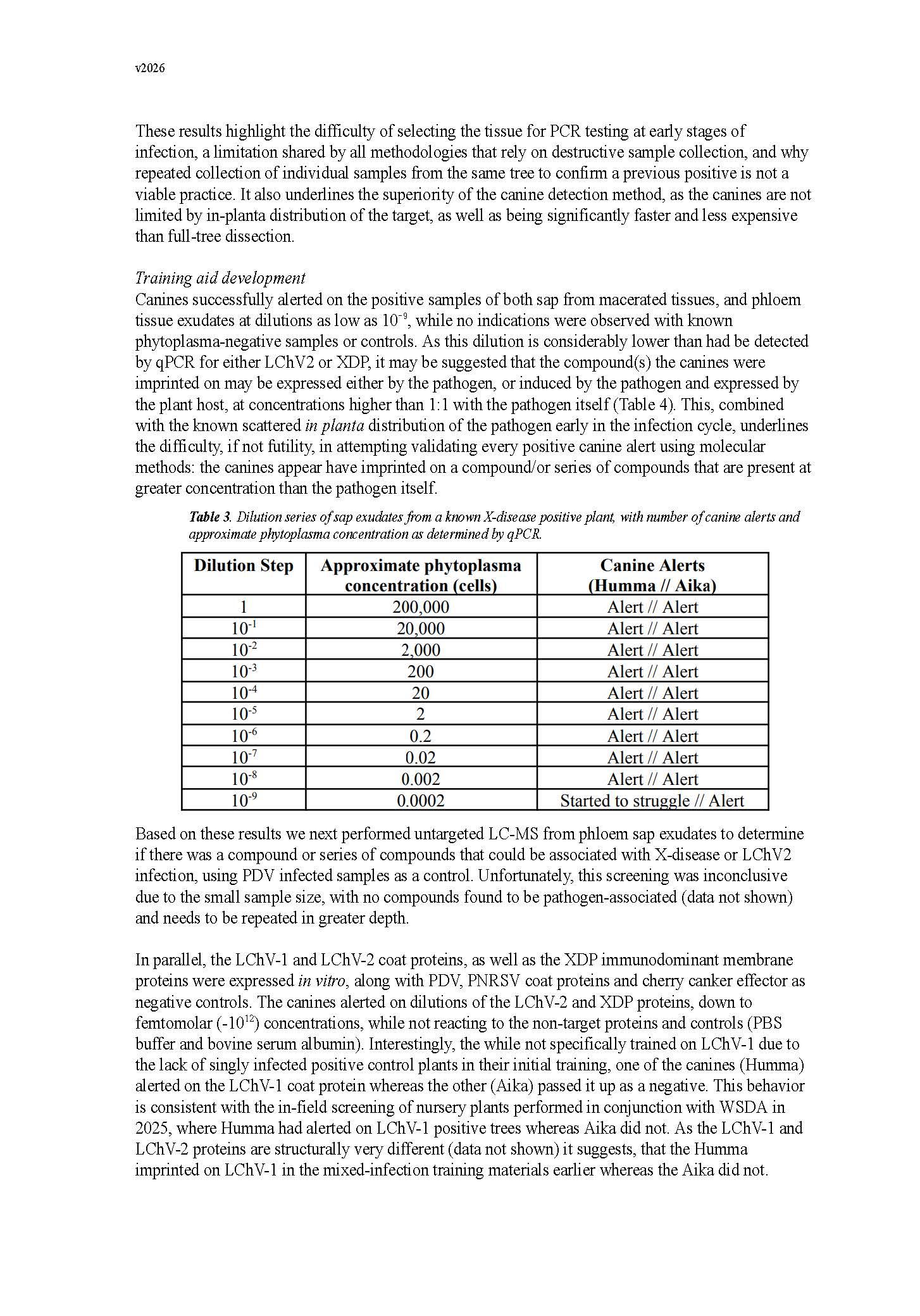
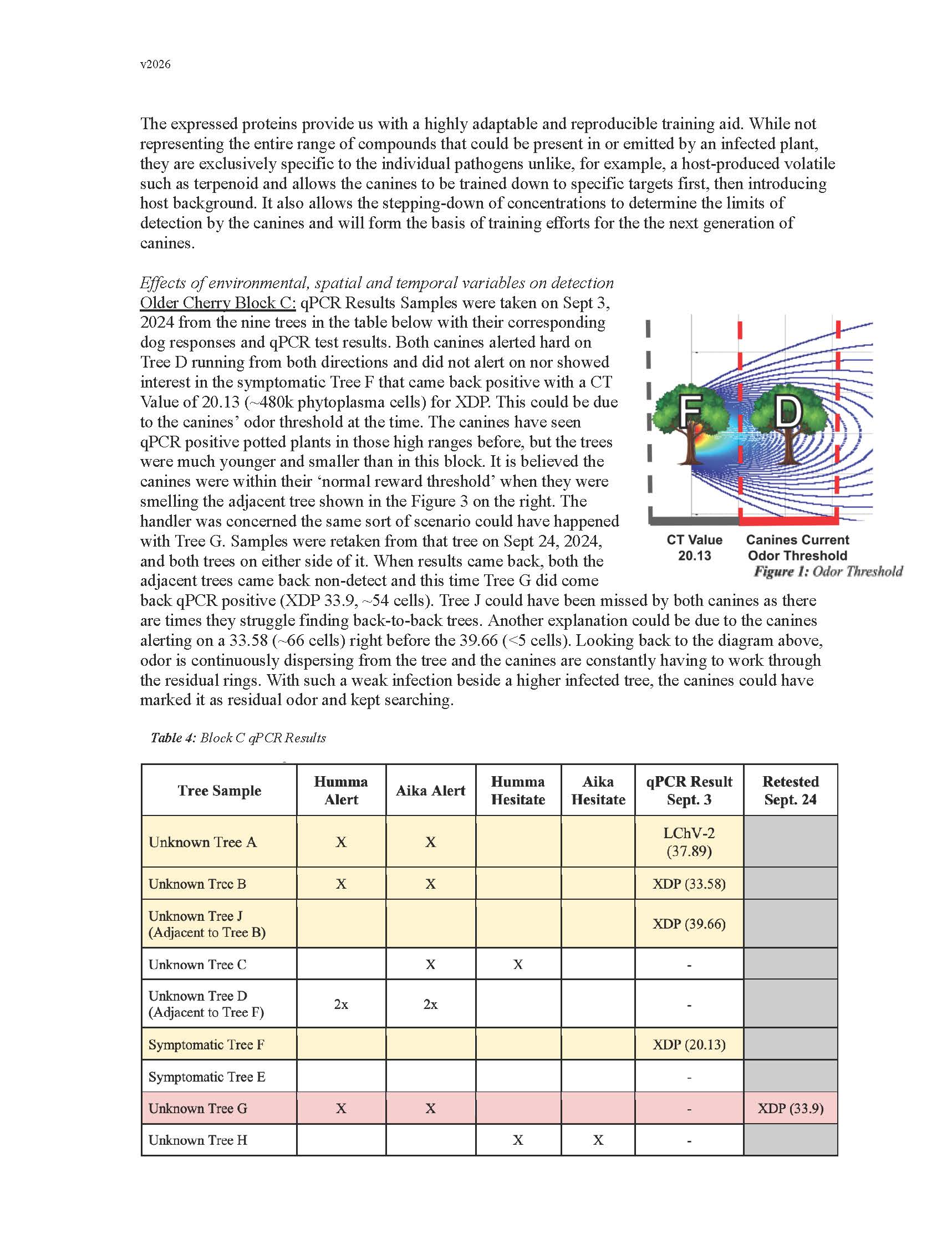
Summary: Abstract Little Cherry Disease (LCD) is a significant threat to the cherry industry, yet early detection remains difficult due to the short-lived and inconsistent nature of visible symptoms. While conventional PCR testing provides a diagnostic option, the patchy and uneven distribution of the pathogen throughout a tree makes it difficult to collect representative tissue and confirm low-level or early infections from limited subsamples. This project evaluated the use of canines as a potential year-round, real-time, nondestructive detection tool that provides a holistic, whole-tree sampling approach rather than relying on individual tissue subsamples. Two canines were trained to detect the three pathogens that cause LCD and subsequently demonstrated discrimination between LCD and other common diseases and stressors. In blind, controlled testing, the canines achieved 99.72% overall accuracy, 96% sensitivity, and 100% specificity. They were successfully transitioned from potted trees to field and commercial orchard settings. Importantly, several trees alerted on by the canines initially tested non-detect by qPCR. Five of these trees were later removed and extensively dissected, and all five were confirmed positive, with only 13 of 464 tissue samples testing positive. This highlights the highly uneven distribution of pathogen within these trees and demonstrates why confirming early or weakly infected trees through qPCR is so difficult. Further expanding on the need for a method that can sample the whole tree. Canines also successfully detected positive sap and phloem extracts at dilutions as low as 10⁻⁹, suggesting they may be responding to one or more compounds associated with infection and may have learned multiple odor signatures associated with LCD. Field studies identified additional factors affecting detection, including tree spacing, adjacent infections, seasonal conditions, and low pathogen levels. Overall, these results demonstrate strong potential for canine detection as a tool for identifying LCD-infected trees and improving disease management. Continued research will focus on training new canines with the newly developed training aid, comparing their abilities to the two trained the conventional method, and evaluating the integration of canine screening into commercial nursery and orchard operations. Continued research will focus on training new canines with the newly developed training aid, comparing their abilities to the two canines trained the conventional way, and evaluating the integration of canine screening into commercial nursery and orchard operations.