SWD in-orchard movement and overwintering population dynamics
Author: Christopher Adams
Published: 2026
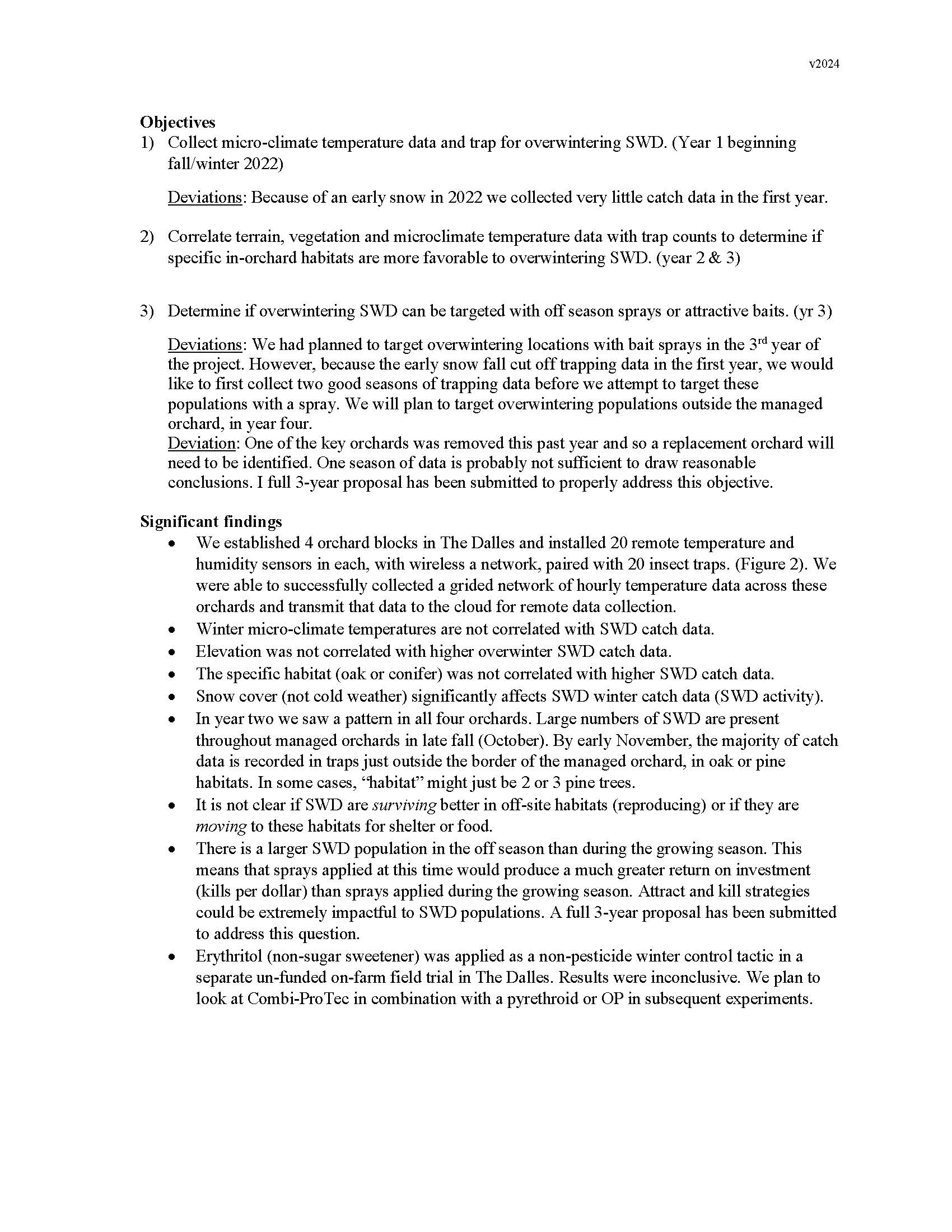
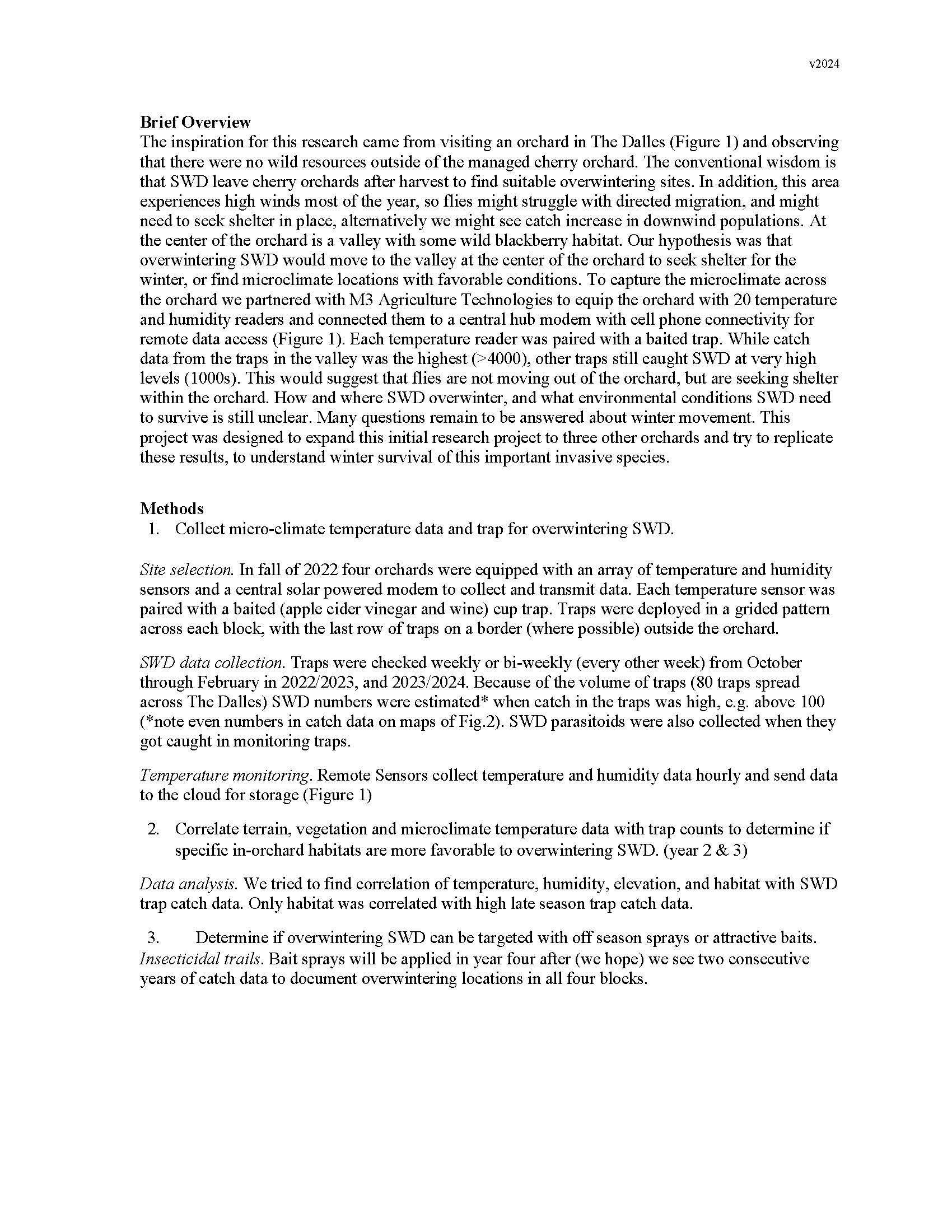
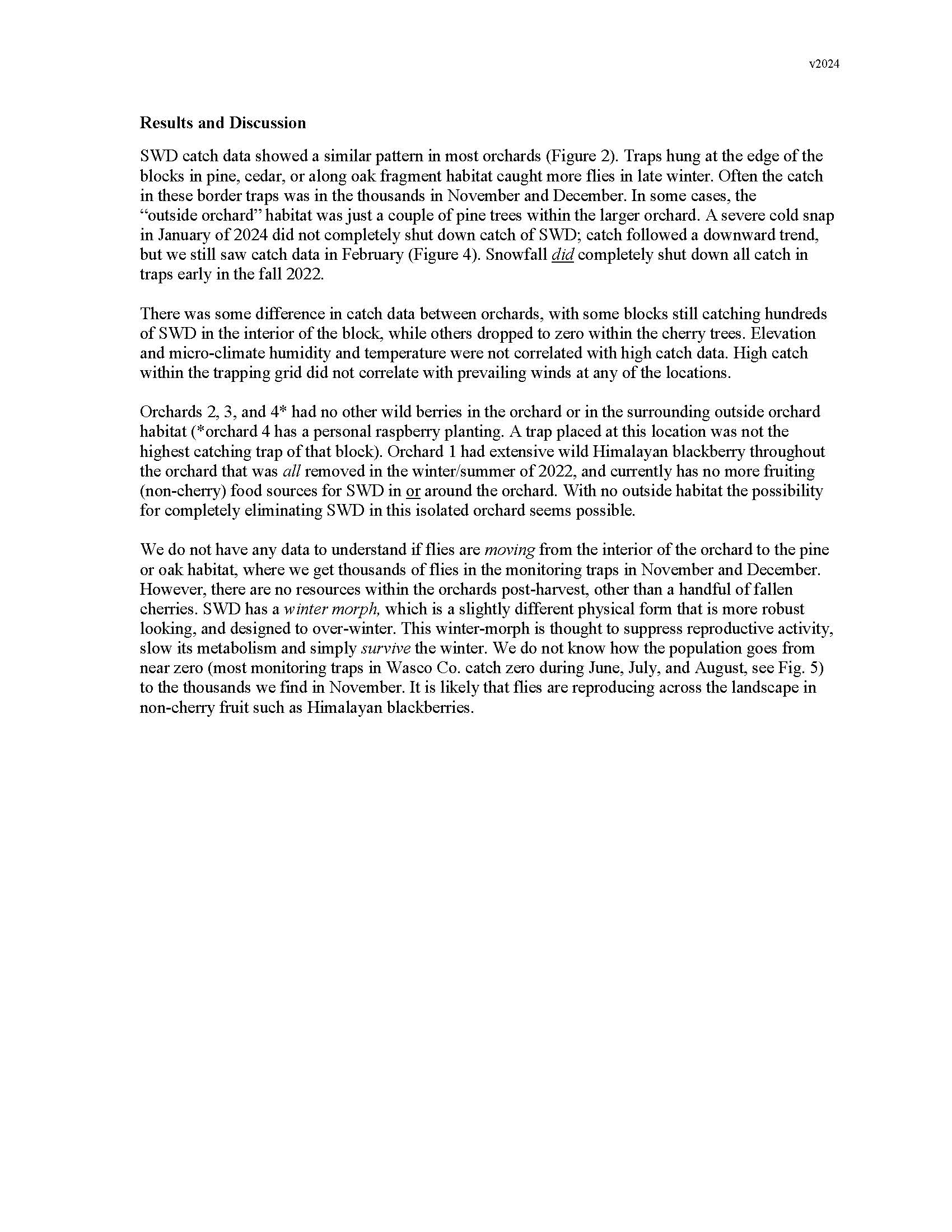
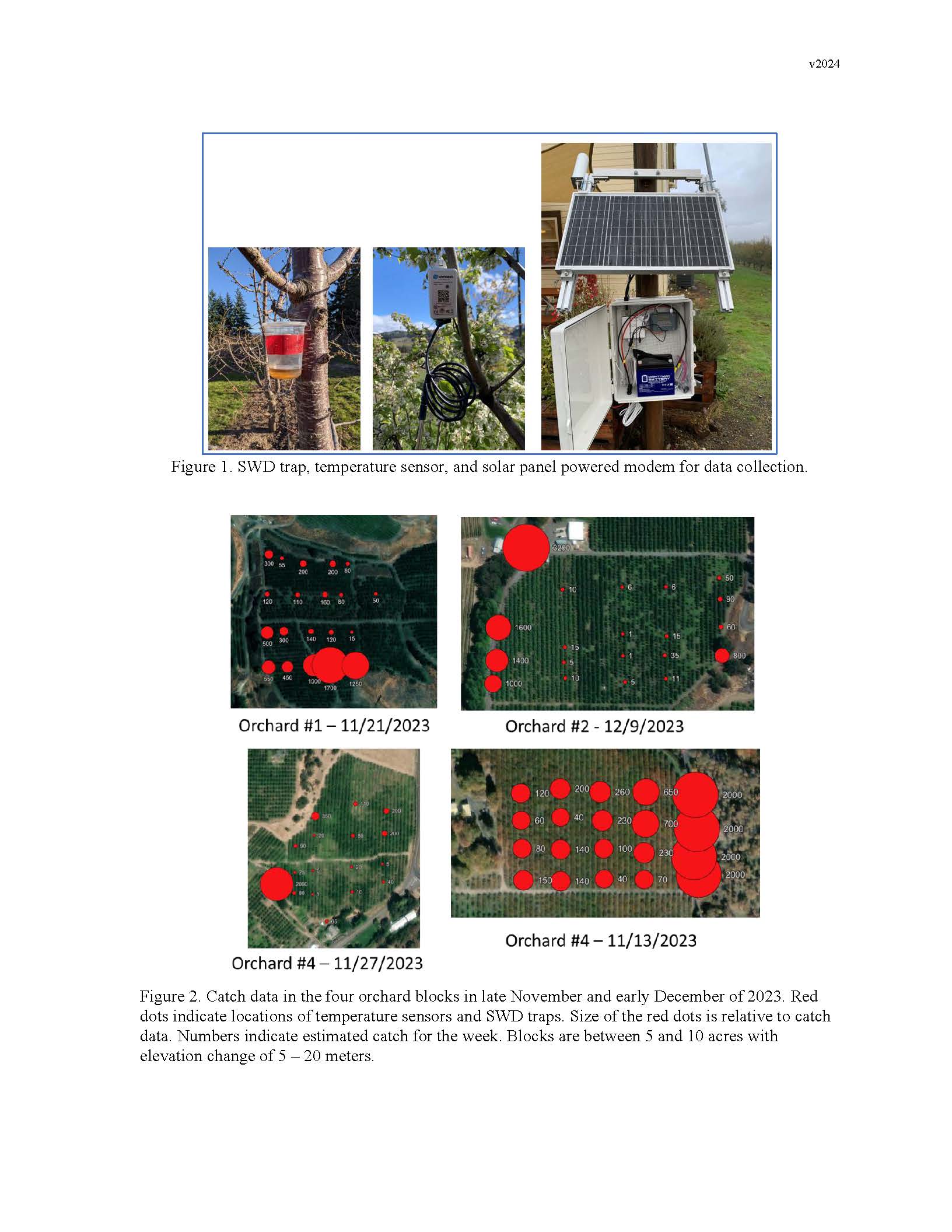
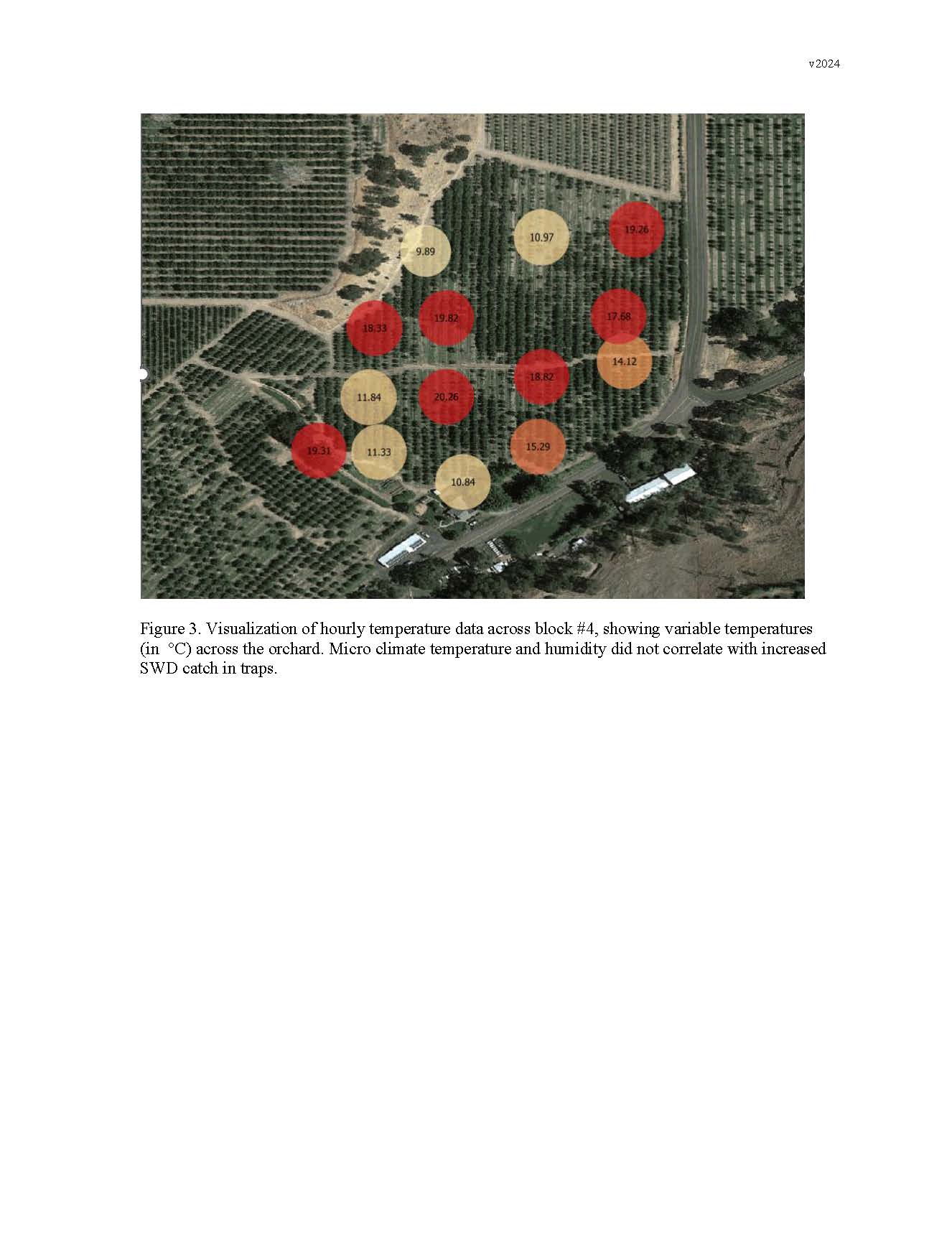
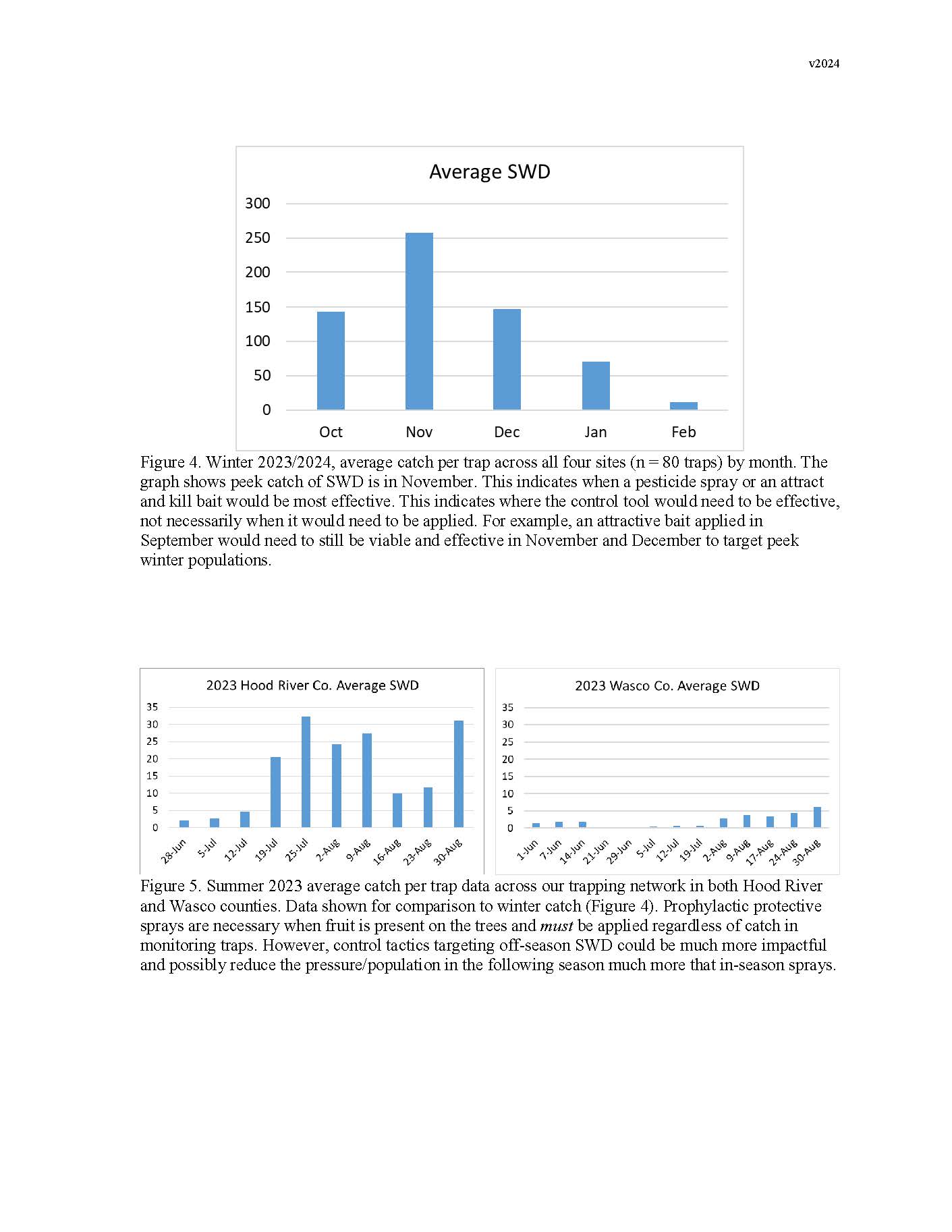
Summary: SWD catch data showed a similar pattern in most orchards (Figure 2). Traps hung at the edge of the blocks in pine, cedar, or along oak fragment habitat caught more flies in late winter. Often the catch in these border traps was in the thousands in November and December. In some cases, the “outside orchard” habitat was just a couple of pine trees within the larger orchard. A severe cold snap in January of 2024 did not completely shut down catch of SWD; catch followed a downward trend, but we still saw catch data in February (Figure 4). Snowfall did completely shut down all catch in traps early in the fall 2022. There was some difference in catch data between orchards, with some blocks still catching hundreds of SWD in the interior of the block, while others dropped to zero within the cherry trees. Elevation and micro-climate humidity and temperature were not correlated with high catch data. High catch within the trapping grid did not correlate with prevailing winds at any of the locations. Orchards 2, 3, and 4* had no other wild berries in the orchard or in the surrounding outside orchard habitat (*orchard 4 has a personal raspberry planting. A trap placed at this location was not the highest catching trap of that block). Orchard 1 had extensive wild Himalayan blackberry throughout the orchard that was all removed in the winter/summer of 2022, and currently has no more fruiting (non-cherry) food sources for SWD in or around the orchard. With no outside habitat the possibility for completely eliminating SWD in this isolated orchard seems possible. We do not have any data to understand if flies are moving from the interior of the orchard to the pine or oak habitat, where we get thousands of flies in the monitoring traps in November and December. However, there are no resources within the orchards post-harvest, other than a handful of fallen cherries. SWD has a winter morph, which is a slightly different physical form that is more robust looking, and designed to over-winter. This winter-morph is thought to suppress reproductive activity, slow its metabolism and simply survive the winter. We do not know how the population goes from near zero (most monitoring traps in Wasco Co. catch zero during June, July, and August, see Fig. 5) to the thousands we find in November. It is likely that flies are reproducing across the landscape in non-cherry fruit such as Himalayan blackberries.