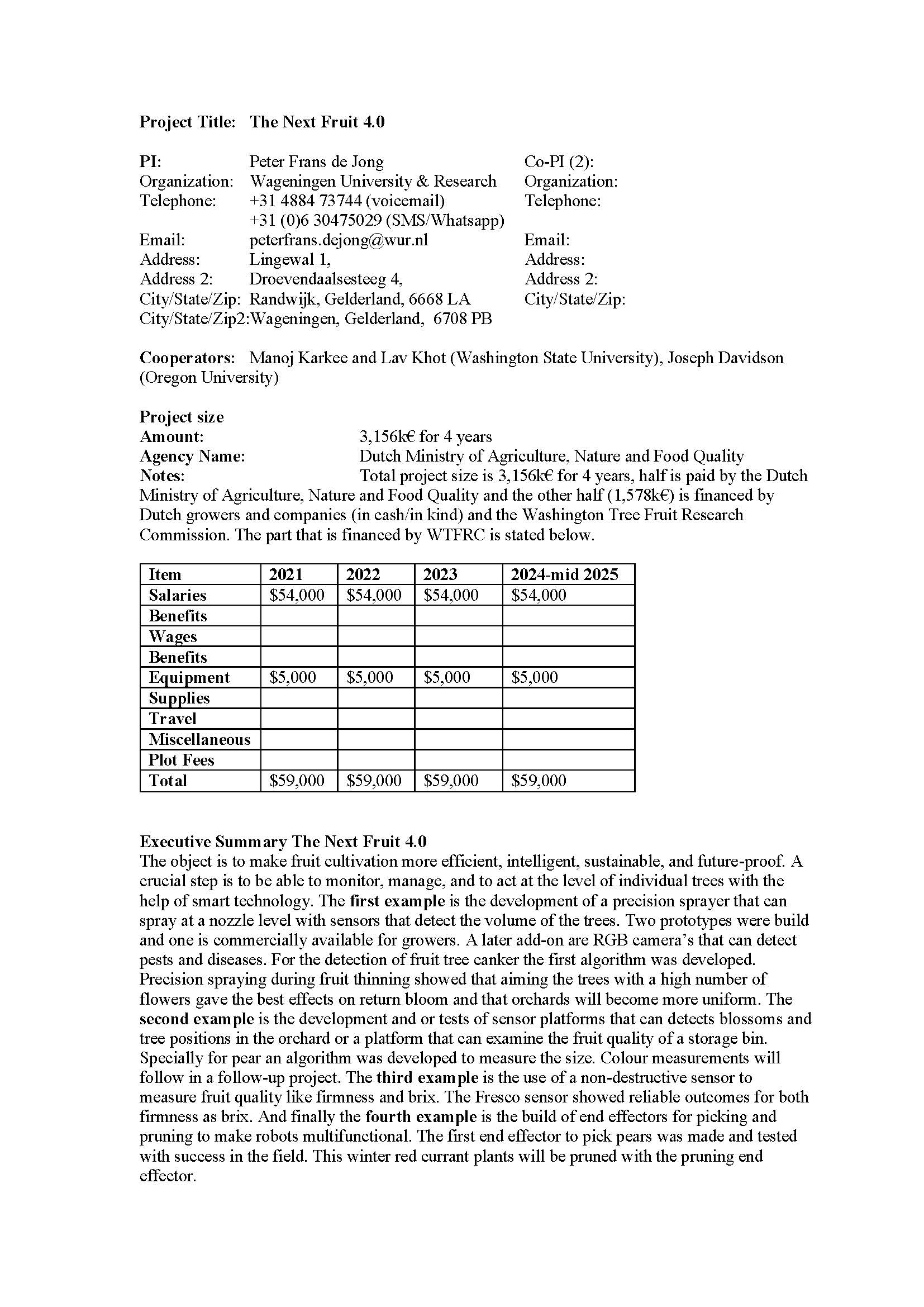
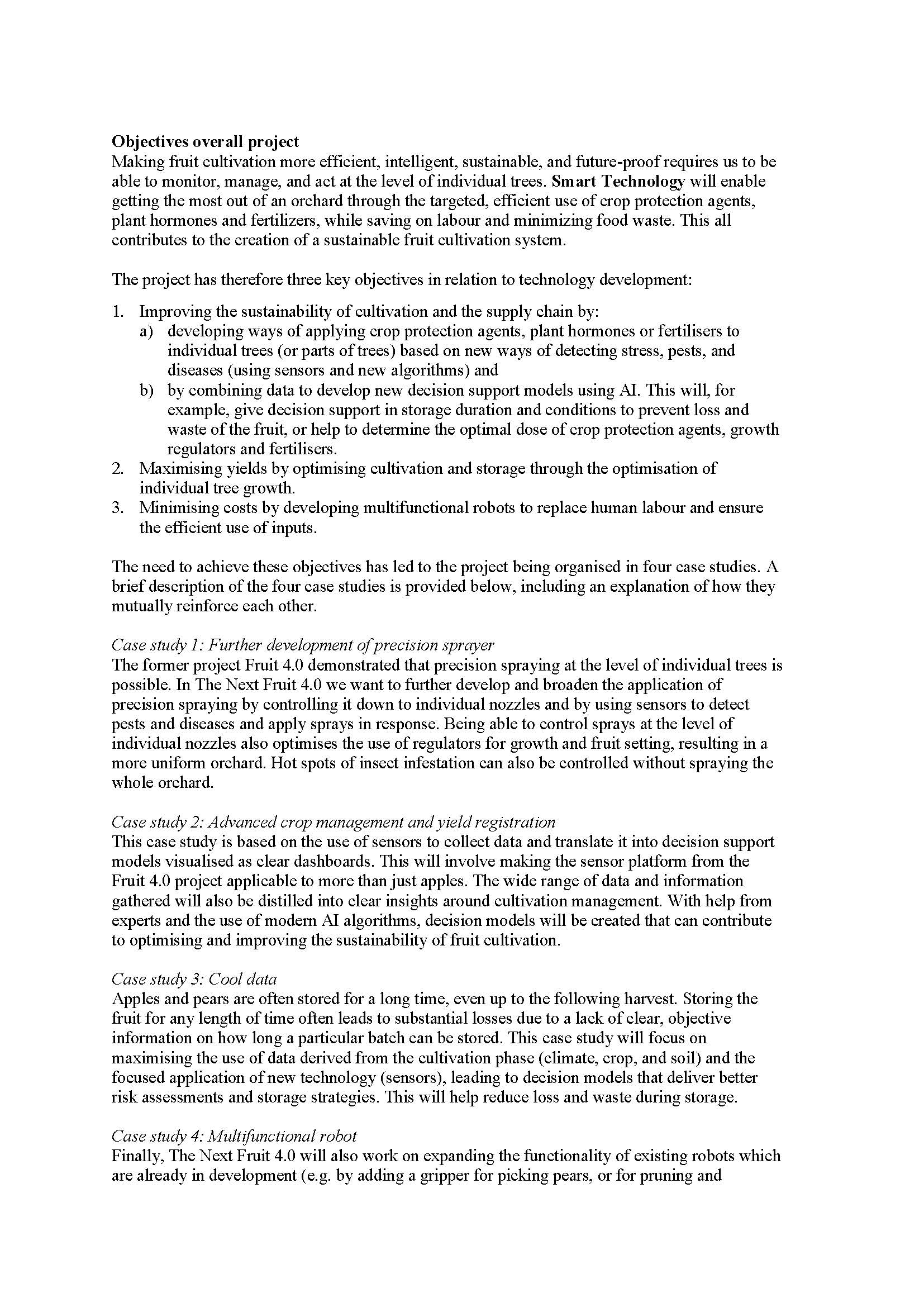
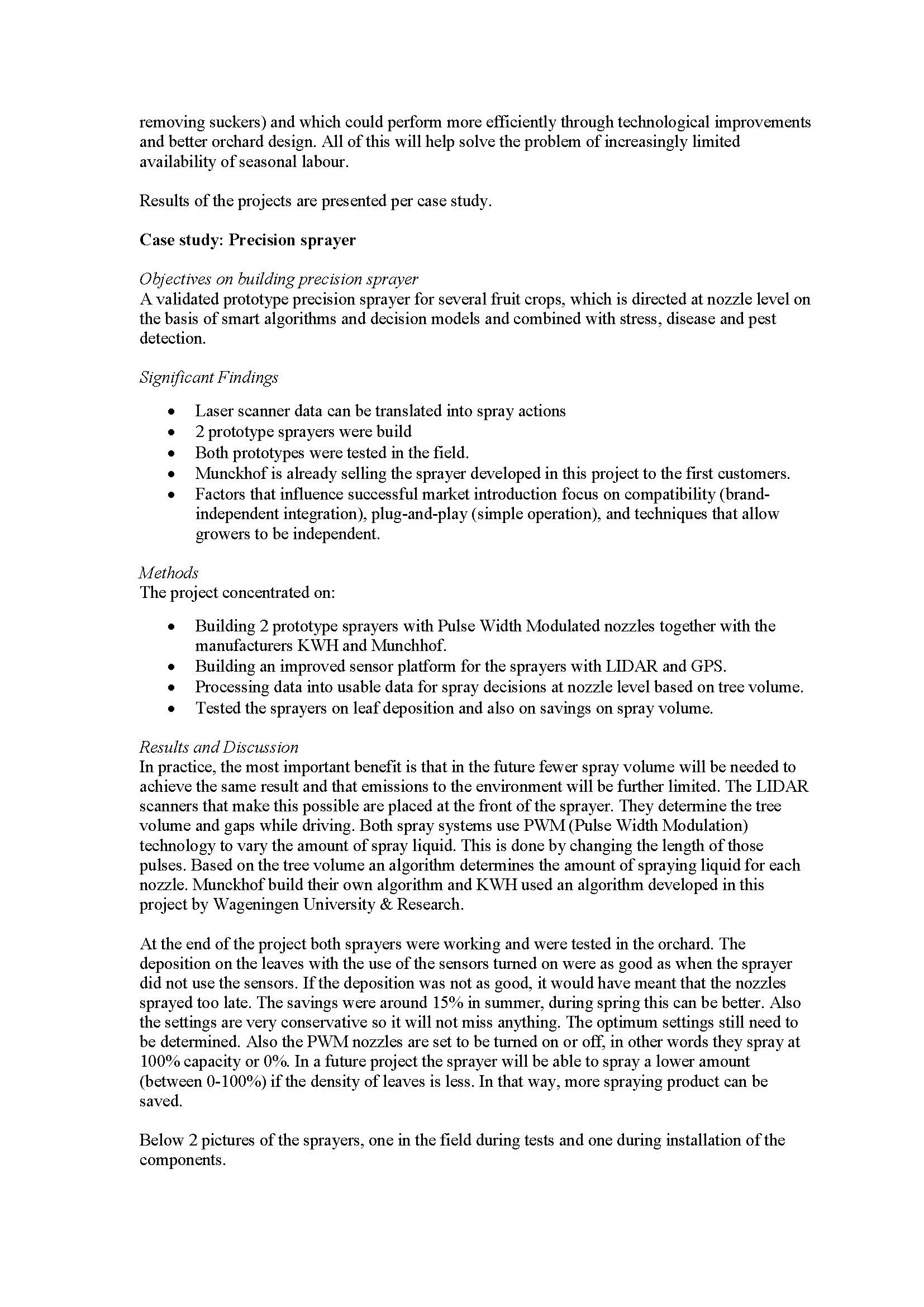
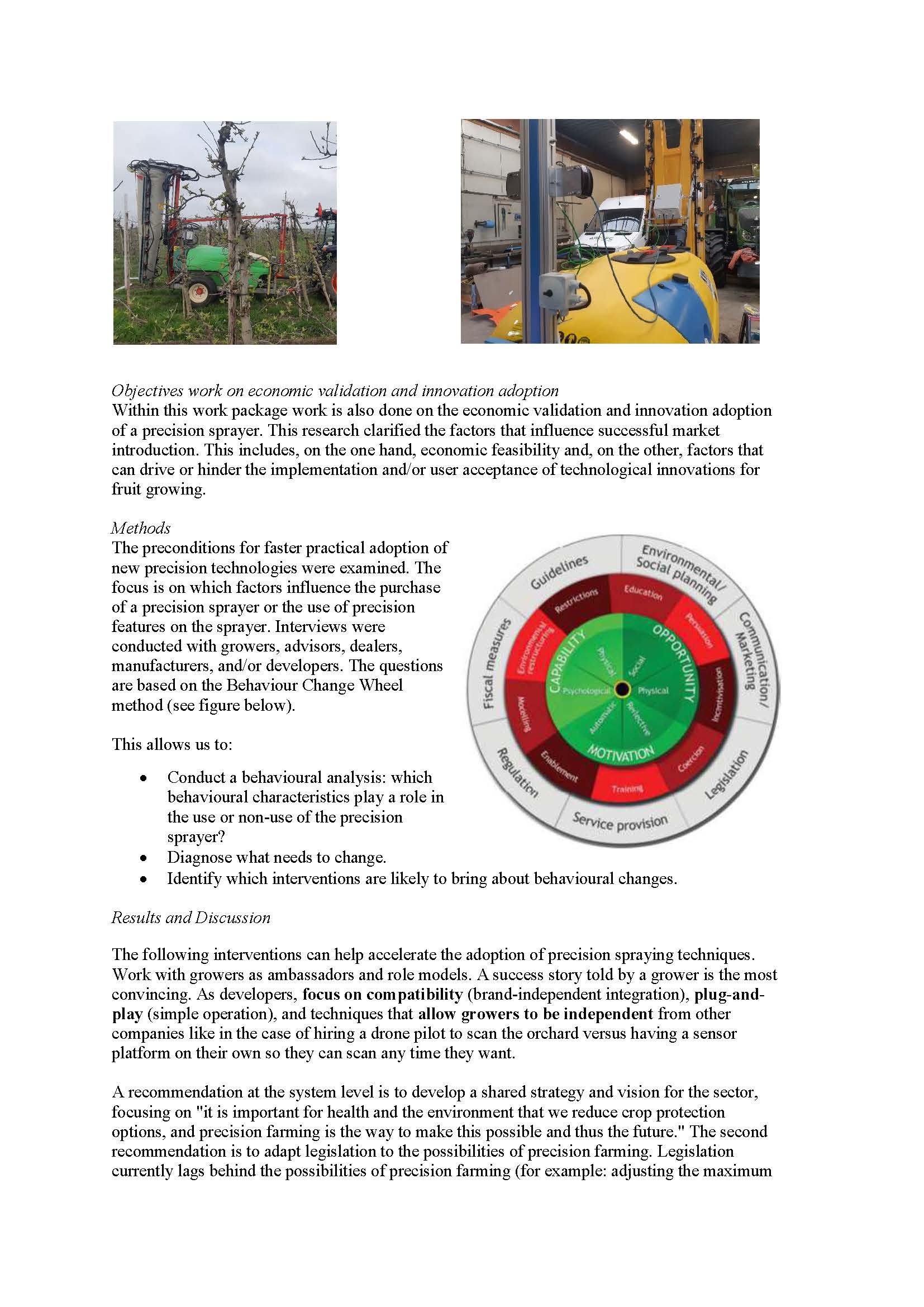
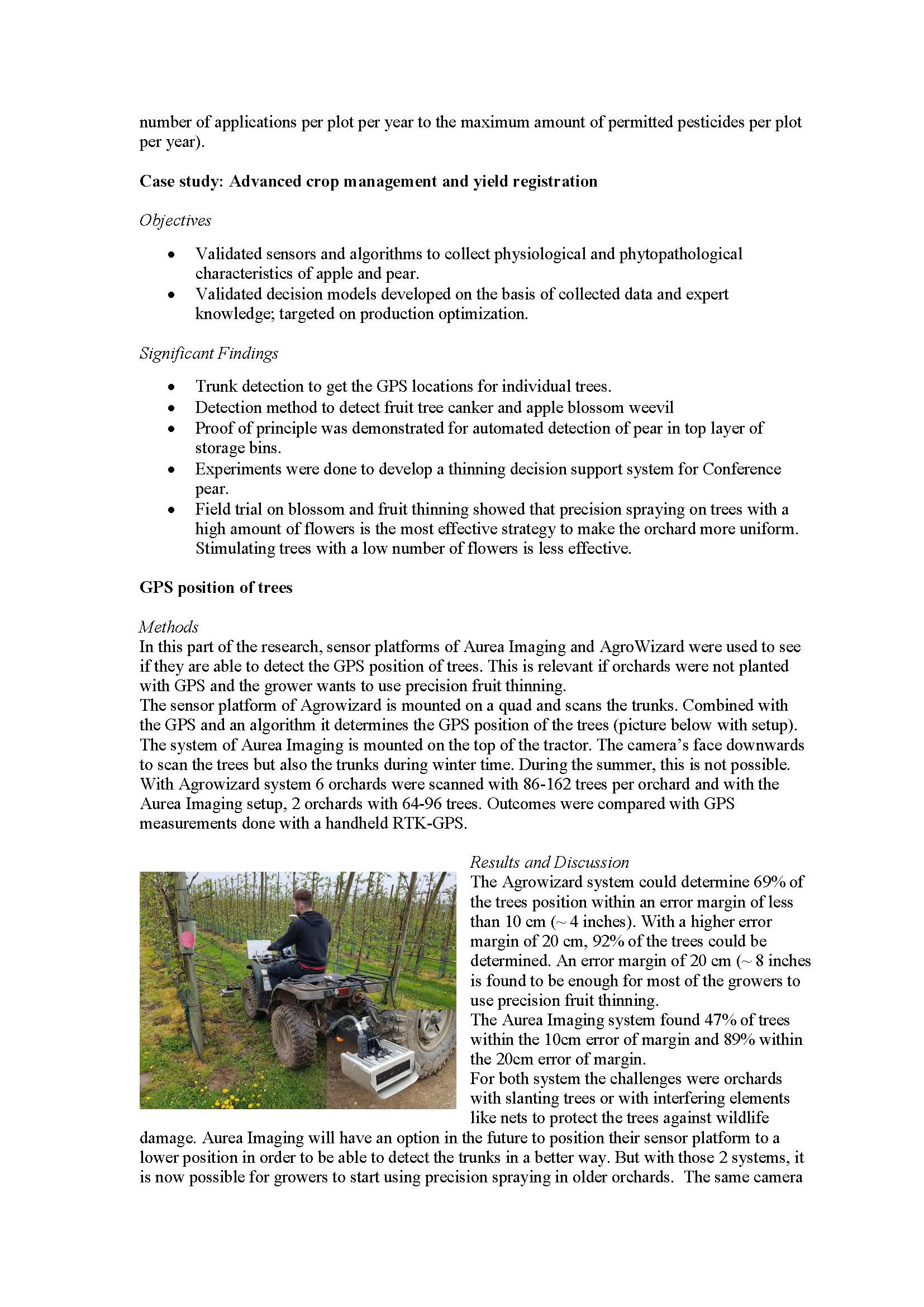
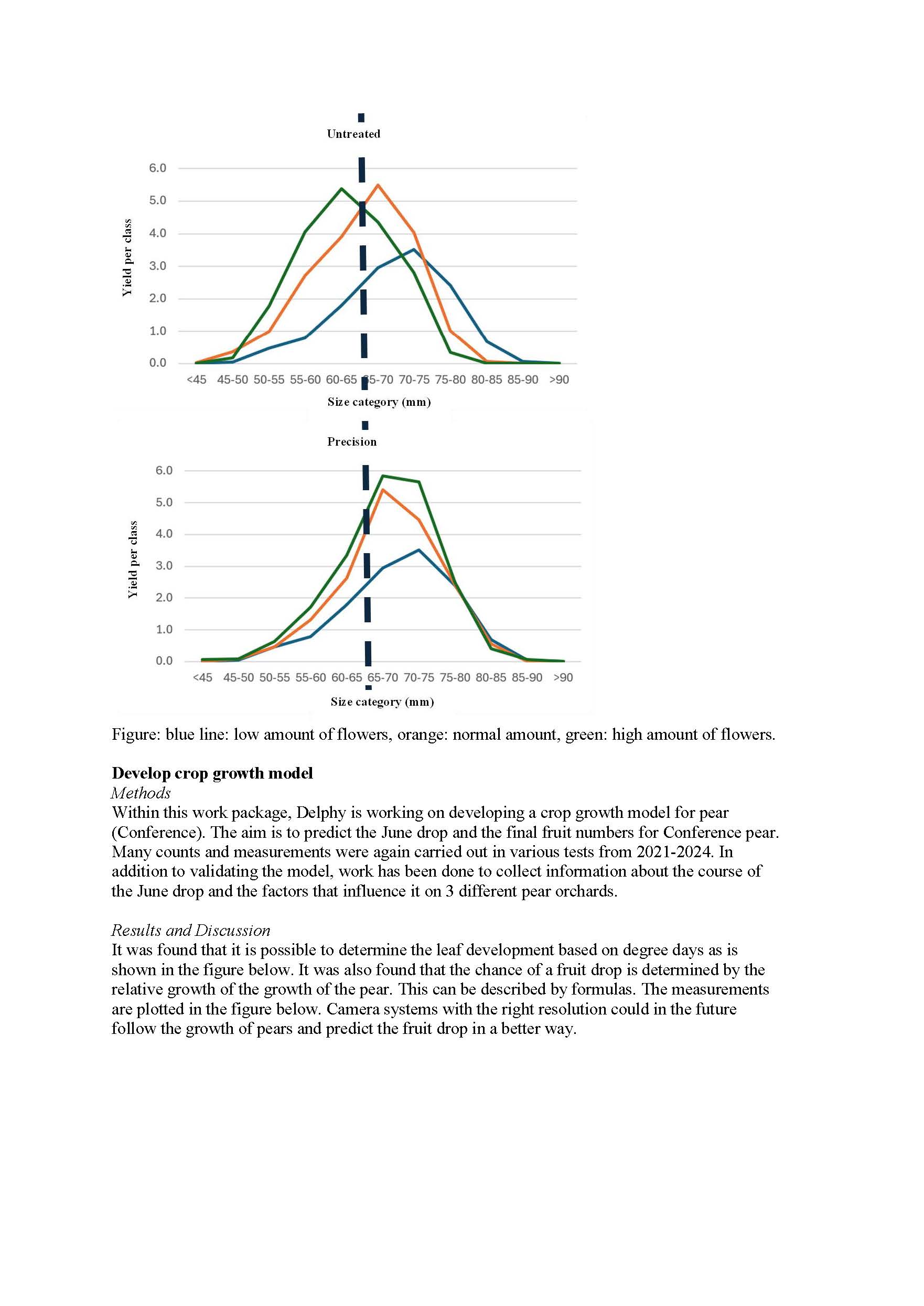
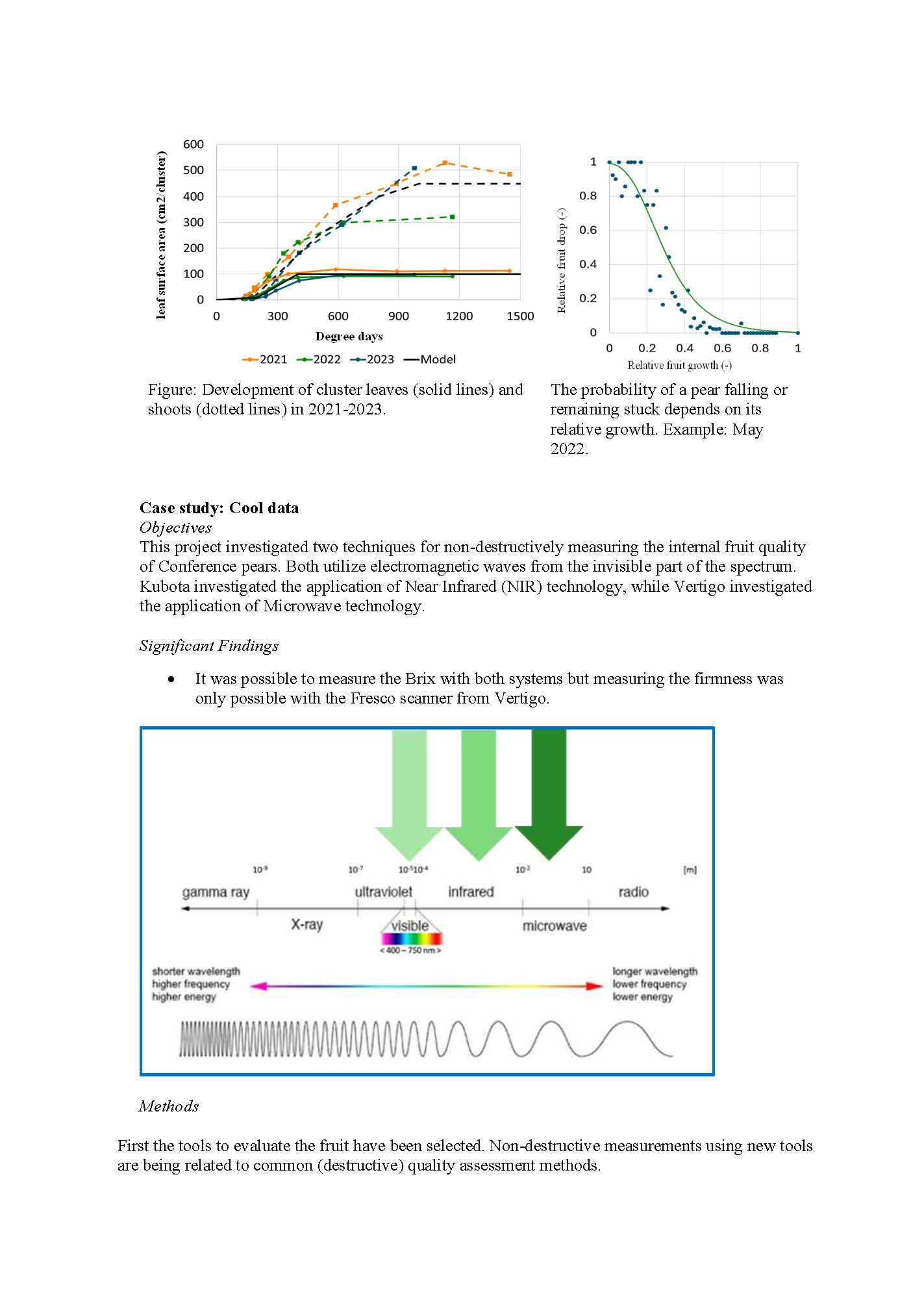
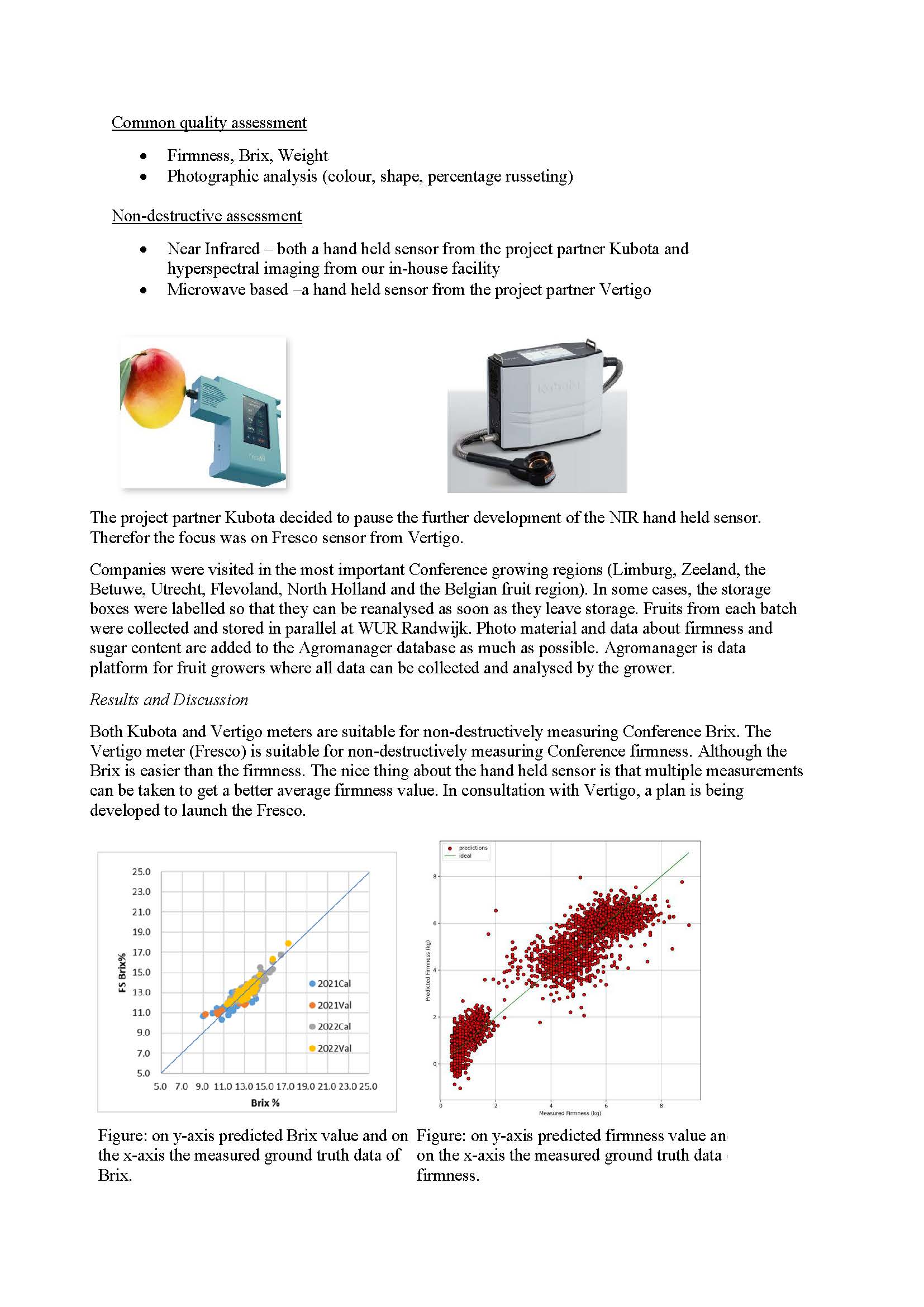
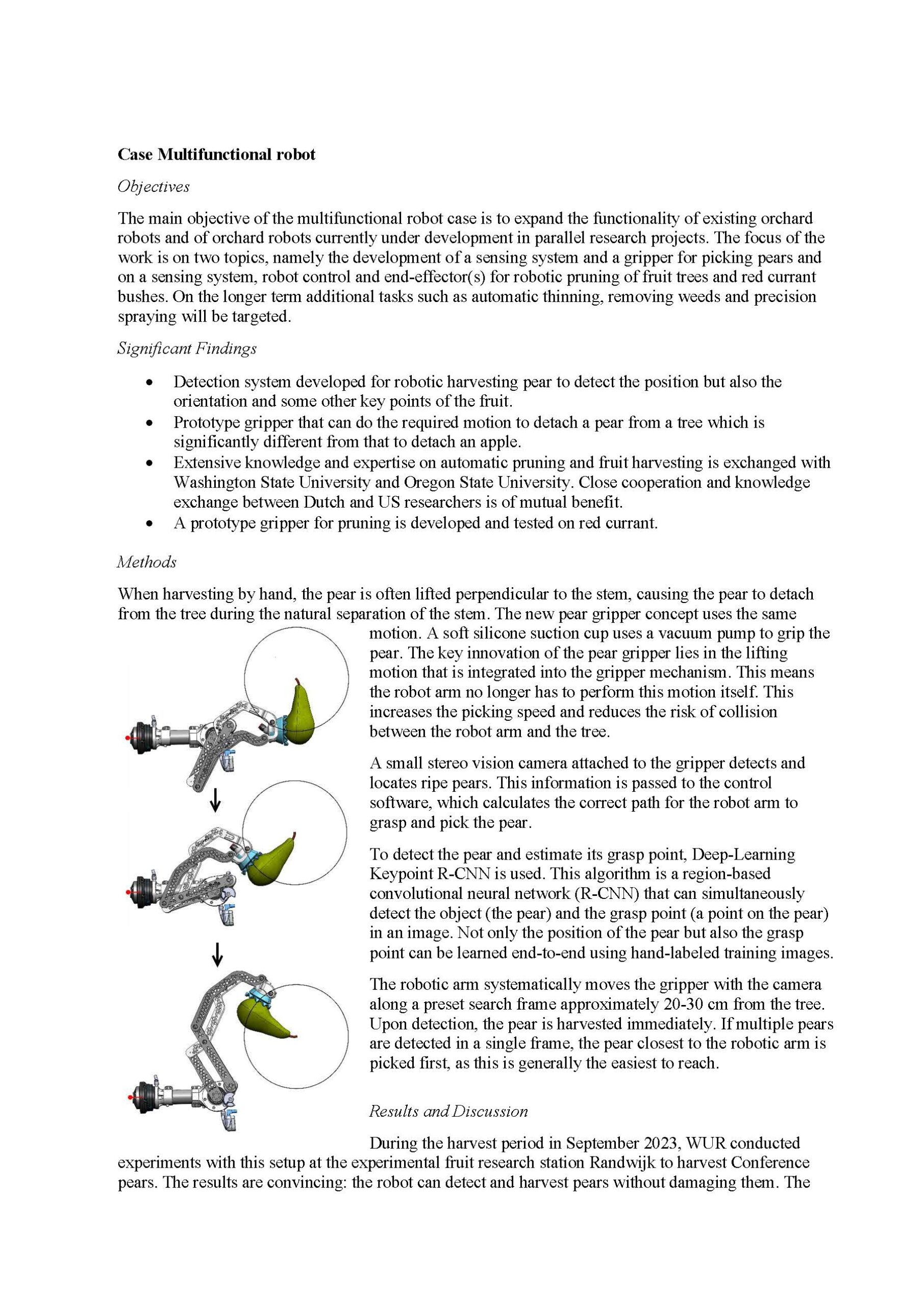
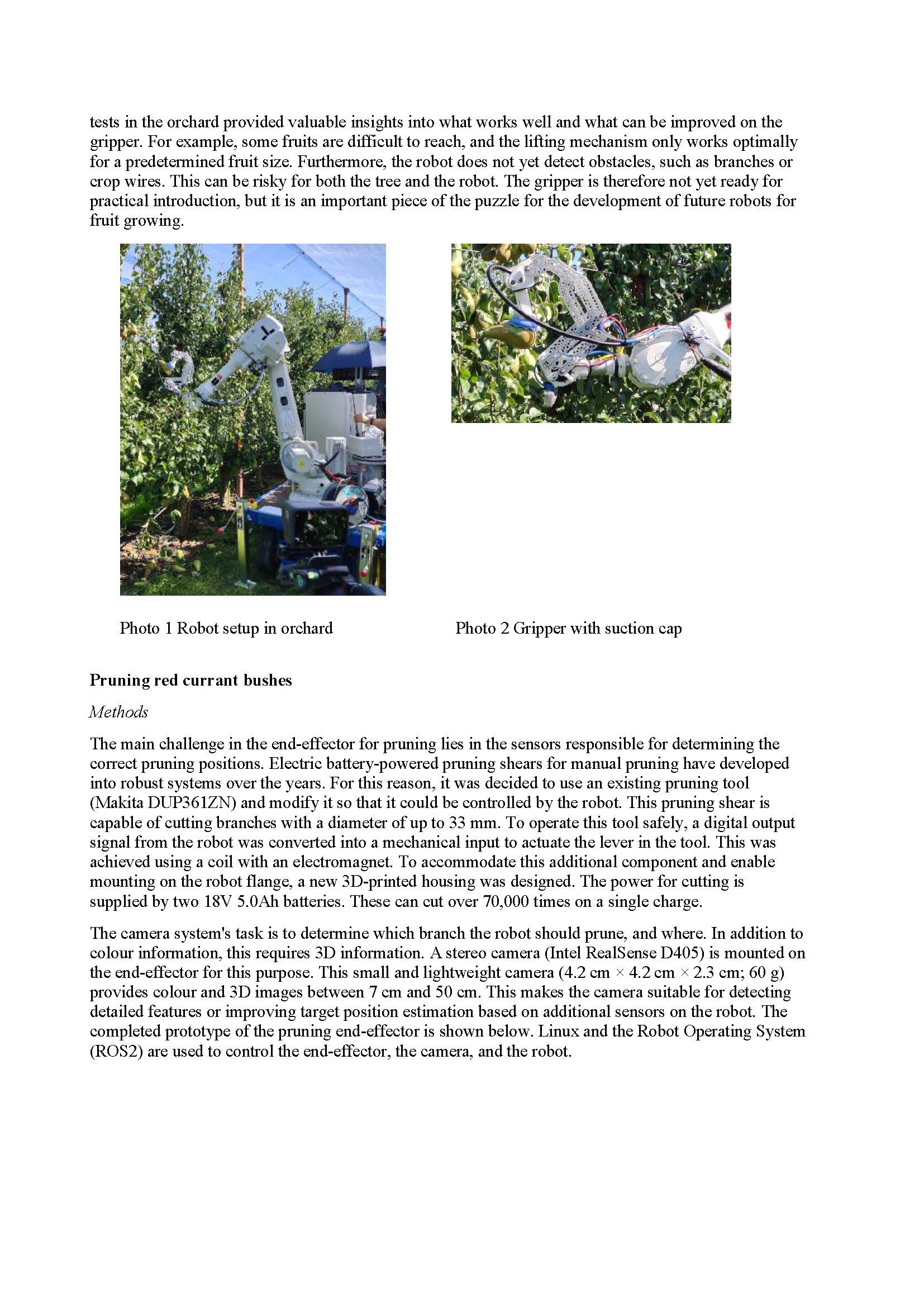
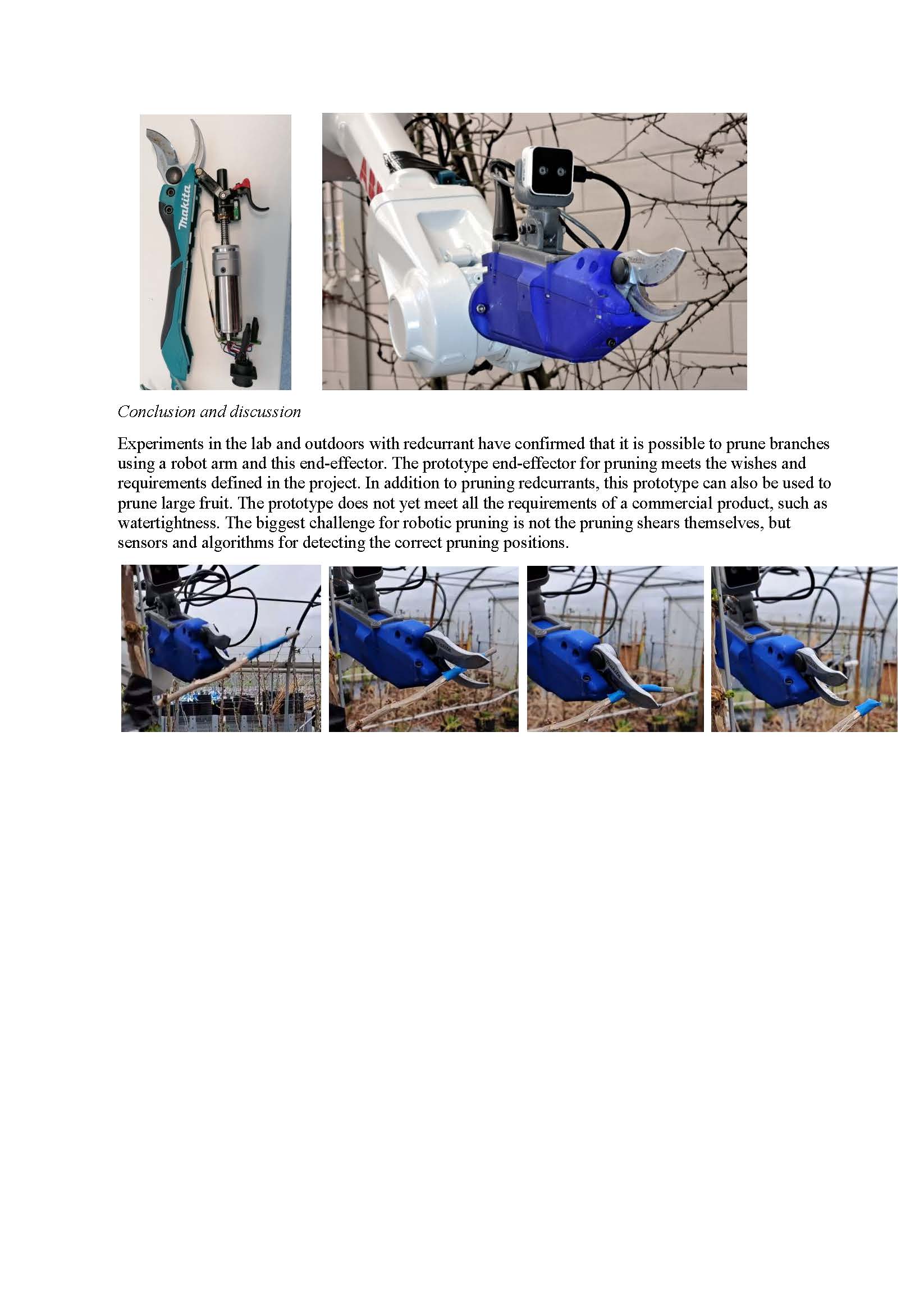
Summary: The object is to make fruit cultivation more efficient, intelligent, sustainable, and future-proof. A crucial step is to be able to monitor, manage, and to act at the level of individual trees with the help of smart technology. The first example is the development of a precision sprayer that can spray at a nozzle level with sensors that detect the volume of the trees. Two prototypes were build and one is commercially available for growers. A later add-on are RGB camera’s that can detect pests and diseases. For the detection of fruit tree canker the first algorithm was developed. Precision spraying during fruit thinning showed that aiming the trees with a high number of flowers gave the best effects on return bloom and that orchards will become more uniform. The second example is the development and or tests of sensor platforms that can detects blossoms and tree positions in the orchard or a platform that can examine the fruit quality of a storage bin. Specially for pear an algorithm was developed to measure the size. Colour measurements will follow in a follow-up project. The third example is the use of a non-destructive sensor to measure fruit quality like firmness and brix. The Fresco sensor showed reliable outcomes for both firmness as brix. And finally the fourth example is the build of end effectors for picking and pruning to make robots multifunctional. The first end effector to pick pears was made and tested with success in the field. This winter red currant plants will be pruned with the pruning end effector.