Ultra-low O2 CA strategies to reduce ‘d’Anjou’ storage disorders
Author: David Rudell
Published: 2026
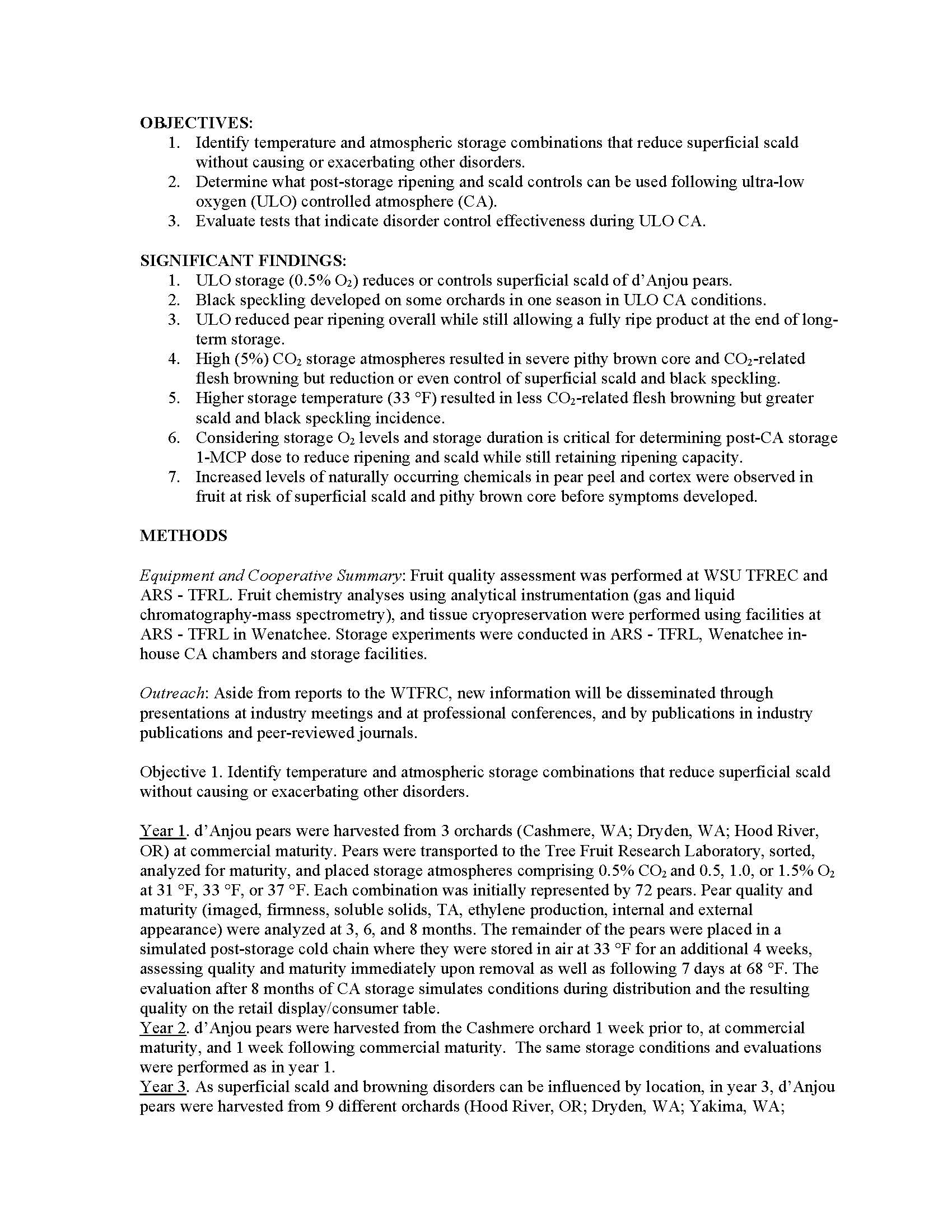
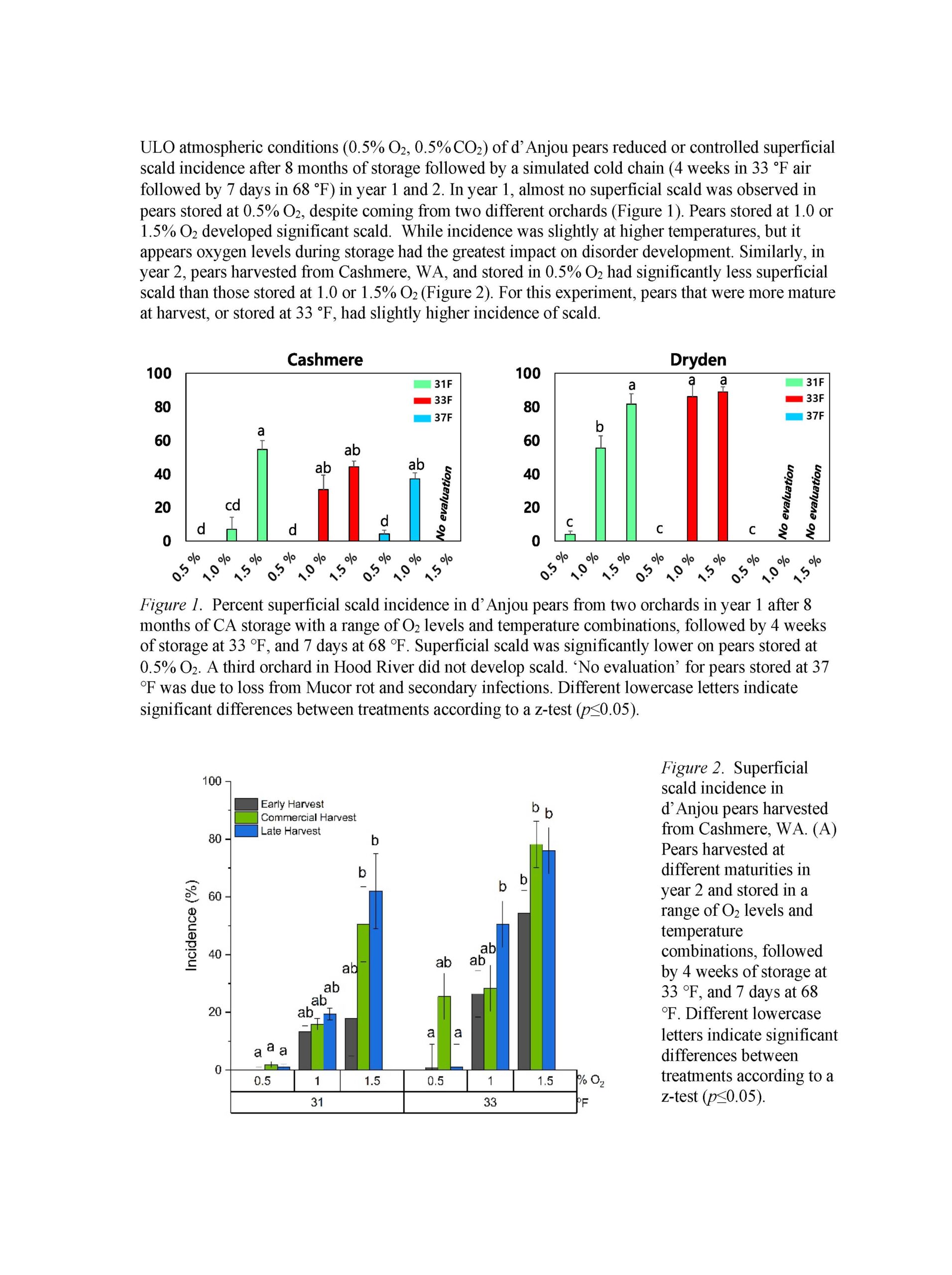
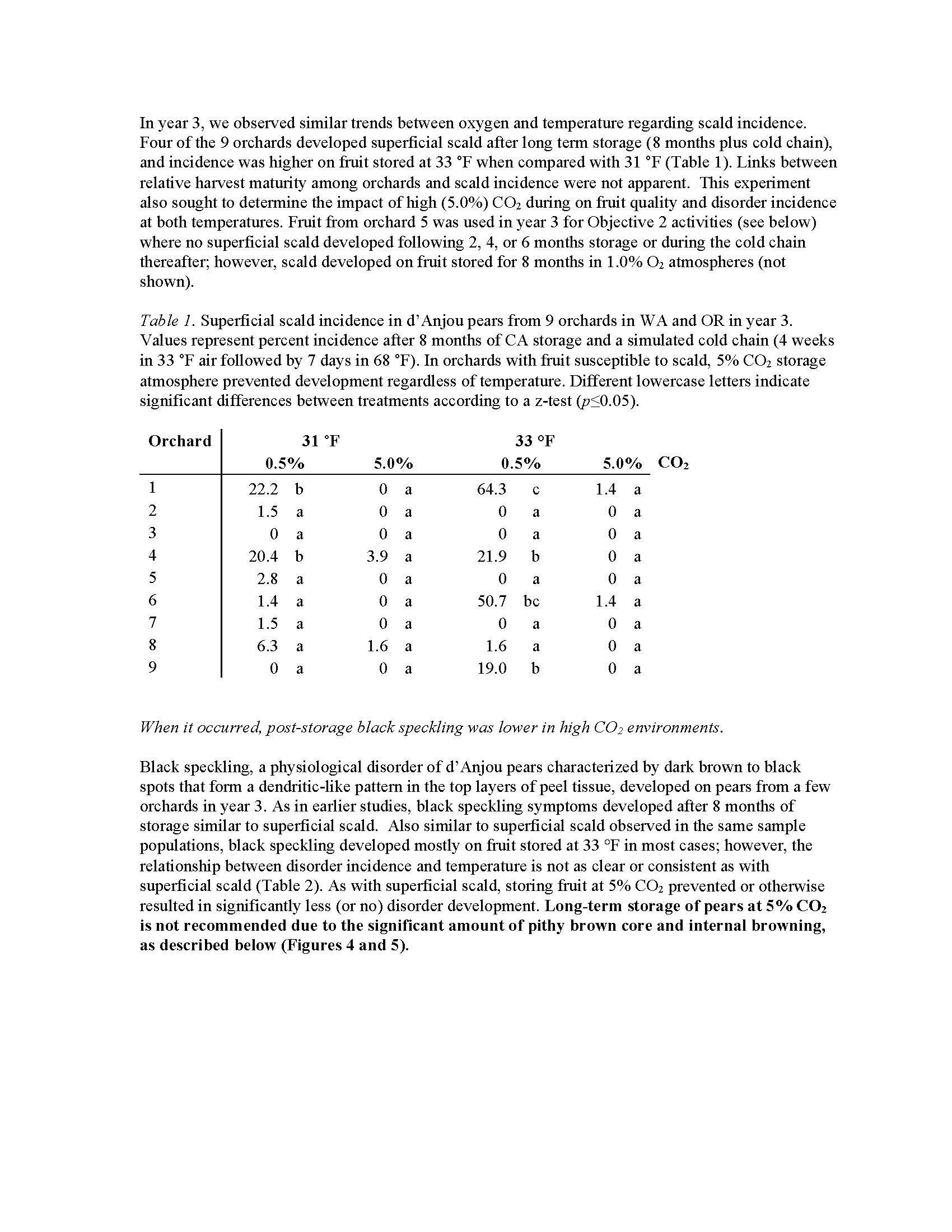
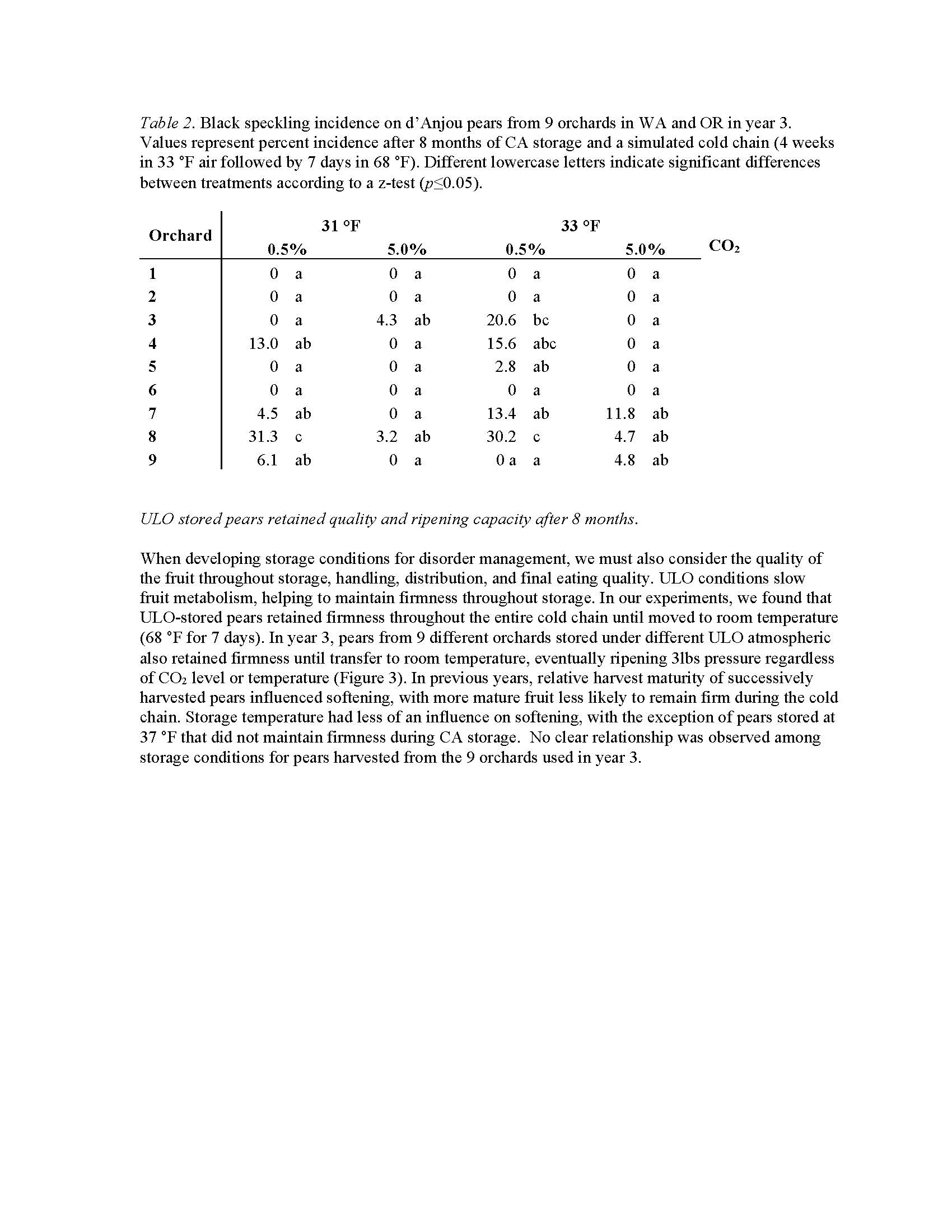
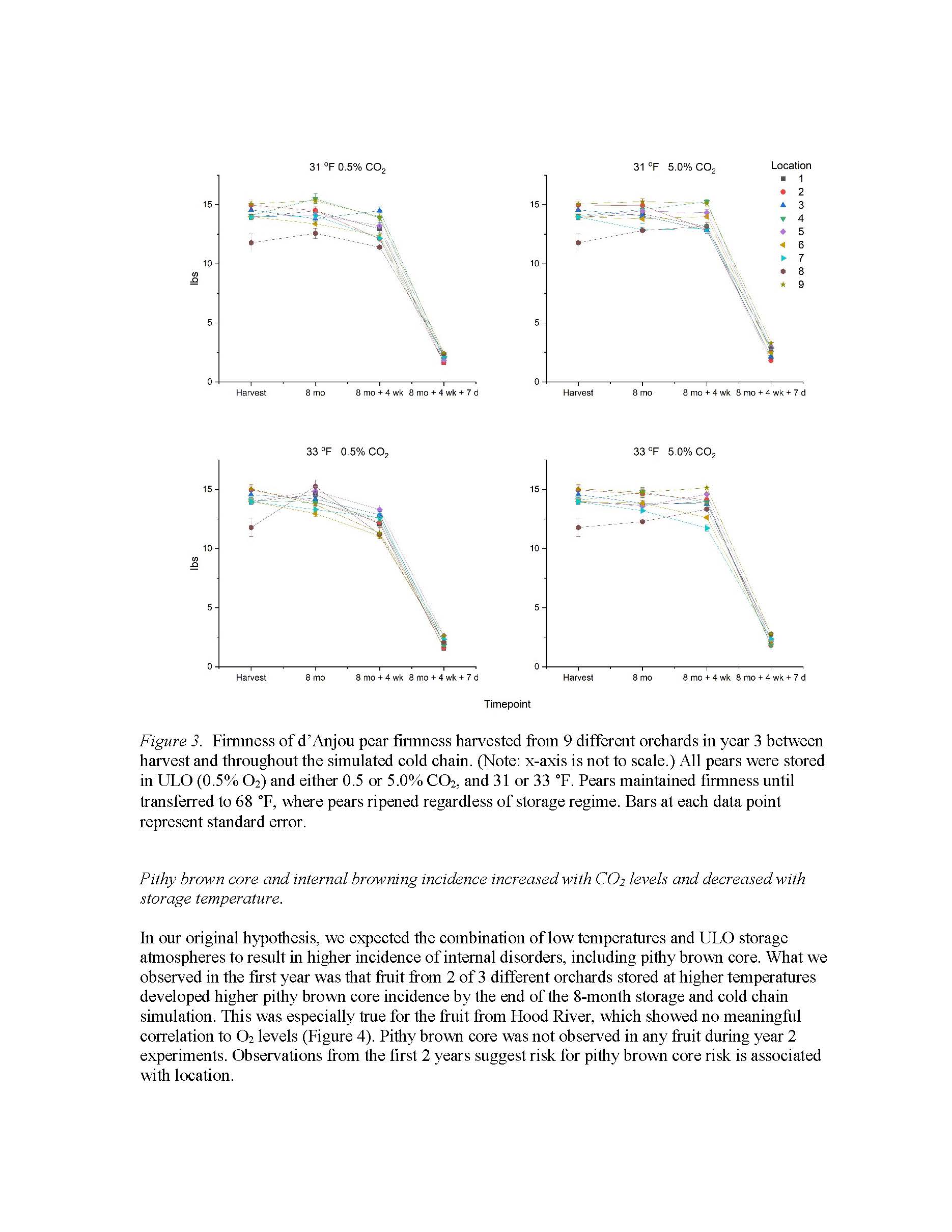
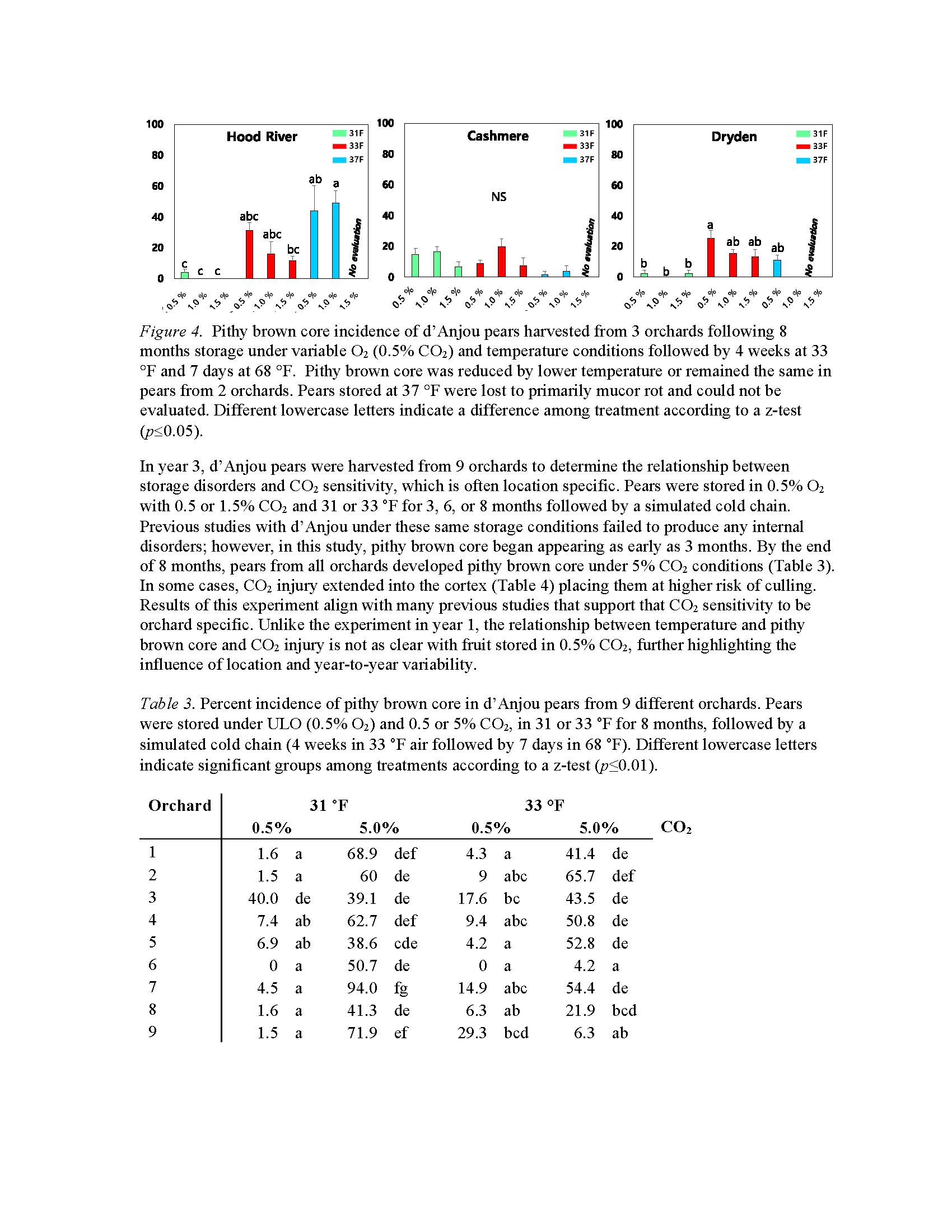
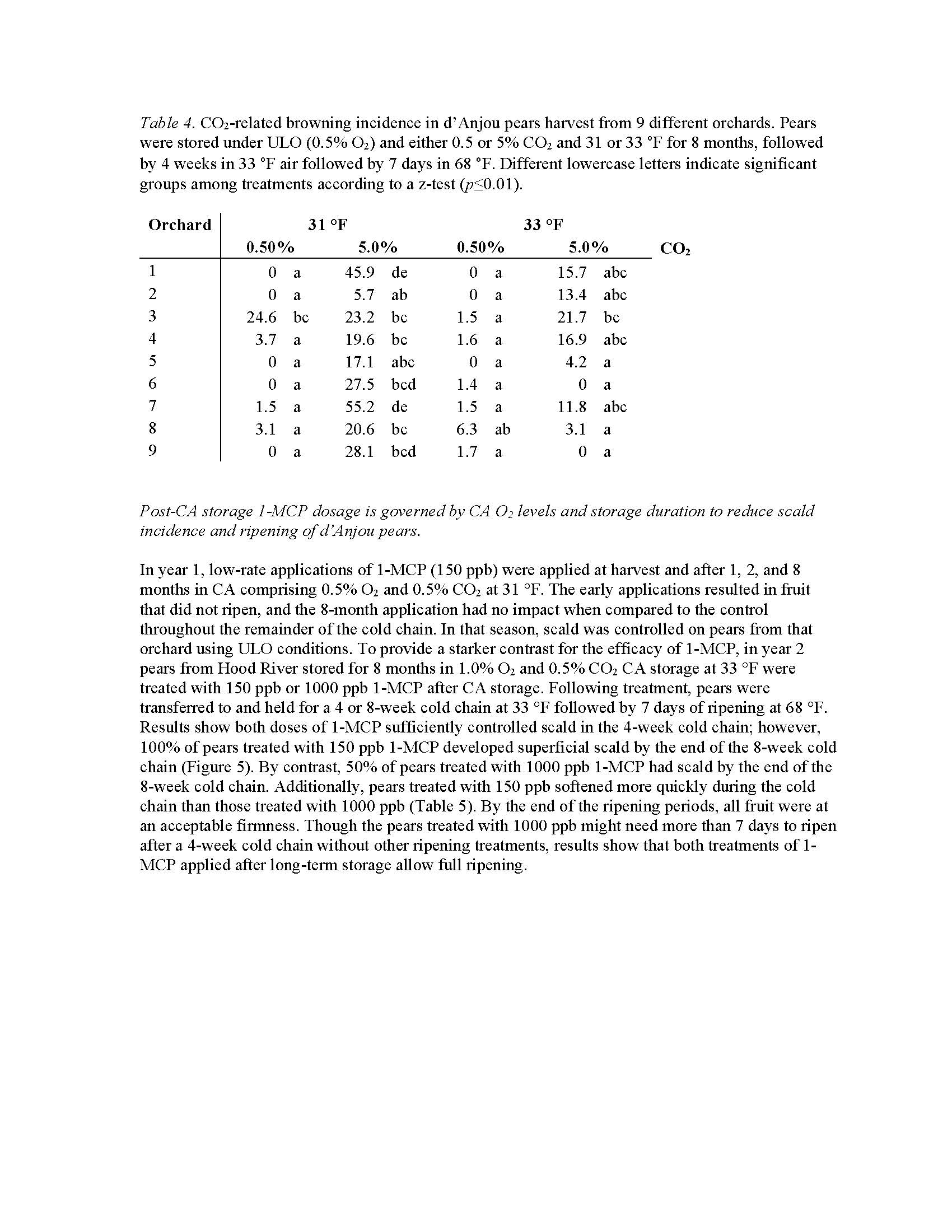
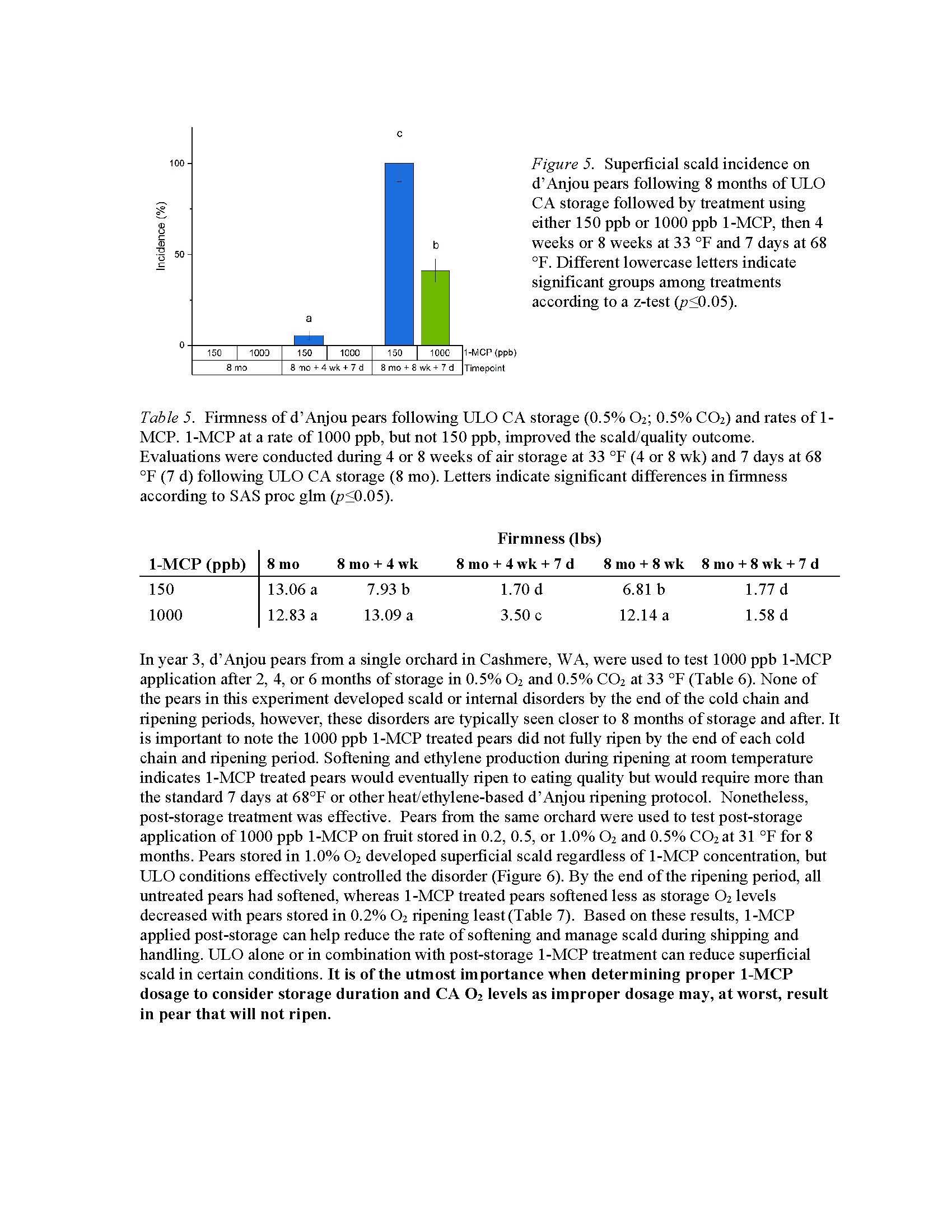
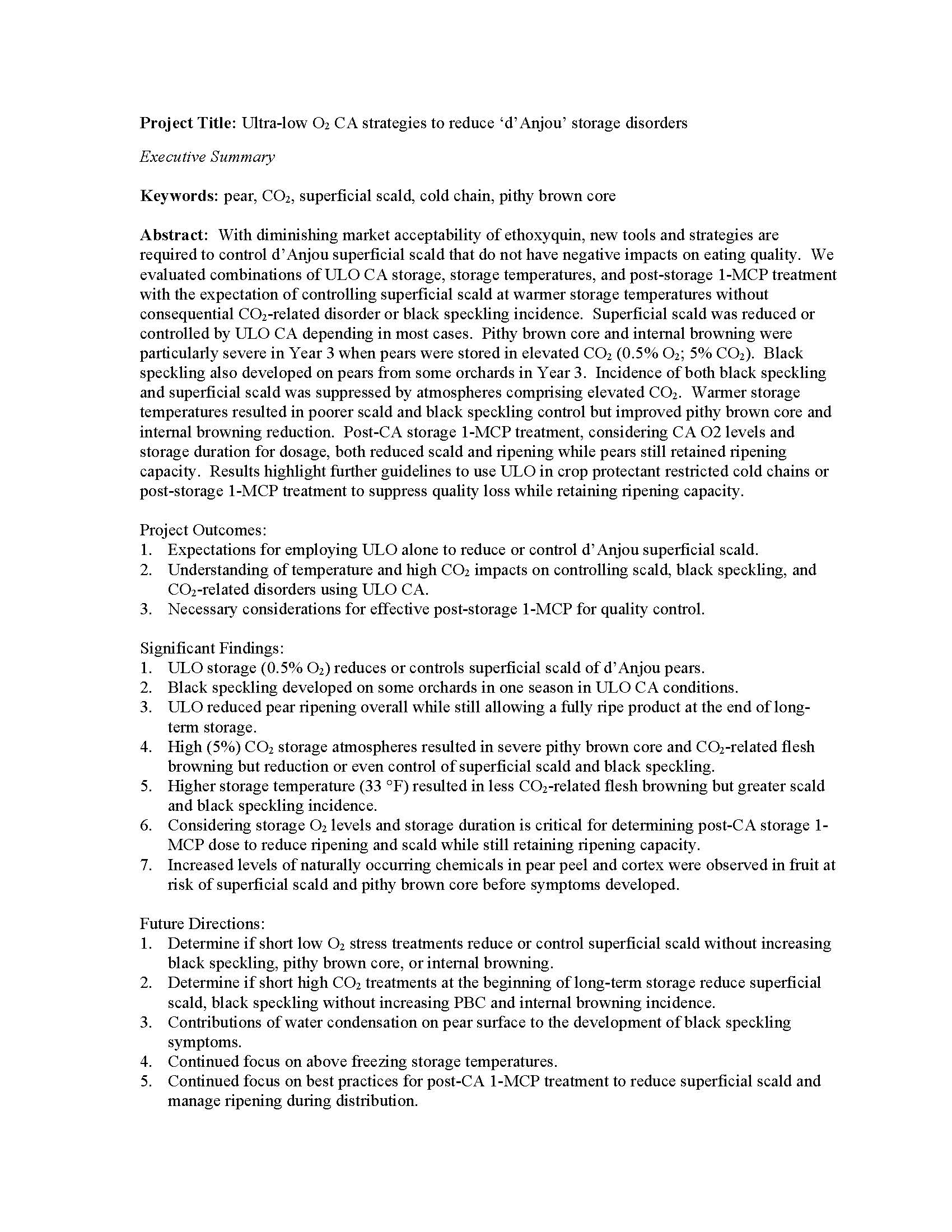
Summary: With diminishing market acceptability of ethoxyquin, new tools and strategies are required to control d’Anjou superficial scald that do not have negative impacts on eating quality. We evaluated combinations of ULO CA storage, storage temperatures, and post-storage 1-MCP treatment with the expectation of controlling superficial scald at warmer storage temperatures without consequential CO2-related disorder or black speckling incidence. Superficial scald was reduced or controlled by ULO CA depending in most cases. Pithy brown core and internal browning were particularly severe in Year 3 when pears were stored in elevated CO2 (0.5% O2; 5% CO2). Black speckling also developed on pears from some orchards in Year 3. Incidence of both black speckling and superficial scald was suppressed by atmospheres comprising elevated CO2. Warmer storage temperatures resulted in poorer scald and black speckling control but improved pithy brown core and internal browning reduction. Post-CA storage 1-MCP treatment, considering CA O2 levels and storage duration for dosage, both reduced scald and ripening while pears still retained ripening capacity. Results highlight further guidelines to use ULO in crop protectant restricted cold chains or post-storage 1-MCP treatment to suppress quality loss while retaining ripening capacity.