Understanding Food Safety Risks During Post-Harvest Cherry Production
Author: Claire Murphy
Published: 2027
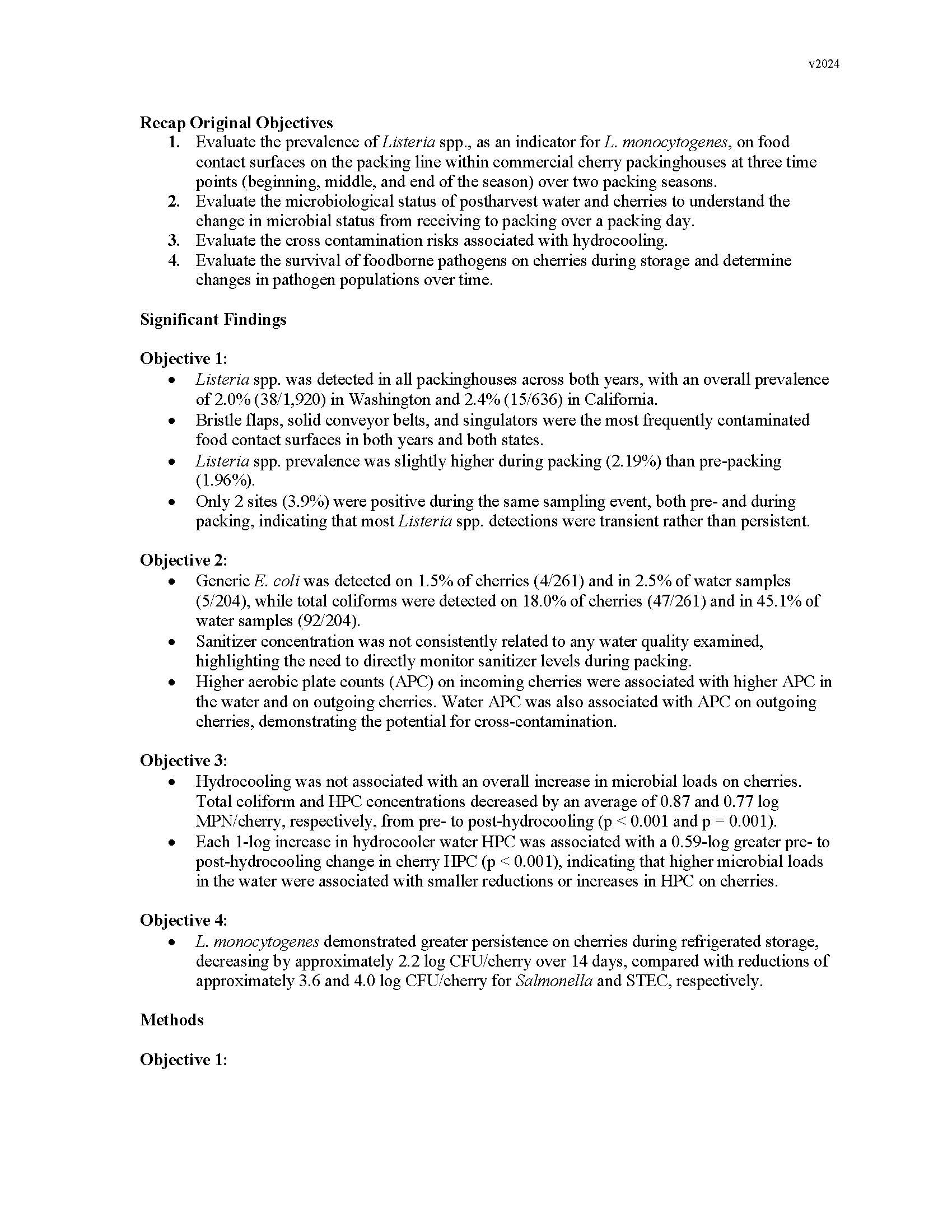
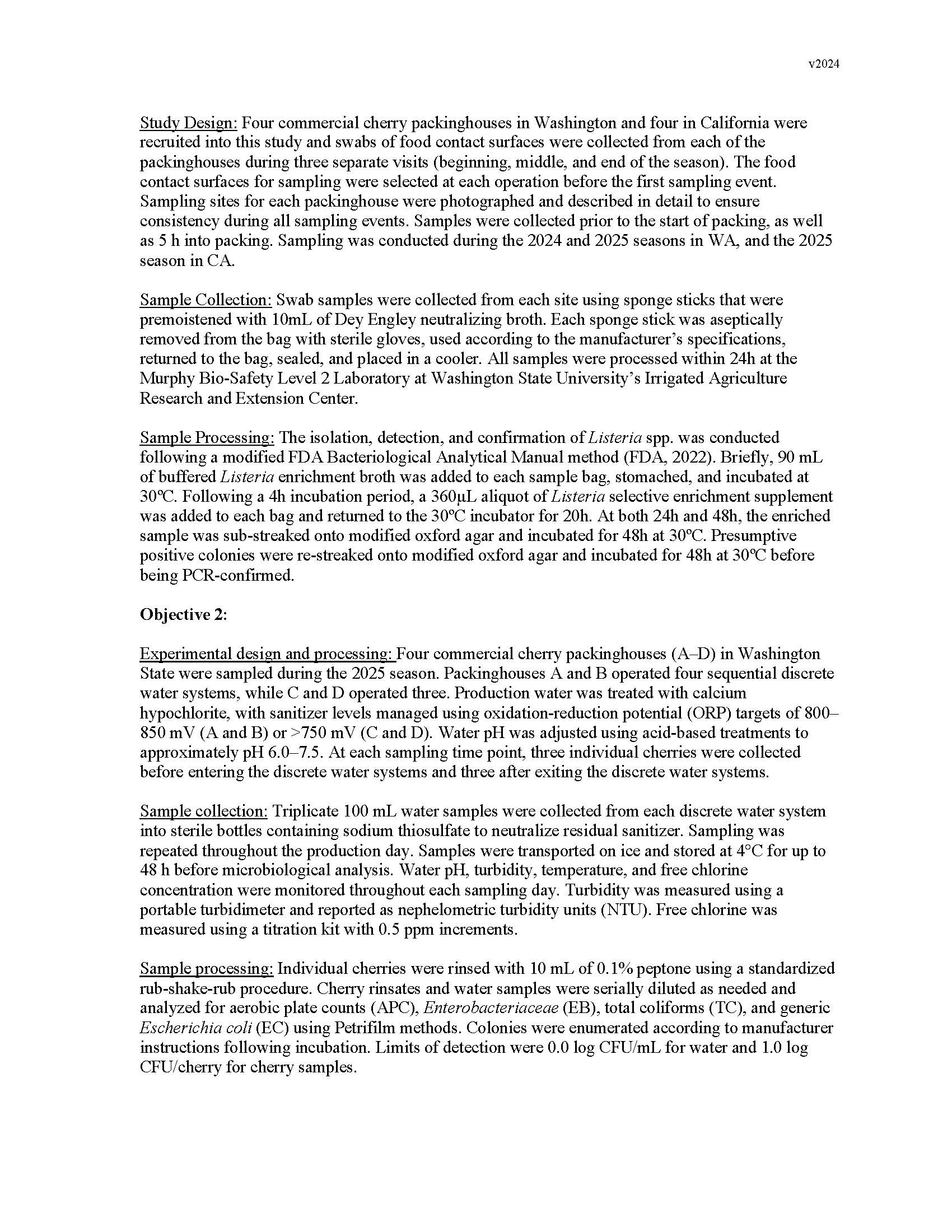
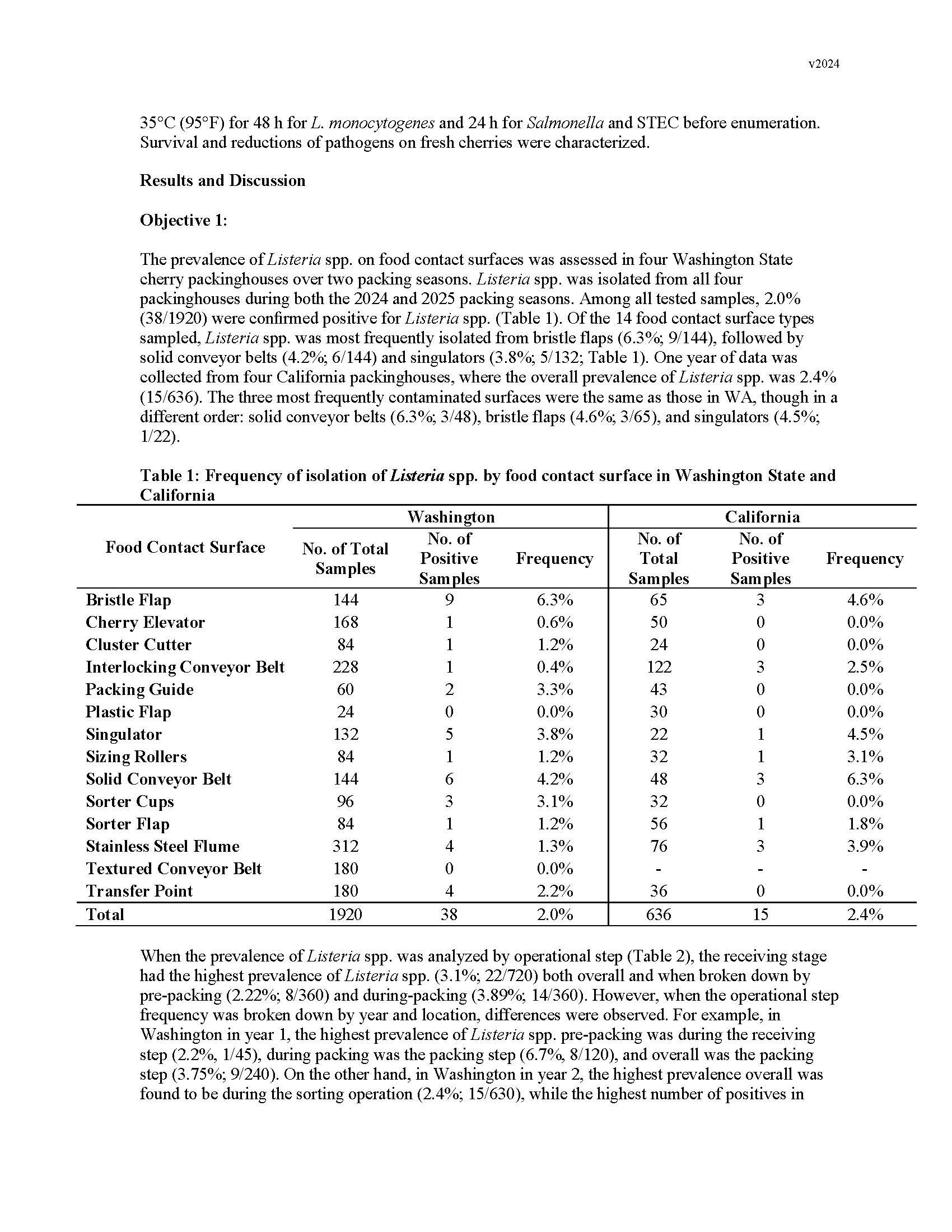
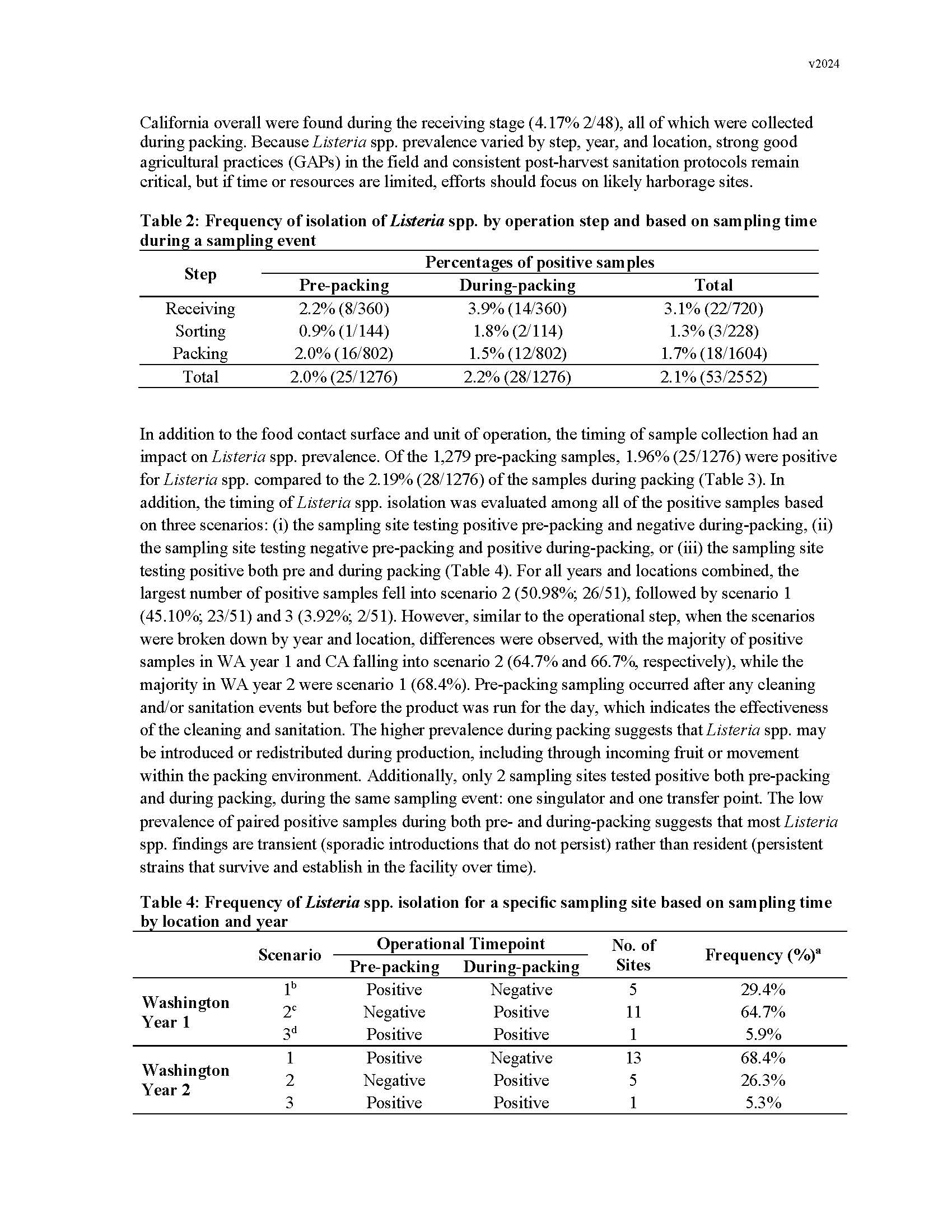
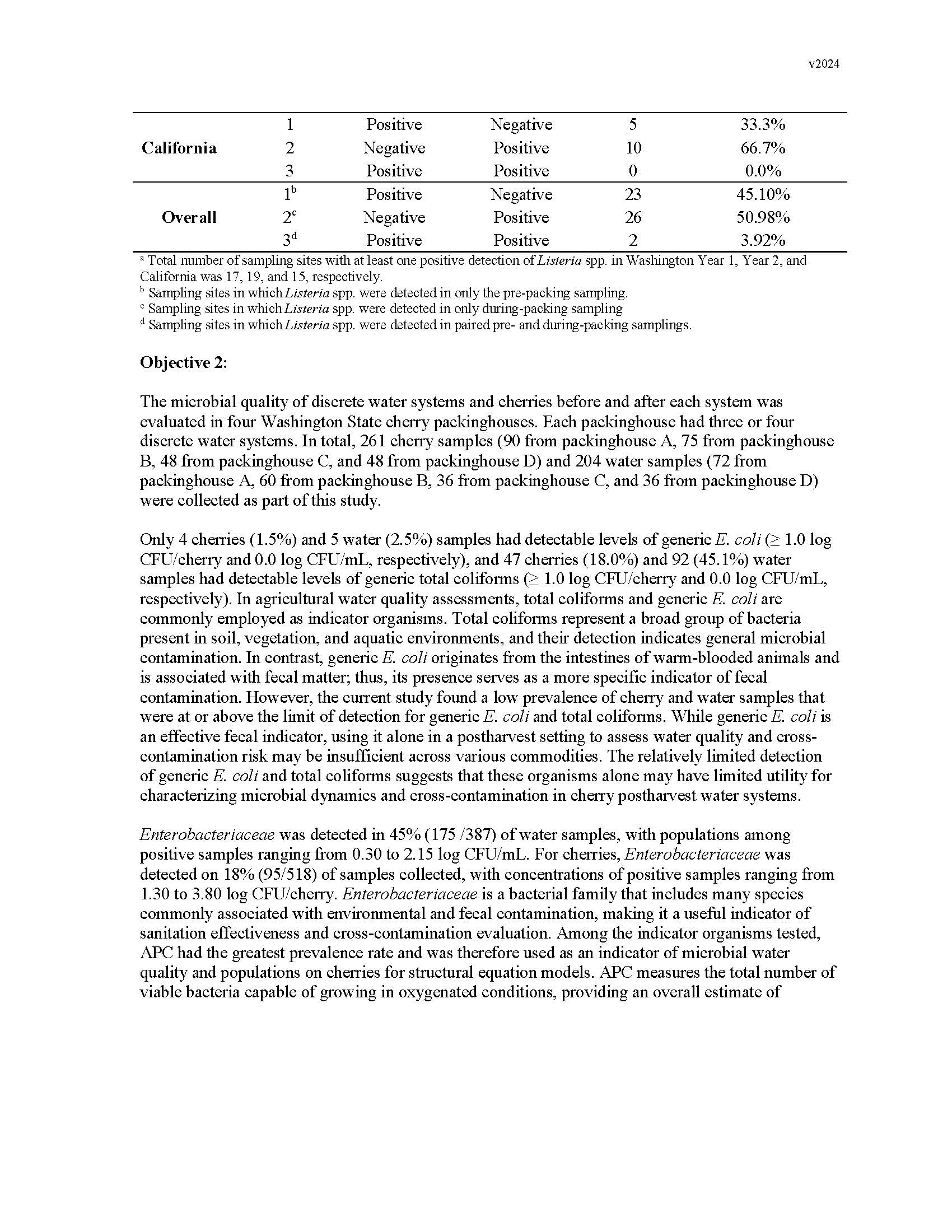
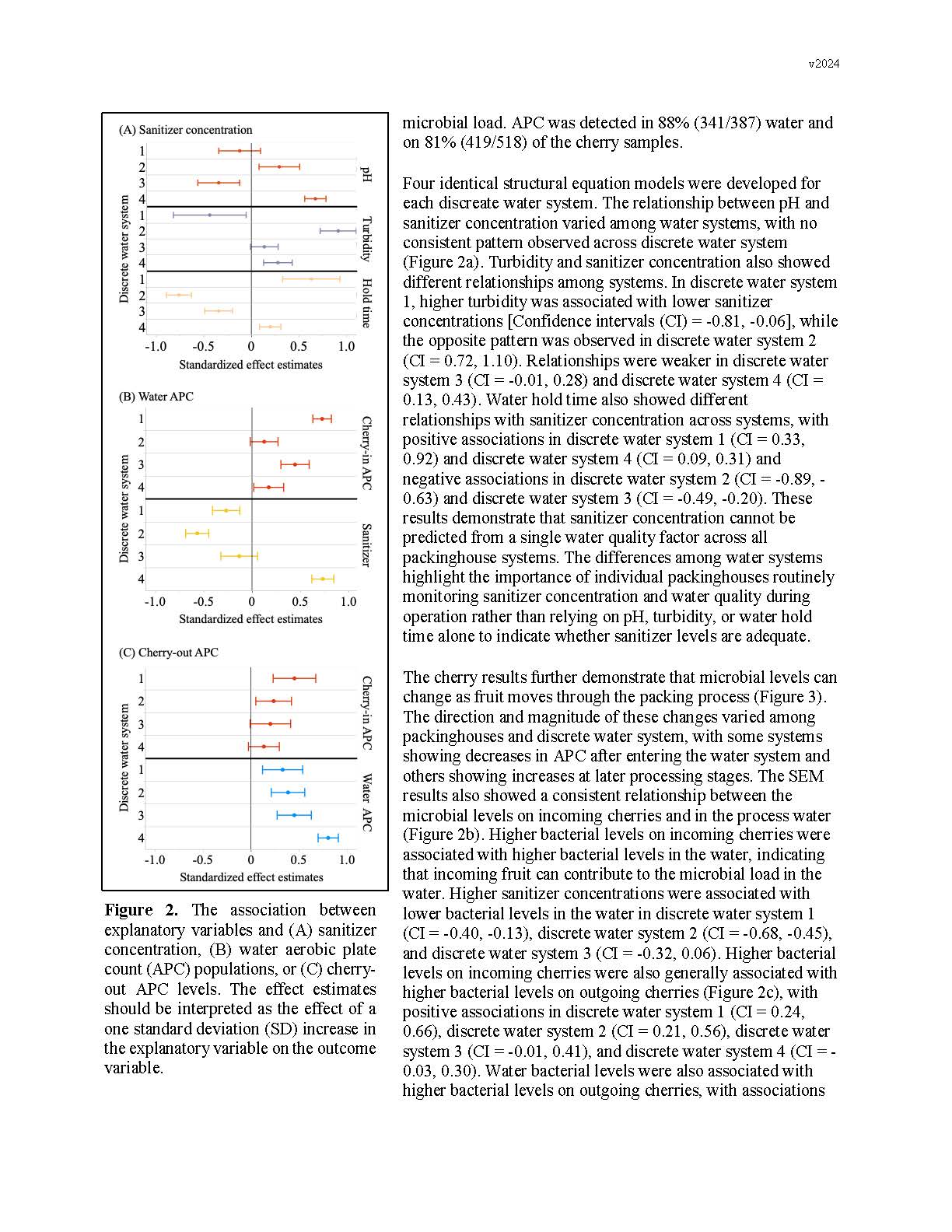
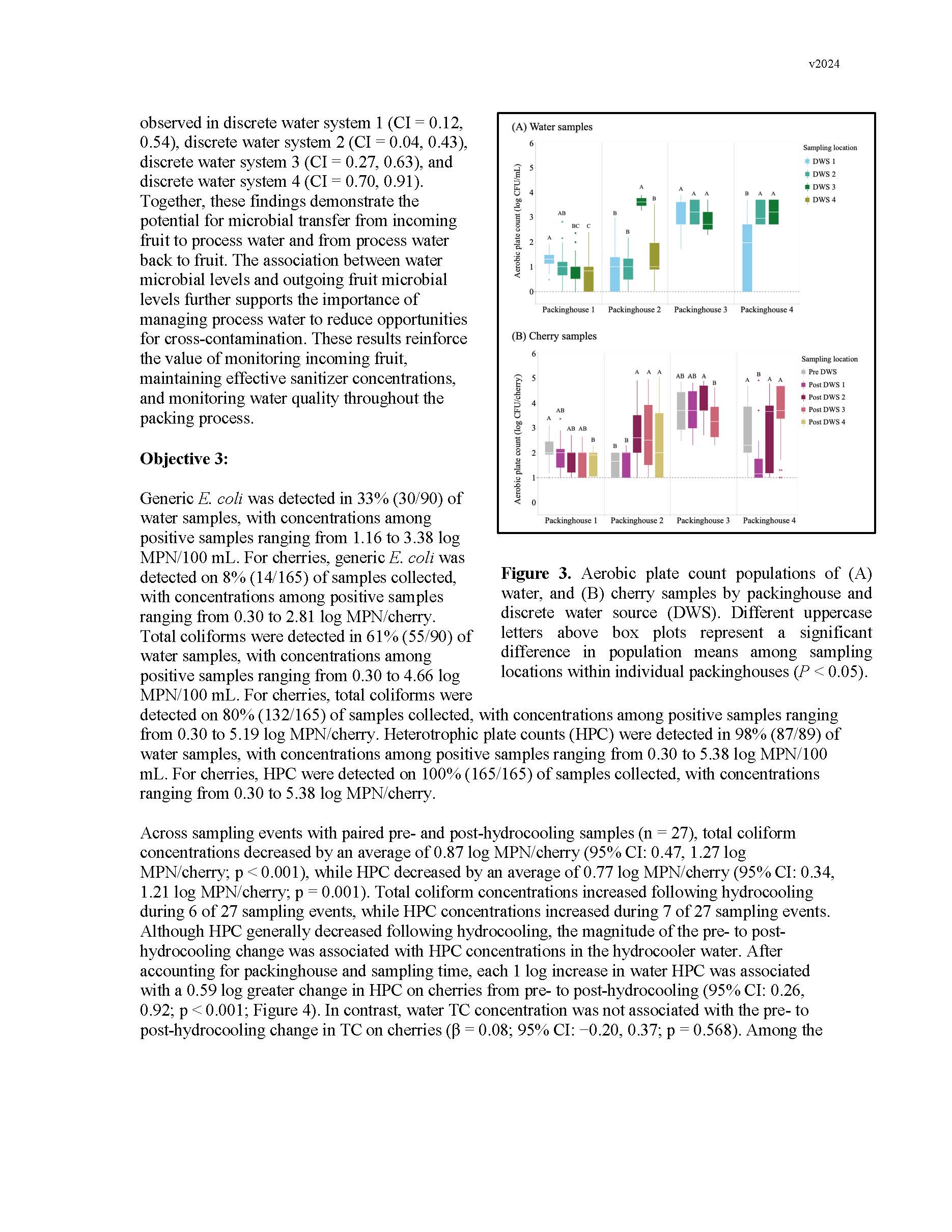
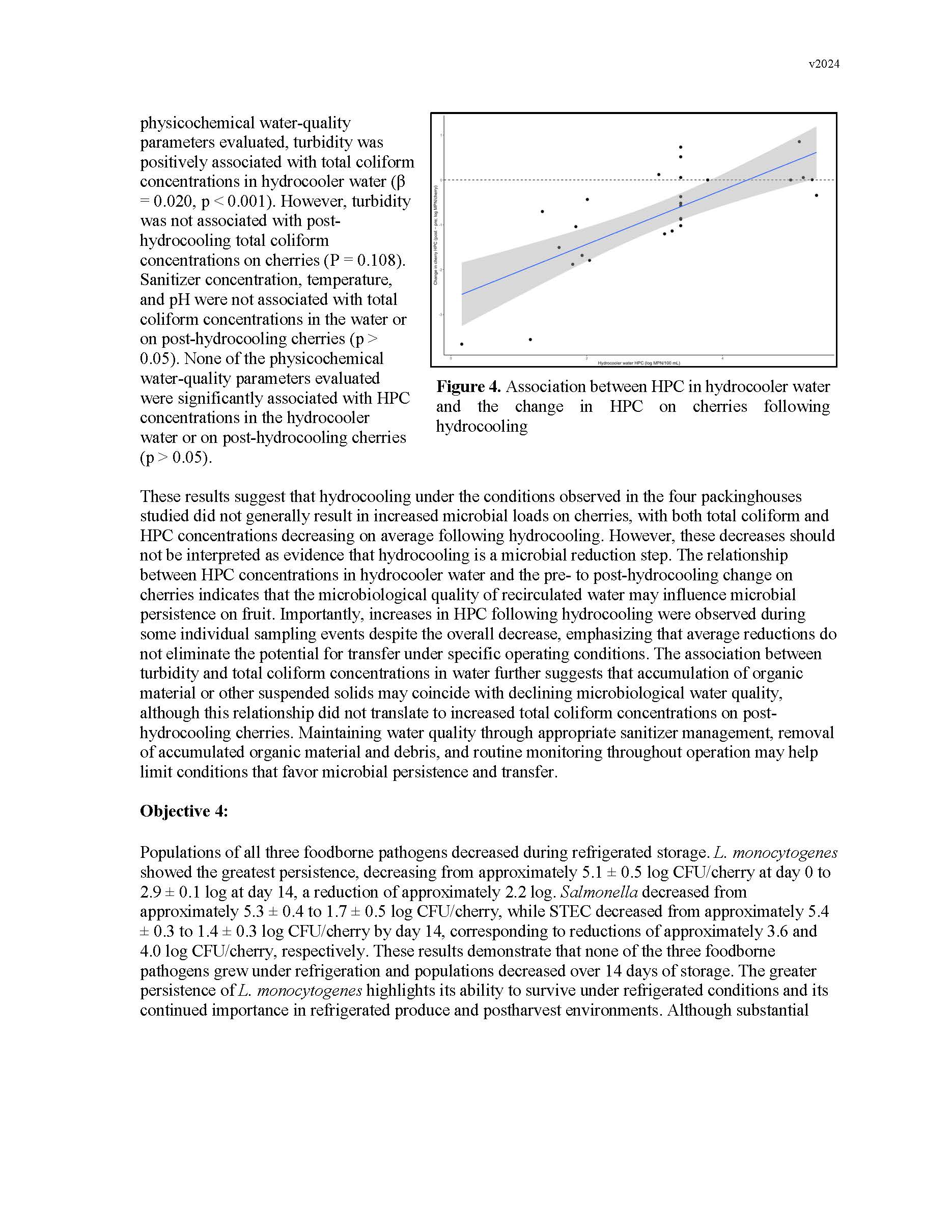
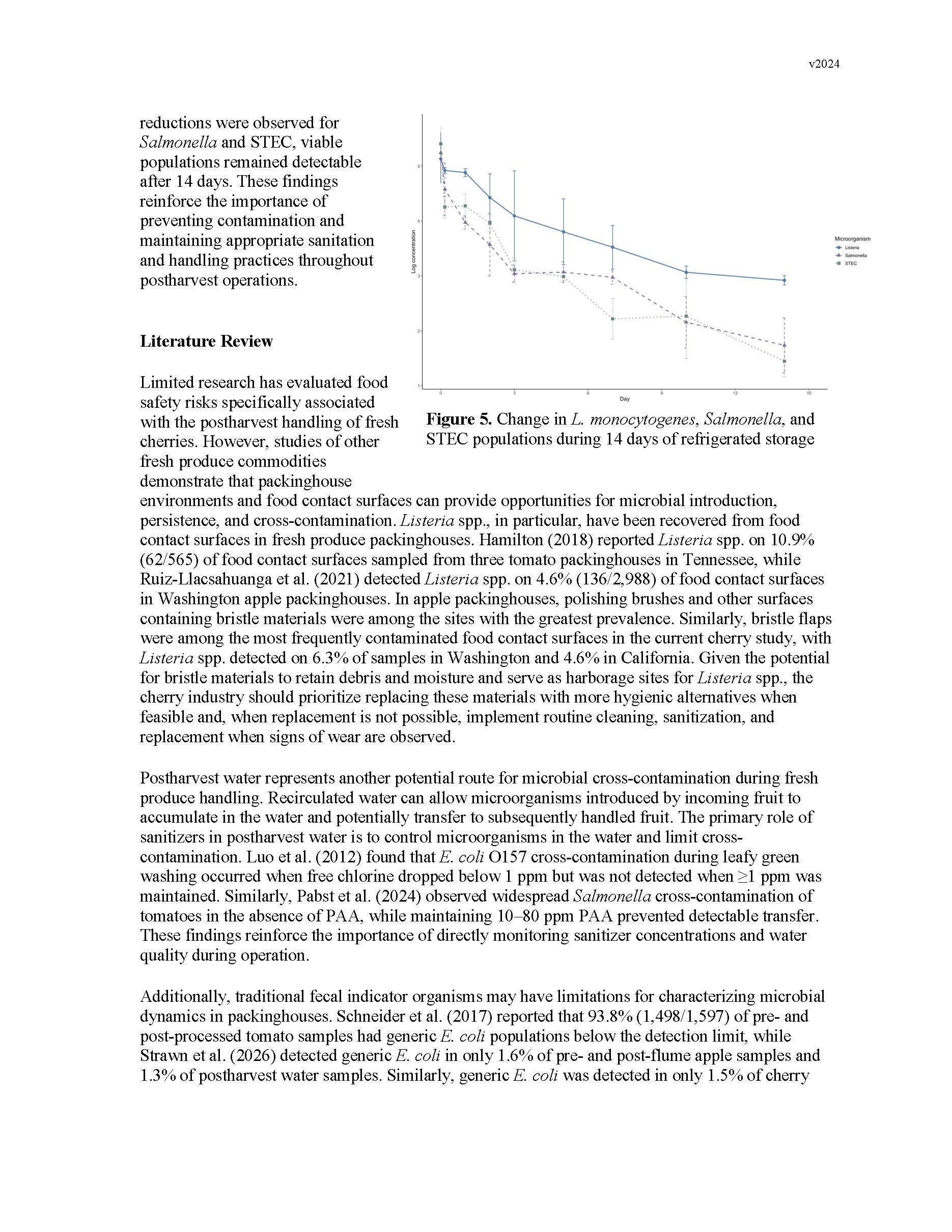
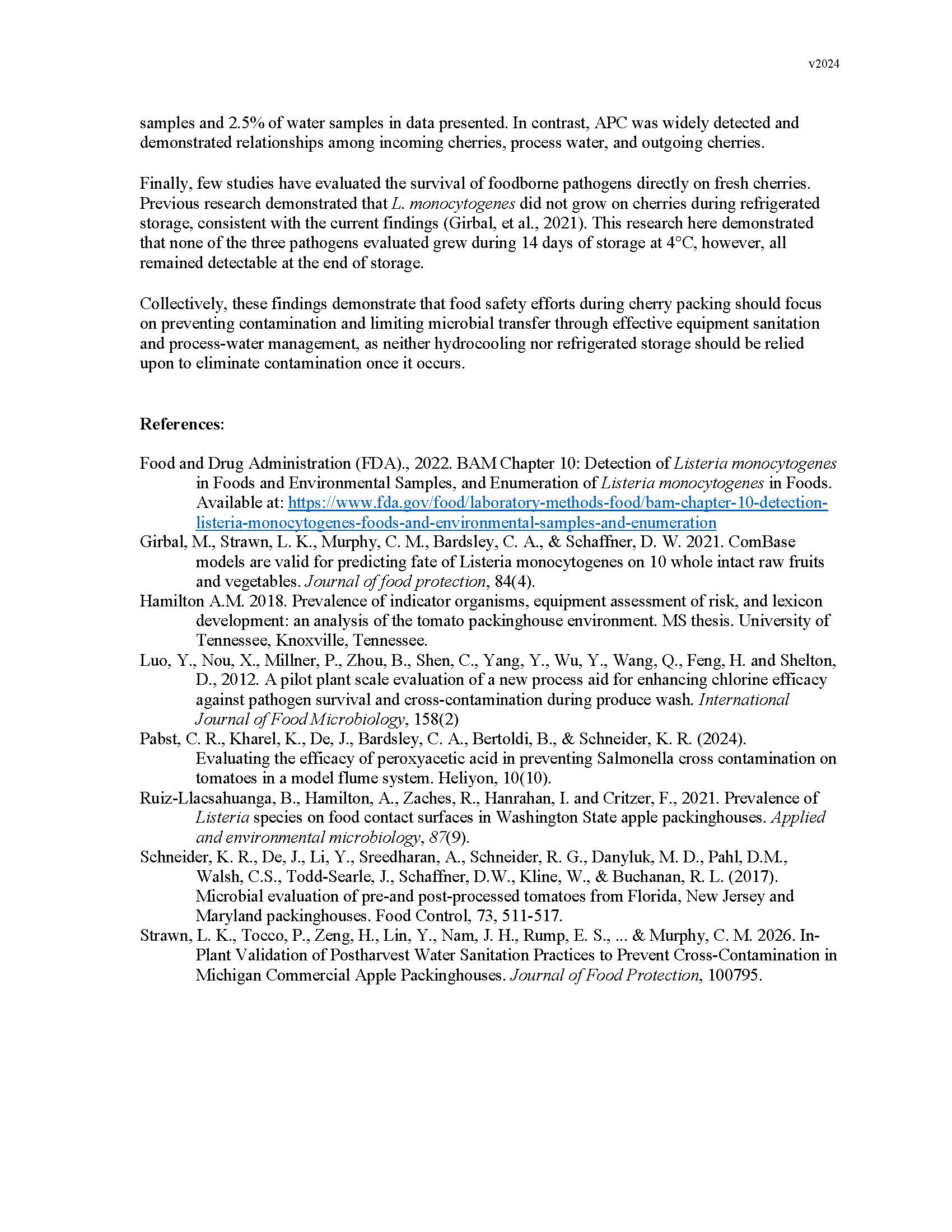
Summary: This three-year project evaluated food safety risks associated with commercial postharvest cherry handling, with emphasis on Listeria spp. on food contact surfaces, microbial quality and crosscontamination in postharvest water systems, hydrocooling, and survival of foodborne pathogens on cherries during refrigerated storage. Commercial cherry packinghouses in Washington and California participated across the study objectives. Listeria spp. was detected in all packinghouses evaluated, with an overall prevalence of 2.0% (38/1,920) on food contact surfaces in Washington and 2.4% (15/636) in California. Bristle flaps, solid conveyor belts, and singulators were among the most frequently contaminated surfaces. Only 3.9% of positive sampling sites were positive both before and during packing within the same sampling event, suggesting that most detections represented transient contamination rather than persistent harborage. Evaluation of commercial postharvest water systems demonstrated that microbial populations on incoming cherries can influence microbial quality throughout the packing process. Generic E. coli was detected in 1.5% of cherries and 2.5% of water samples, while total coliforms were detected in 18.0% and 45.1%, respectively. Higher APC populations on incoming cherries were associated with higher APC populations in process water and on outgoing cherries, and higher water APC was also associated with higher APC on outgoing cherries. Relationships between sanitizer concentration and individual water-quality parameters varied among water systems, emphasizing the importance of directly monitoring sanitizer concentrations rather than relying on individual physicochemical parameters as indicators of sanitizer status. Hydrocooling did not generally increase microbial populations on cherries under the commercial conditions evaluated. Total coliform and HPC populations decreased by an average of 0.87 and 0.77 log MPN/cherry, respectively, following hydrocooling. However, increases occurred during some individual sampling events, and higher HPC populations in hydrocooler water were associated with less favorable changes in HPC on cherries. These findings indicate that hydrocooling should not be considered a microbial reduction step and reinforce the importance of maintaining the microbiological quality of recirculated water. Finally, L. monocytogenes, Salmonella, and STEC did not grow on cherries during 14 days of refrigerated storage, but viable populations of all three pathogens remained detectable. L. monocytogenes demonstrated the greatest persistence, decreasing by approximately 2.2 log CFU/cherry compared with reductions of approximately 3.6 and 4.0 log CFU/cherry for Salmonella and STEC, respectively. Overall, the results demonstrate that effective cherry food safety management should focus on preventing contamination and limiting microbial transfer throughout postharvest handling. Priority practices include hygienic design and sanitation of difficult-to-clean food contact surfaces, particularly bristle materials; routine monitoring and management of process-water quality and sanitizer concentrations; control of organic material and debris accumulation; and recognition that incoming fruit can contribute microbial loads to recirculated water systems.